




Enter your VAT number here and click Verify:
Your details have been verified. VAT number registered to:
,
.
Your order will now be zero rated for VAT purposes. We reserve the right to verify these details after your order request has been made and reinstate VAT if required.
Your VAT details were not recognised or were invalid. Your VAT number must be matched to your Billing Country as specified above. This is currently specified as . You do not need to enter the country code part of your VAT number as this has already been selected in your billing address details above.
The VAT number checking service is currently offline. Please supply your VAT details within the comments or special instructions field below and we will apply a VAT discount after placing your order request.

OE Match

OE Match for Porsche
OE Match is a specialist replacement-parts brand developed around Porsche applications, covering routine maintenance, mechanical repairs, restoration and difficult-to-source components for classic and modern models. Design911 selects brands for quality and Porsche fitment, with knowledgeable specialists available to help owners and workshops choose suitable parts.
The OE Match story
OE Match is focused on preserving Porsche vehicles by returning hard-to-find and no-longer-available components to the market. Its purpose is to keep Porsche vehicles maintained, repaired, restored and usable for the future, particularly where original components have become expensive, difficult to source or discontinued.
Supplied catalogue information records over 8000 individual part numbers, more than 11,800 OE cross-references and over 100 new products in engineering, while the wider product programme contains more than 9,000 variants; these figures describe different measures of the range. Continuing development involves researching the parts owners and workshops genuinely need, working with specialist manufacturers, reviewing engineering specifications, assessing samples, testing and approving components before release. From small seals, clips and brackets to major mechanical components, the aim is to prevent a difficult-to-source item from holding up an entire repair or restoration: preserving Porsche, one part at a time.
Why choose OE Match for your Porsche
OE Match is a quality aftermarket and OE-equivalent replacement option developed specifically around Porsche applications rather than adapted from a general aftermarket range. Original references, vehicle fitment information, dimensions, materials and component specifications are used to identify suitable replacements for routine service, age-related wear, larger mechanical repairs and restoration work.
Its research, development and quality-control processes assess material and manufacturing quality, dimensions and specification, OE-reference compatibility, vehicle application, fit and function, supplier samples, product consistency, packaging and presentation. Where appropriate, physical inspection and fitment evaluation form part of final approval, and products must meet the programme's requirements before entering the catalogue.
Coverage includes the Porsche 356, 911, 912, 914, 924, 944 and 928, alongside the 964, 993, Boxster 986, 996, Cayenne, Cayman and 997. This gives owners, enthusiasts, independent specialists and professional workshops a Porsche-focused replacement option alongside Genuine Porsche parts. OE Match is intended to provide correctly specified, OE-equivalent replacements with sensible running costs rather than simply serving as a lower-cost alternative. Design911 selects the brands it carries for quality and fitment and can advise customers on suitable options for maintenance, restoration or upgrades.
- A replacement-parts programme developed specifically around Porsche applications.
- More than 9,000 product variants within the wider programme.
- Original Porsche part-number cross-references wherever applicable.
- Dedicated research, development, sample evaluation and quality-control processes.
- Classic and modern Porsche coverage for maintenance, repairs and restoration.
- Development focused on difficult-to-source and discontinued applications.
Categories we stock from this brand
Design911 stocks OE Match across an extensive range of Porsche mechanical, electrical, body, interior and maintenance categories. Original Porsche references help identify replacements where part numbers have been superseded or several versions exist. Always check the model, production year, engine, transmission, side or position, connector type where relevant and individual product notes. Incorrect application, mismatched versions, reused seals or hardware and worn supporting components can cause noise, premature wear, leaks, fitment problems or repeat failures. Safety-critical specifications and installation should be checked by a competent technician.
Engine components
OE Match engine coverage supports maintenance, repair and rebuilding work, ranging from small retaining hardware and brackets to components associated with the cylinder heads, crankcase, valve train and supporting engine systems.
- Confirm the engine type, capacity, production year and original reference.
- Inspect associated seals, fasteners and supporting components during engine work.
- Check whether components require specialist measuring, machining or installation procedures.
Engine seals and gaskets
Replacement seals and gaskets help address oil, coolant, air and vacuum leaks throughout classic and modern Porsche engines. The range supports individual repairs as well as more extensive engine resealing and rebuilding projects.
- Identify the source of a leak before replacing components.
- Check mating surfaces, housings and fasteners for wear or damage.
- Use the correct gasket or seal version for the engine and production year.
Cooling systems and radiators
OE Match cooling-system coverage includes components used to circulate coolant, control temperature and transfer heat away from the engine. These parts support repairs involving radiators, pipework, hoses, fittings and related cooling hardware.
- Investigate coolant loss, overheating, staining and damaged hoses promptly.
- Check pressure caps, clips, seals and connecting pipes during cooling-system work.
- Bleed and refill the system using the correct model-specific procedure.
Oil system components
Oil-system parts support engine lubrication, oil circulation, filtration and leak repair. Coverage can assist with routine servicing as well as work on oil lines, fittings, housings, seals and associated hardware.
- Confirm thread sizes, connection types and component position.
- Inspect flexible lines and seals for age-related hardening or leakage.
- Verify the required oil specification and system capacity separately.
Transmission and drivetrain
OE Match transmission and drivetrain parts support manual and automatic gearbox repairs, clutch operation, gear selection and the transfer of power to the driven wheels.
- Match parts to the exact gearbox or transmission code where specified.
- Check splines, bearings, seals, joints and supporting hardware for related wear.
- Diagnose noise, vibration or difficult gear selection before ordering components.
Engine and gearbox mounts
Replacement mounts help support the powertrain, maintain alignment and control unwanted engine and transmission movement. Worn mounts may contribute to vibration, knocking, drivetrain shunt or unsettled gear changes.
- Inspect mounts for cracking, collapse, separation and oil contamination.
- Check mounting bolts, washers, brackets and surrounding hardware.
- Consider replacing paired mounts together where required by the application.
Suspension and steering
OE Match suspension hardware and steering components support repairs intended to restore accurate wheel control, alignment and predictable steering response. Coverage includes wear-related items used around suspension joints, mounting points and steering assemblies.
- Investigate play, knocking, uneven tyre wear and unstable handling.
- Check left- and right-hand applications and axle position carefully.
- Arrange wheel alignment after replacing components that affect geometry.
Braking components
OE Match braking components form part of its Porsche-specific replacement programme. Brake work may address wear, restore stopping performance or prepare a car for fast-road or track use, but the specification of each component must suit the intended application.
- Symptoms prompting inspection include vibration, longer stopping distances, squealing, pulling to one side, warning lights and visible disc or pad wear.
- Confirm whether the selected component is an OE-equivalent replacement or a performance upgrade.
- Check whether new fitting kits, seals, hardware and pad wear sensors are required.
Electrical and ignition
Electrical and ignition coverage supports Porsche repairs involving starting, charging, ignition and engine-management faults. Correct diagnosis is particularly important because wiring, supply voltage, earth connections and other supporting components can produce similar symptoms.
- Typical symptoms include intermittent no-start, misfires, rough idle, poor charging, warning lights and heat-soak failures.
- Check the original reference, engine, production year and connector type.
- Test power supplies, earths and wiring before replacing electrical components.
Sensors and switches
OE Match sensors and switches provide replacement options for systems that monitor or control engine operation, temperature, pressure, position, lighting and driver warnings.
- Similar-looking sensors may have different calibrations, connectors or applications.
- Use fault codes as a diagnostic guide rather than proof that a sensor has failed.
- Inspect connectors for corrosion, damaged terminals and degraded wiring.
Heating and air conditioning
Heating, ventilation and air-conditioning components support cabin temperature control, airflow and demisting. The range covers replacement needs involving blower assemblies, controls, ducts, valves, fittings and related hardware.
- Check whether parts differ between left- and right-hand-drive vehicles.
- Confirm connector, housing and production-year variations.
- Refrigerant-system work should be completed by an appropriately qualified technician.
Exhaust components
OE Match exhaust coverage supports repairs to worn, corroded or leaking parts of the exhaust system, together with associated brackets, clamps, seals and fittings.
- Inspect joints, flanges, fixings and heat shields when replacing exhaust parts.
- Check emissions equipment and sensor positions for the specific model.
- Corroded fasteners may require additional hardware during installation.
Rubber seals and hoses
Rubber components are important throughout a Porsche for sealing fluids, air, weather and noise. OE Match coverage assists with replacing hardened, split, swollen, leaking or missing hoses, boots, grommets and sealing profiles.
- Match the shape, dimensions, connection points and intended fluid or system.
- Inspect adjoining clips, pipes and sealing surfaces.
- Age-related rubber deterioration can affect several nearby components at once.
Exterior trim and body components
Exterior and body coverage supports accident repair, cosmetic refurbishment and restoration. It includes replacement needs involving trim, lamps, brackets, fixings, seals and other model-specific body fittings.
- Confirm body style, side, position, colour and finish where applicable.
- Check whether clips, seals or mounting hardware are supplied separately.
- Compare the original component and reference before installation.
Interior components
OE Match interior products support the repair and restoration of cabin fittings that may have worn, faded, broken or become difficult to source with age.
- Check colour, finish, side and model-year variations.
- Inspect clips, brackets and fixing points before fitting replacement trim.
- Some interior components may differ according to body style or equipment specification.
Service and maintenance parts
OE Match service components support scheduled upkeep across Porsche generations, helping owners and workshops maintain reliability, efficiency and system protection while addressing everyday wear.
- Hard starting, rough idle, poor fuel economy and warning lights can accompany clogged filters or worn ignition components.
- Select service items against the exact Porsche model, engine, production year and required specification.
- Review related seals, hardware and other maintenance items when planning a larger service.
Restoration hardware
Restoration hardware covers the small but essential fasteners, brackets, clips, fittings and retaining components needed to complete repairs accurately and securely.
- Record the position and orientation of original hardware during dismantling.
- Check thread, length, finish, quantity and model application.
- Replacing damaged or heavily corroded hardware can prevent delays during reassembly.
Difficult-to-source and discontinued applications
A central purpose of the OE Match programme is identifying gaps where original Porsche parts have become difficult to obtain or are no longer available. Reintroduced components can help prevent one missing seal, clip, bracket or mechanical part from delaying an otherwise complete repair or restoration.
- Use OE cross-references and dimensions to verify the intended application.
- Check whether the original number has been superseded.
- Review product-specific fitment notes where several component versions exist.
Brake Pad Wear Sensors
OE Match brake pad wear sensors provide replacement options for Porsche brake servicing. Sensors may need renewal when pads are replaced or when a worn or damaged sensor causes a brake wear warning.
- Warning messages with new pads, damaged sensor cables and broken clips warrant inspection.
- Match the OE reference, caliper application, model year, connector and sensor position.
- Check the quantity required and whether sensors are included with the selected brake parts.
Engine Electrical
OE Match engine electrical parts cover starting, charging, ignition, sensor and switch applications. They support repairs involving intermittent no-start, misfires, rough idle, stalling, battery drain, poor charging, warning lights, inconsistent readings and heat-related failures.
- Similar-looking components may have different electrical or vehicle applications.
- Repeat faults can indicate a mismatched component or a worn supporting item.
- Battery condition, earth straps, connectors and voltage drop should be checked during diagnosis.
Service Parts
OE Match service parts cover everyday maintenance requirements intended to protect the engine, gearbox and other major systems. Routine replacement can address natural wear caused by heat, friction, fluid degradation and environmental exposure.
- Match filters, ignition parts, belts and fluids to the exact vehicle specification.
- Many symptoms overlap, so establishing a sound service baseline can assist diagnosis.
- Keep a service record to support future maintenance and fault finding.
Service Kits
OE Match service kits group key maintenance components to simplify servicing and establish a known baseline. They are particularly useful when catching up on overdue maintenance or assessing sluggish running, inconsistent idle, poor economy and reduced performance.
- Match each kit to the exact Porsche model, engine and production year.
- Contents vary, so review the included components rather than assuming every service item is supplied.
- Add any required while-you-are-there items, such as spark plugs, belts, fluids, seals or hardware.
Explore the range
Browse the OE Match Porsche range at Design911, then narrow your selection by model and category and cross-check the original part references and fitment notes. Whether you are planning routine maintenance, a workshop repair or a complete restoration, Design911's Porsche specialists can help identify suitable components within a programme focused on fitment, quality and long-term vehicle preservation.



- Porsche 911 1968-1973 2.2L / 2.4L / 2.7L RS LWB (F)
- Porsche 911 1974-1977 2.7L / 1976-77 3.0 Carrera
- Porsche 911 1978-1983 3.0L / SC
- Porsche 911 1984-1986 3.2L
- Porsche 911 1975-1977 3.0L Turbo (930)
Restore smooth and reliable window operation with this OE Match Electric Window Motor with 8-Tooth Cog, manufactured as a direct replacement. Produced to OE-style specifications, this electric window motor provides the power required to raise and lower the door glass, ensuring consistent operation and correct engagement with the window regulator mechanism.
Fits:
- Porsche 911 1968-1973 2.2L / 2.4L / 2.7L RS LWB (F)
- Porsche 911 1974-1977 2.7L / 1976-77 3.0 Carrera
- Porsche 911 1978-1983 3.0L / SC
- Porsche 911 1984-1986 3.2L
- Porsche 911 1975-1977 3.0L Turbo (930)
Over time, electric window motors are subjected to continual use, vibration, moisture, and electrical wear. Internal motor components can weaken, while the drive gear and bearings may wear, resulting in slow, erratic, or complete loss of window movement. Replacing a faulty window motor restores dependable operation and helps prevent additional strain on the window regulator assembly. This OE Match component is ideal for routine maintenance, electrical repairs, and Porsche restoration projects.
What This Product Does:
- Powers the raising and lowering of the door window.
- Drives the window regulator via the 8-tooth drive cog.
- Provides smooth and consistent window movement.
- Helps maintain reliable operation of the electric window system.
- Replaces worn, seized, or failed original window motors.
- Reduces strain on the window regulator mechanism.
- Provides an OE-style fit and dependable quality.
Symptoms Of Wear Or Failure:
- Electric window operates slowly.
- Window stops part way through its travel.
- Window fails to move despite switch operation.
- Grinding or clicking noises from inside the door.
- Intermittent window operation.
- Motor runs without moving the window.
- Excessive play or wear in the drive cog.
- Complete failure of the electric window motor.
Why Replacement Matters:
- The electric window motor is responsible for converting electrical power into the mechanical movement needed to raise and lower the door glass. A worn or failed motor can leave the window stuck open or closed, place unnecessary strain on the regulator mechanism, and reduce the convenience and security of the vehicle.
- Replacing the window motor restores smooth, reliable window operation and helps protect associated regulator components from premature wear. Manufactured as a direct replacement and produced to OE-style specifications, this OE Match electric window motor with an 8-tooth cog provides the correct fit, dependable quality, and long-lasting durability, making it an excellent choice for Porsche maintenance, electrical repairs, and restoration projects.
Related reference numbers
Related, superseded, cross reference or alternative numbers for comparison.
91162401
The product you are viewing cross references to these numbers
- Porsche 911 1965-1968 2.0L / 912 SWB (F)
- Porsche 911 1968-1973 2.2L / 2.4L / 2.7L RS LWB (F)
- Porsche 914 (1970-1976)
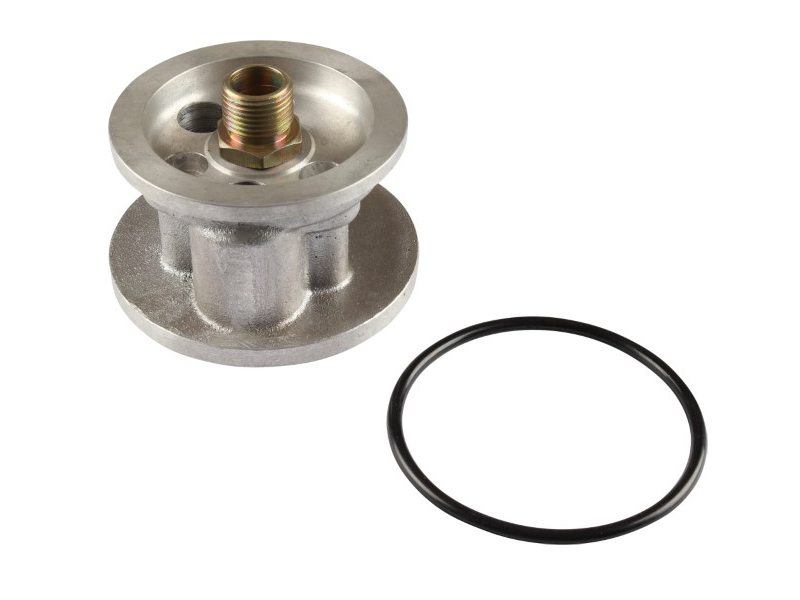
Oil Filter Console
Maintain the integrity of your classic Porsche's lubrication
system with this OE Match Oil Filter Console. This precision-manufactured component provides the correct mounting point for
the engine oil filter while maintaining factory-style fit and function.
Fits:
- Porsche 911 1965-1968 2.0L / 912 SWB (F)
- Porsche 911 1968-1973 2.2L / 2.4L / 2.7L RS LWB (F)
- Porsche 914 (1970-1976)
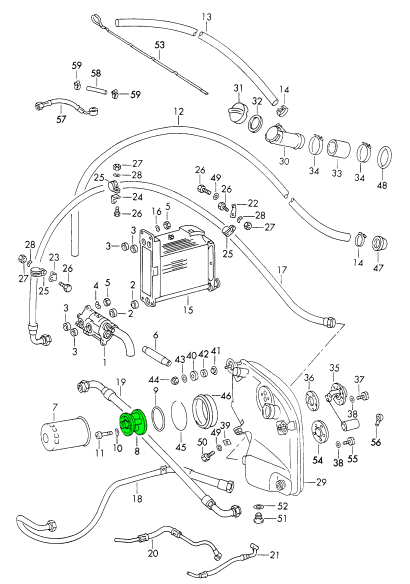
Diagram ref no 8
Manufactured to OE specifications, this oil filter console is engineered to provide accurate alignment, reliable oil flow and secure sealing, making it an ideal solution for routine engine repairs, complete engine rebuilds or concours-quality restorations.
What Does the Oil Filter Console Do?
The oil filter console is a vital component of the engine lubrication system.
It securely mounts the oil filter to the engine and directs pressurised engine oil through the filter before it is circulated throughout the engine. This ensures contaminants are removed from the oil, helping to protect internal engine components from premature wear.
A correctly functioning oil filter console helps provide:
- Secure oil filter mounting
- Correct oil flow through the filtration system
- Reliable sealing against oil leaks
- Proper lubrication throughout the engine
- Consistent oil pressure
- Long-term engine protection
Because every drop of engine oil passes through this assembly, maintaining it in good condition is essential for engine reliability.
Why Replace the Oil Filter Console?
Over decades of use, the original oil filter console can become damaged through corrosion, accidental impact, incorrect filter installation or repeated servicing.
Replacement may be necessary due to:
- Damaged filter mounting threads
- Corrosion
- Cracked casting
- Damaged sealing surfaces
- Previous over-tightening
- Oil leaks
- Accident or engine damage
- Wear during engine rebuilding
Replacing the console restores proper oil filtration and helps ensure leak-free operation.
Symptoms of a Damaged Oil Filter Console
The oil filter console should be inspected if you
experience:
- Oil leaking around the oil filter
- Damaged filter sealing surface
- Cross-threaded filter mounting
- Difficulty fitting the oil filter
- Visible corrosion or cracks
- Persistent oil seepage
- Damaged oil passages
- Engine oil pressure concerns following physical damage
Whenever the oil filter console is removed, the sealing gasket and associated hardware should also be inspected and replaced where necessary.
Manufactured to OE Specifications
This OE Match oil filter console has been manufactured to replicate the original component's dimensions and mounting points.
Features include:
- Precision-machined sealing surfaces
- Accurate oil passage alignment
- Correct filter mounting threads
- Factory-style mounting locations
- Direct replacement fitment
- High-quality construction
It provides a straightforward replacement for worn or damaged original units while preserving the original appearance and operation of the engine.
Benefits
Installing this OE Match oil filter console helps to:
- Restore correct oil filter mounting
- Maintain proper oil circulation
- Reduce the risk of oil leaks
- Ensure reliable engine lubrication
- Replace damaged or corroded original housings
- Improve long-term engine reliability
- Maintain factory-style engine appearance
- Support professional engine rebuilds
- Preserve originality during restoration
- Provide dependable service for classic Porsche engines
Installation Recommendations
Professional installation is recommended.
During installation, inspect:
- Oil filter sealing ring
- Console gasket or sealing rings
- Oil pressure relief components
- Oil cooler connections
- Engine crankcase sealing surfaces
- Mounting studs and fasteners
- Oil lines
- Thread condition
- Oil pressure sender (where applicable)
Carefully clean all mating surfaces before installation and always use new seals or gaskets where specified.
After installation, prime the lubrication system if appropriate, start the engine and carefully inspect for oil leaks while confirming correct oil pressure.
Related reference numbers
Related, superseded, cross reference or alternative numbers for comparison.
90110702500
The product you are viewing cross references to these numbers
- Porsche 911 1965-1968 2.0L / 912 SWB (F)
- Porsche 911 1968-1973 2.2L / 2.4L / 2.7L RS LWB (F)
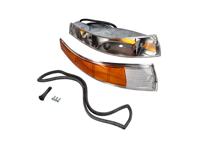
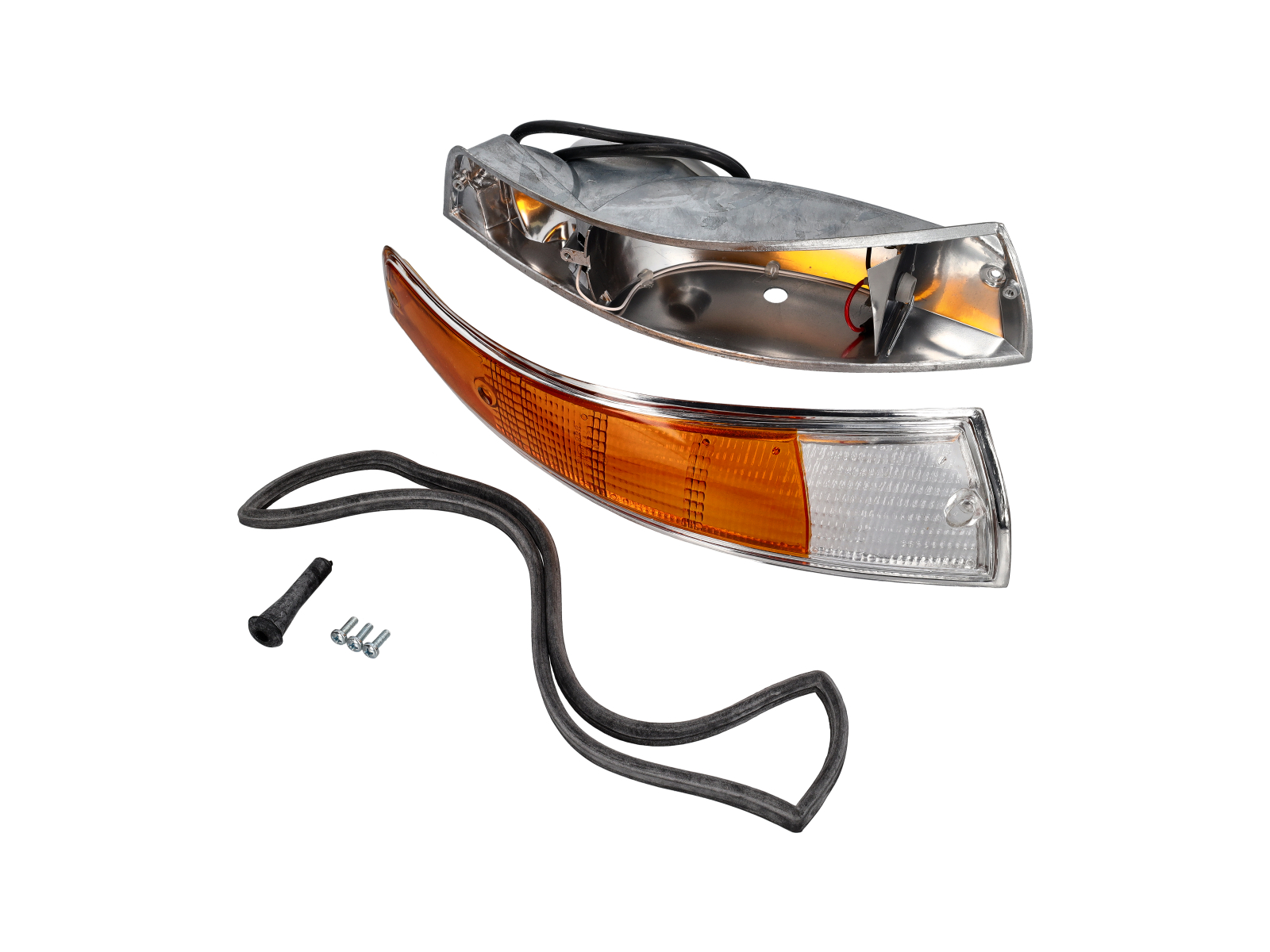
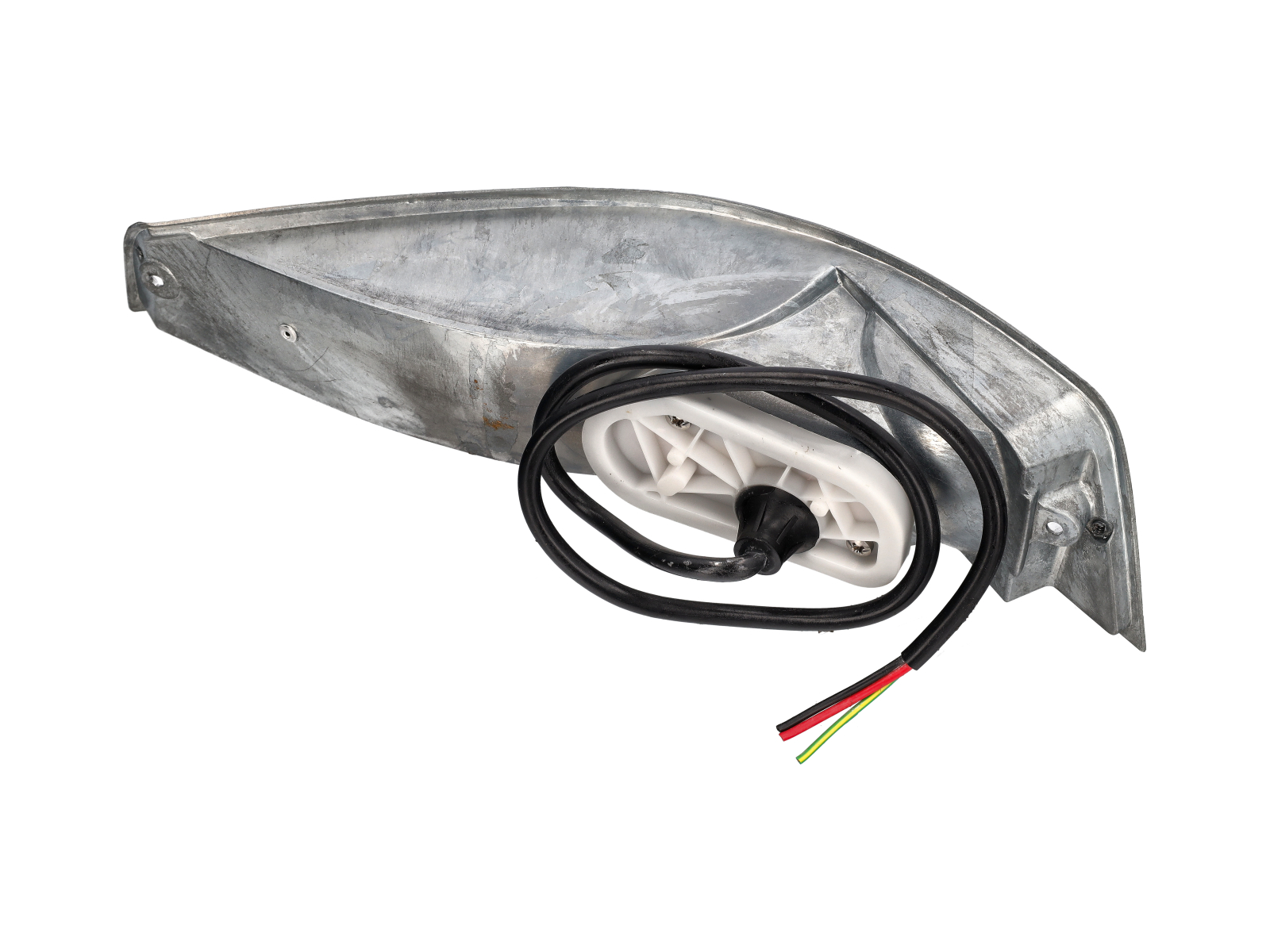
Front Indicator Housing Kit – Metal Housing Including Lens & Gasket
Refresh the appearance and reliability of your classic
Porsche with this OE Match Front Indicator Housing Kit, complete with a
precision-manufactured metal housing, indicator lens and sealing gasket for
Porsche 911 models produced between 1968 and 1973.
Fits:
- Porsche 911 1965-1968 2.0L / 912 SWB (F)
- Porsche 911 1968-1973 2.2L / 2.4L / 2.7L RS LWB (F)
This complete assembly provides everything required to restore worn, corroded or damaged front indicator units. Manufactured to OE specifications, each component delivers factory-style fitment, helping preserve the authentic appearance of your classic 911 while ensuring dependable lighting performance.
Whether you're carrying out a concours-quality restoration, repairing accident damage or replacing weathered original components, this complete kit offers a convenient, high-quality solution.
Complete Front Indicator Assembly
Unlike purchasing individual components separately, this kit
includes:
OE
Match metal front indicator housing
Indicator
lens
Rubber
sealing gasket
The complete assembly simplifies installation while ensuring all key components are renewed at the same time, reducing the likelihood of water ingress or mismatched ageing between old and new parts.
Manufactured to OE Specifications
Each component has been produced to match the dimensions and appearance of the original Porsche indicator assembly.
The housing features:
- OE-style pressed metal construction
- Factory-style mounting points
- Correct lens fitment
- Accurate sealing surfaces
- Direct replacement installation
- Excellent panel alignment
The supplied lens provides clear, bright illumination while maintaining the original styling of early long-wheelbase Porsche 911 models.
Restore the Original Appearance
Front indicators are among the most noticeable features on every classic Porsche 911.
Years of exposure to:
- Road debris
- Stone chips
- UV exposure
- Moisture
- Corrosion
- Previous repairs
can leave the original housings dented, rusty or poorly aligned.
Replacing the complete assembly restores the clean factory appearance while improving lighting performance and weather sealing.
Why Replace the Complete Assembly?
Replacing only the lens often leaves aged housings and hardened seals in place.
A complete housing kit provides:
- Fresh metal housing
- New lens
- New sealing gasket
- Improved water resistance
- Factory-style appearance
- Simplified installation
- Long-term reliability
It also avoids reusing corroded hardware that may compromise fit or allow moisture to enter the lighting unit.
Symptoms of a Worn Front Indicator Assembly
Replacement is recommended if you notice:
- Corroded metal housing
- Damaged mounting points
- Cracked or faded indicator lens
- Water inside the indicator
- Condensation behind the lens
- Hardened or split rubber gasket
- Poor panel fit
- Loose indicator assembly
- Reduced indicator brightness
- Rust around the housing
Renewing the complete assembly restores both appearance and functionality.
Benefits
Installing this OE Match indicator housing kit helps to:
- Restore the factory appearance
- Improve front-end aesthetics
- Replace rusty or damaged housings
- Eliminate cracked or faded lenses
- Improve weather sealing
- Reduce moisture inside the lamp
- Improve indicator visibility
- Simplify restoration projects
- Preserve vehicle originality
- Deliver reliable long-term performance
Installation Recommendations
Professional installation is recommended.
During installation, inspect:
- Indicator bulb holder
- Bulb contacts
- Wiring connectors
- Earth connections
- Mounting hardware
- Front wing mounting surface
- Surrounding paintwork
- Rubber seals
- Electrical terminals
Clean all mounting surfaces before installation to ensure the gasket seals correctly.
If corrosion is present around the mounting area, repair and protect the panel before fitting the new housing.
Always test the indicator operation before final assembly.
Related reference numbers
Related, superseded, cross reference or alternative numbers for comparison.
90163140
The product you are viewing cross references to these numbers
- Porsche 996 TURBO 2000-05
- Porsche 996 GT2 2001-05
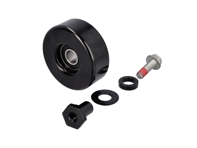
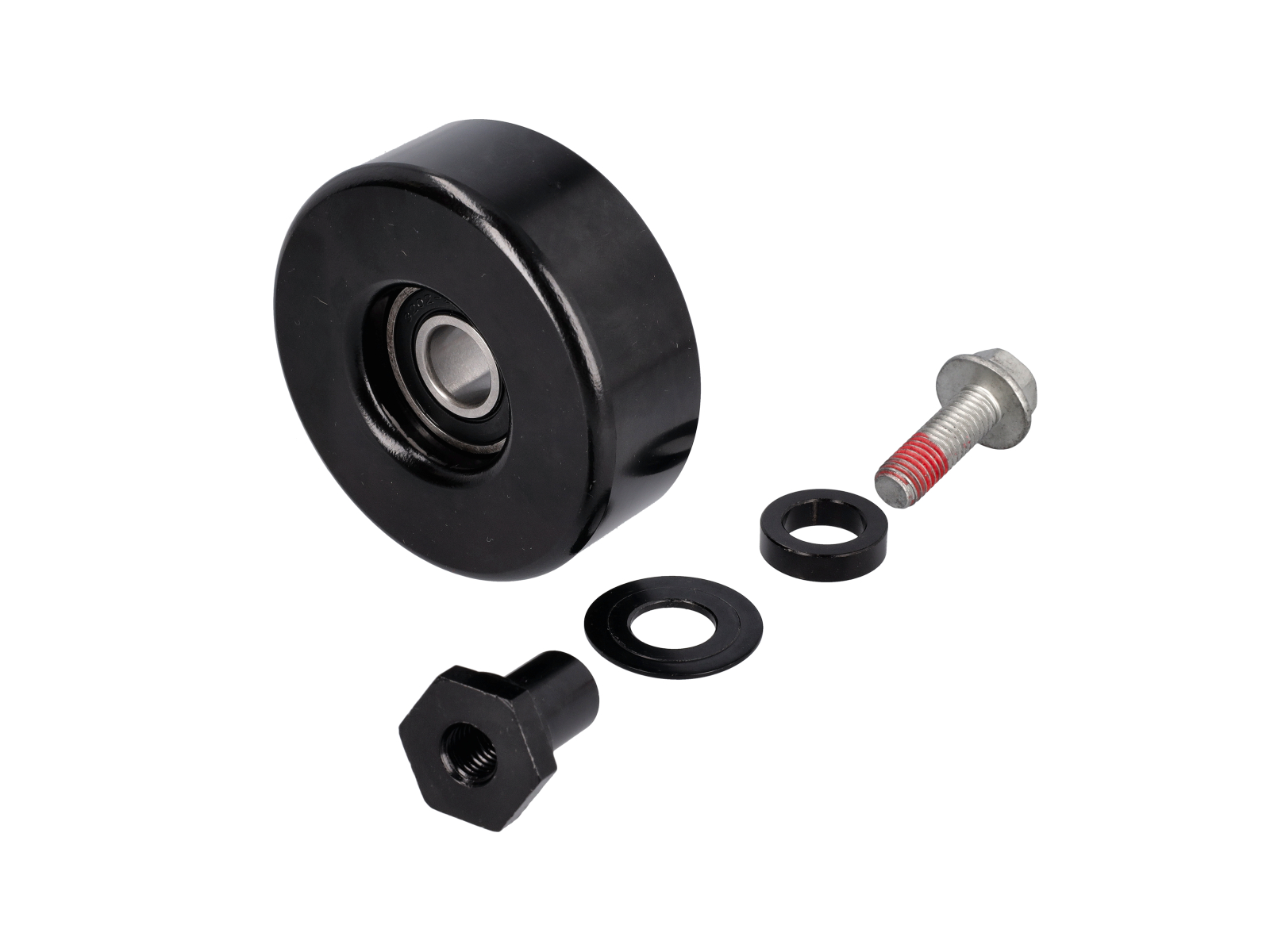
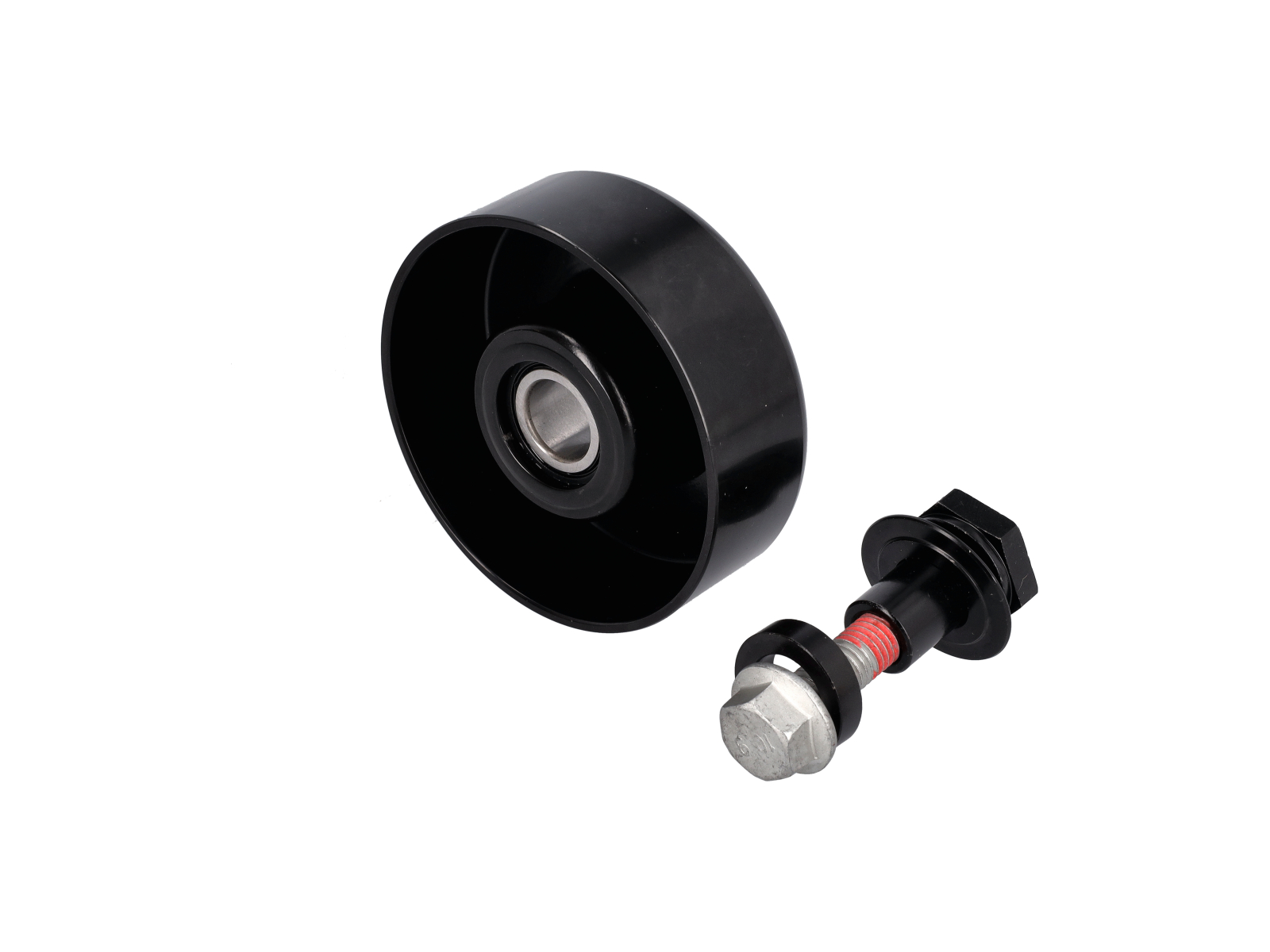
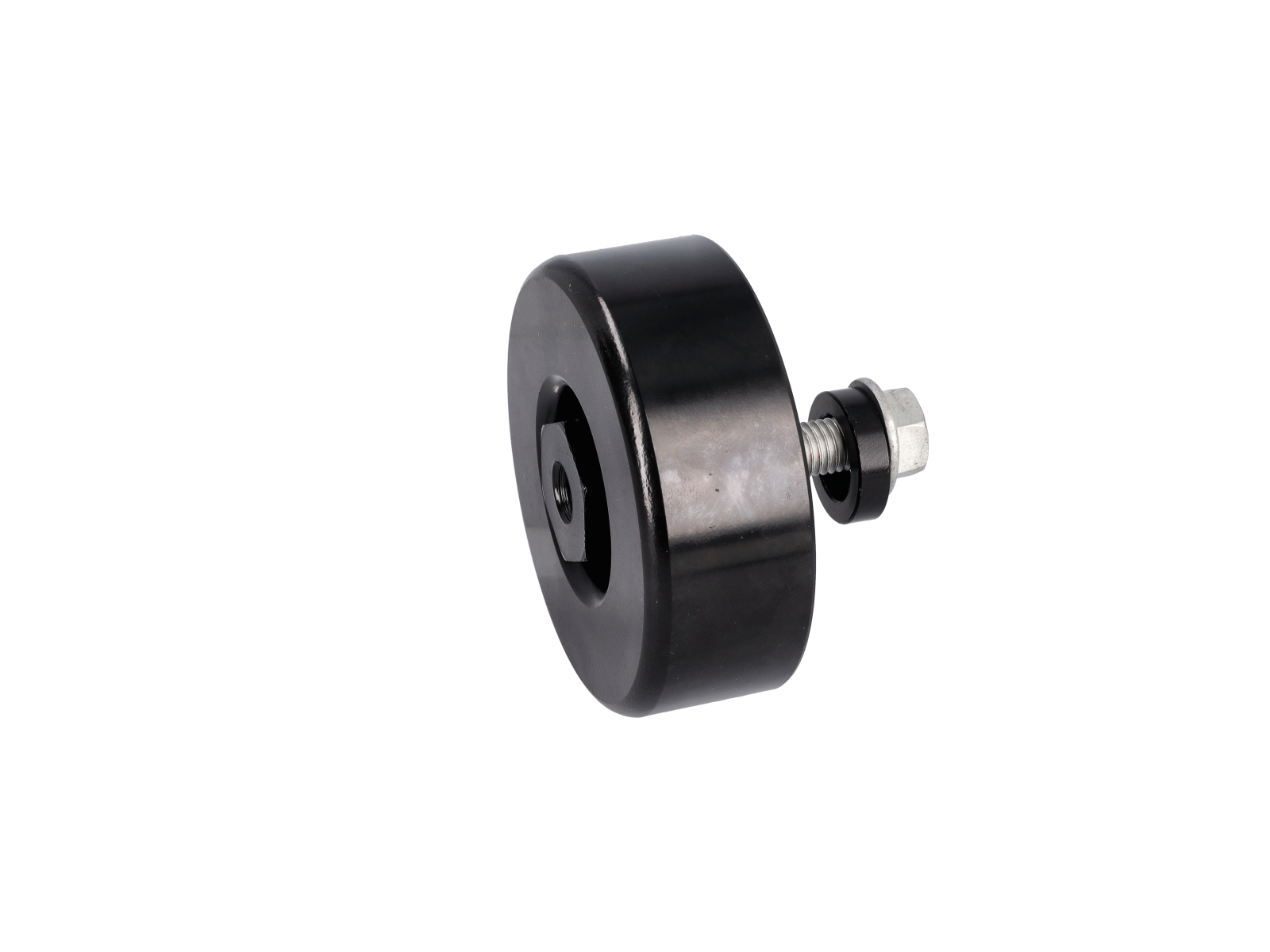
Accessory Drive Belt Pulley used in aux/serpentine belt drive system. This pulley guides and stabilizes the belt path to maintain proper belt tension control and smooth accessory operation. Over time, pulley bearings can wear from heat and mileage, causing squealing/whining, belt vibration, or uneven belt tracking. Replacing a worn pulley helps restore quiet operation and reduces the risk of belt failure that can leave you stranded. This OE Match pulley is built to match original fit and function for a direct install solution ideal for preventative maintenance or resolving belt noise and bearing wear.
Fits:
Porsche 996 Turbo / GT2
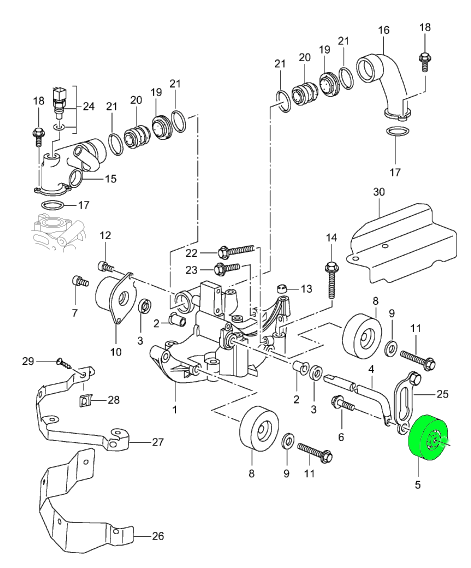
Diagram ref no 5
Key features:
- OE Match quality (fit/function equivalent to OE)
- Smooth, stable belt guidance to reduce belt slip and vibration
- Helps eliminate squeal/whine caused by worn pulley bearings
- Direct-fit replacement for straightforward installation
- Often referenced as idler pulley / tensioner pulley / tensioning roller
Related reference numbers
Related, superseded, cross reference or alternative numbers for comparison.
99611501672
The product you are viewing cross references to these numbers
- Porsche 356C 1963-65
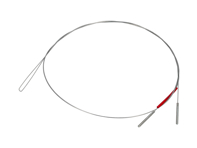
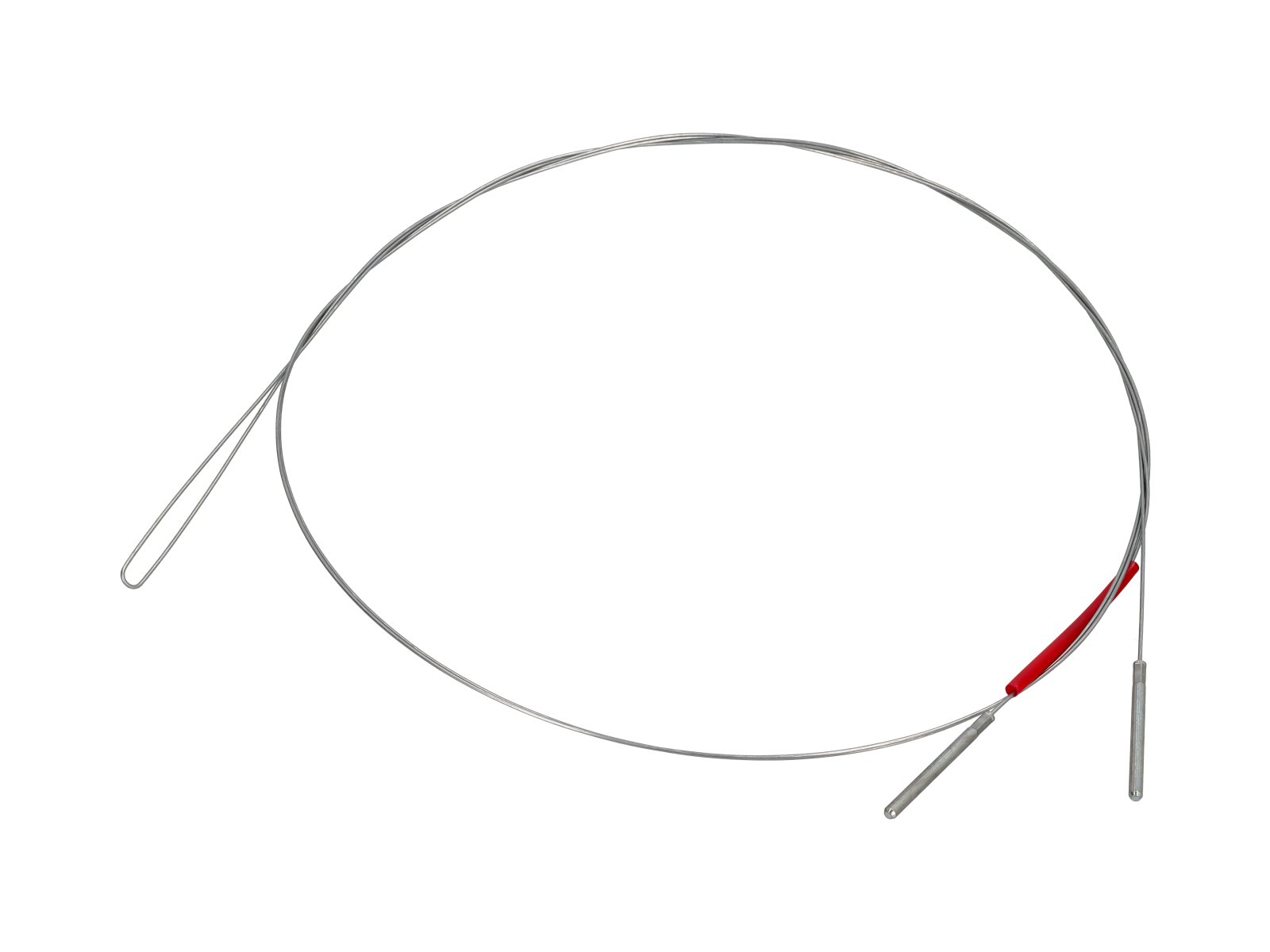
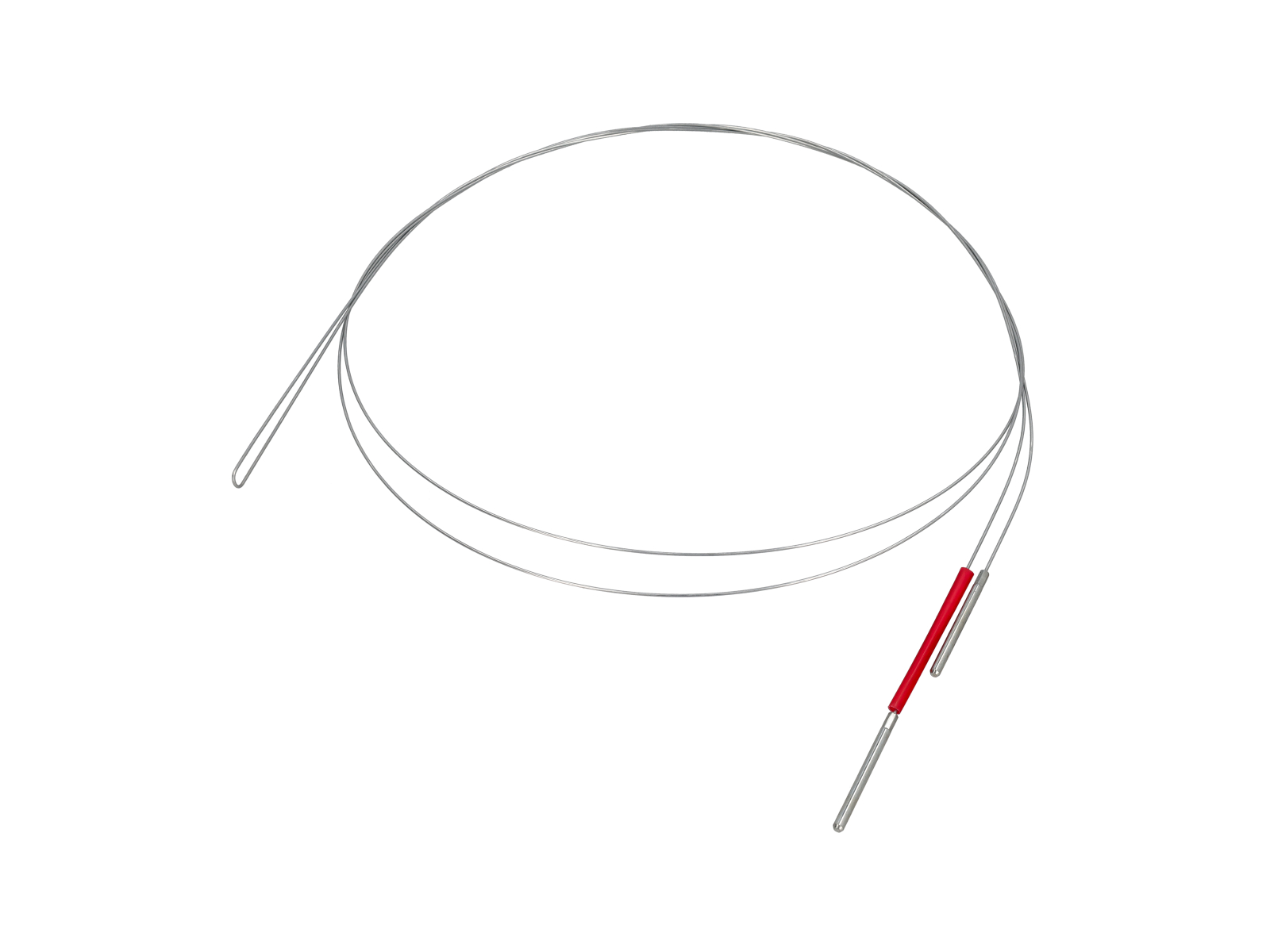
Heater Cable - New Version Heating
Restore smooth and reliable cabin heater operation with this
OE Match heater cable. This heater cable
is manufactured to OE specifications and serves as a direct replacement for the
original component. It transfers movement from the dashboard heater control to
the heater mechanism, allowing precise adjustment of the heating system.
Fits:
- Porsche 356C 1963-65
Over time, heater cables can become stretched, corroded or seize through age and lack of use, making the heater difficult to operate or preventing the flaps from opening and closing correctly. Replacing the cable restores smooth mechanical operation while maintaining the original factory feel of your Porsche 356 C.
Ideal for routine maintenance, concours restorations and complete heating system rebuilds, this OE Match replacement provides dependable performance and factory-style fitment.
What Does the Heater Cable Do?
The heater cable forms part of the Porsche 356 C's mechanical heating control system.
When the heater control is operated inside the vehicle, the cable transfers that movement to the heater valve or flap mechanism, regulating the flow of warm air into the cabin.
A correctly functioning heater cable ensures:
- Smooth operation of the heater control
- Accurate heater flap movement
- Reliable cabin temperature adjustment
- Correct travel of the heater mechanism
- Consistent operation of the factory heating system
Why Replace the Heater Cable?
After many years of service, the original heater cable may suffer from corrosion, internal wear or physical damage.
Common causes of failure include:
- Cable stretching
- Frayed inner cable Internal corrosion
- Seized movement
- Broken cable ends
- Excessive resistance
- Damaged outer casing
- Incorrect adjustment following previous repairs
Replacing the cable restores positive heater control and helps prevent unnecessary strain on the heater mechanism.
Symptoms of a Worn Heater Cable
You may need to replace the heater cable if you notice:
- Heater controls becoming stiff
- Heater controls difficult to move
- Heating remaining permanently on or off
- Limited heater adjustment
- Excessive free play in the control
- Heater flaps failing to operate fully
- Uneven cabin heating
- Frayed or damaged cable
- Broken cable ends
If these symptoms are present, it is also advisable to inspect the heater valves, linkage and pivot mechanisms for wear or seizure.
Benefits
Installing this OE Match heater cable helps to:
- Restore smooth heater control movement
- Improve cabin heating adjustment
- Eliminate stiff or binding controls
- Ensure correct heater flap operation
- Maintain factory-style functionality
- Improve driving comfort during colder weather
- Protect associated heater linkage components
- Preserve the originality of your Porsche 356 C
- Support a high-quality restoration
Installation Recommendations
Professional installation is recommended.
During installation, inspect:
- Heater control lever
- Heater valve assemblies
- Heater flap linkages
- Pivot points
- Cable guides
- Mounting brackets
- Retaining clips
- Heater box mechanisms
Ensure all moving components operate freely before fitting the new cable. Lubricating pivots and checking cable adjustment during installation will help ensure smooth operation and maximise service life.
After installation, confirm the heater mechanism opens and closes fully throughout the complete range of control movement.
Related reference numbers
Related, superseded, cross reference or alternative numbers for comparison.
64442407101
The product you are viewing cross references to these numbers

- Porsche 914 (1970-1976)
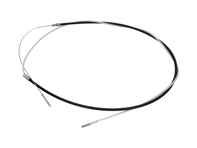
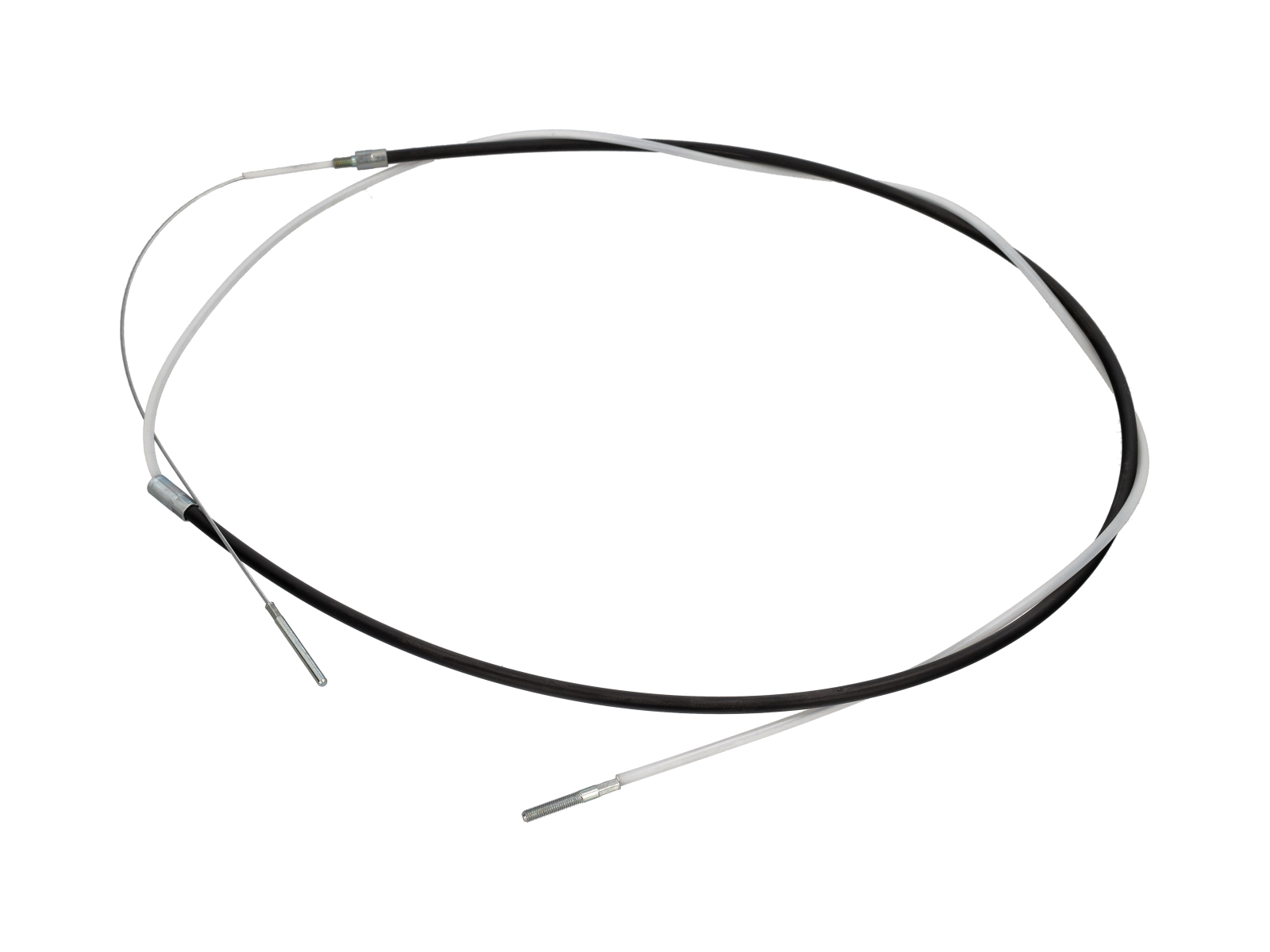
Accelerator Cable
Restore smooth, accurate throttle operation with this OE
Match accelerator cable. The accelerator cable
connects the throttle pedal assembly to the engine’s throttle linkage,
transferring pedal movement into precise throttle opening. A worn, stretched,
frayed or binding cable can cause delayed throttle response, an inconsistent
pedal feel or difficulty achieving full throttle.
- Porsche 914-4 (1970-1976)
Diagram ref no 7
Manufactured to OE specifications, this replacement cable
provides the correct length, fit and operating movement for the Porsche 914/4.
It is designed as a direct replacement for the original component, making it
suitable for routine maintenance, fault repair and complete vehicle
restoration.
What Does the Accelerator Cable Do?
The accelerator cable forms the mechanical connection between the throttle pedal and the engine’s throttle mechanism.
When the driver presses the accelerator pedal, the inner cable moves through its outer guide and operates the throttle linkage. This controls the amount of air and fuel entering the engine and therefore determines engine speed and vehicle acceleration.
A correctly functioning accelerator cable helps provide:
- Smooth throttle pedal movement
- Immediate response to pedal input
- Progressive throttle opening
- Reliable return to idle
- Correct full-throttle travel
- Consistent engine response
- Accurate control during low-speed driving
Why Replace the Accelerator Cable?
The original cable can deteriorate through age, corrosion, repeated movement, heat exposure and contamination.
Common cable problems include:
- Fraying of the inner cable
- Stretching
- Corrosion
- Binding inside the outer sleeve
- Damaged cable ends
- Kinks or distortion
- Worn attachment points
- Excessive slack
- Incorrect routing
A damaged cable can affect throttle control and may eventually snap, leaving the vehicle without a functioning accelerator.
Replacing the cable before complete failure helps maintain reliable operation and reduces the risk of an unexpected roadside breakdown.
Symptoms of a Worn or Failing Accelerator Cable
The accelerator cable should be inspected if the vehicle
displays:
- A stiff accelerator pedal
- Uneven or notchy pedal movement
- Delayed throttle response
- Excessive pedal free play
- Difficulty reaching full throttle
- Engine speed remaining above idle
- Throttle failing to return smoothly
- Squeaking or scraping during pedal movement
- Visible fraying or corrosion
- Sudden changes in pedal resistance
These symptoms can also be caused by worn pedal assembly components, a sticking throttle linkage, incorrect cable routing or return spring problems. The complete system should be inspected during diagnosis.
Benefits
Installing this OE Match accelerator cable can help to:
- Restore accurate throttle response
- Improve accelerator pedal movement
- Reduce stiffness and binding
- Correct excessive pedal free play
- Restore full-throttle operation
- Improve low-speed throttle control
- Support reliable return to idle
- Reduce the risk of cable failure
- Preserve the original mechanical throttle system
- Support a high-quality Porsche 914 restoration
Installation Recommendations
Professional installation is recommended.
During installation, inspect the complete throttle control
system, including:
- Accelerator pedal assembly
- Pedal pivots and bushes
- Cable guide tube
- Throttle linkage
- Return springs
- Cable attachment points
- Retaining clips and hardware
- Carburettor or fuel-injection throttle mechanism
- Cable routing
- Bulkhead and chassis guide points
The cable should follow the original factory routing and must not be kinked, crushed or installed with sharp bends.
The throttle linkage should move freely before the new cable is connected. A seized linkage or damaged guide tube can place excessive strain on the cable and lead to premature failure.
After installation, check that:
- The throttle opens progressively
- Full throttle is achieved
- The mechanism returns fully to idle
- The cable has the correct free play
- The cable does not rub against moving or hot components
Related reference numbers
Related, superseded, cross reference or alternative numbers for comparison.
91442306704
The product you are viewing cross references to these numbers
- Porsche 356B 1959-63
- Porsche 356C 1963-65
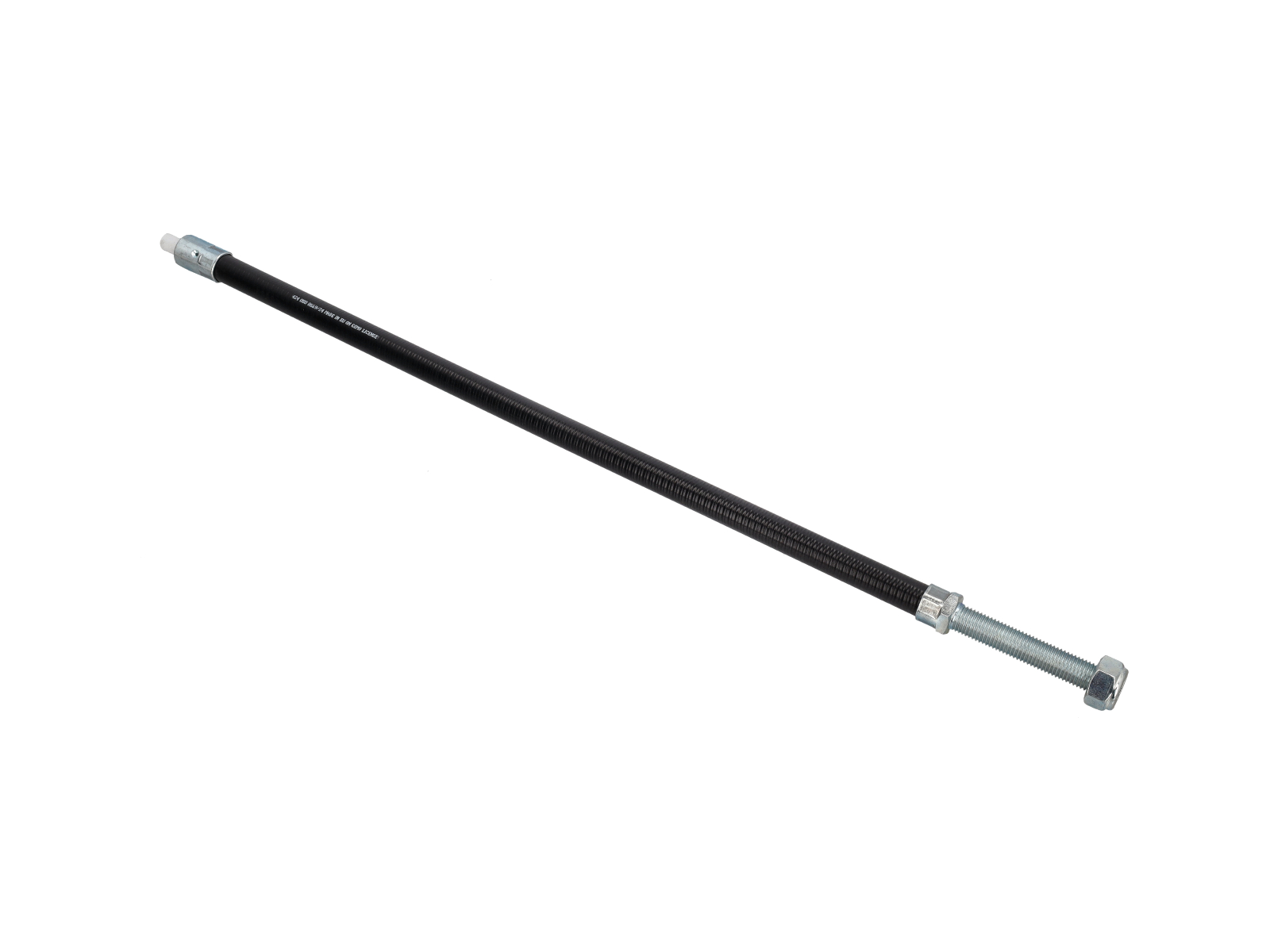
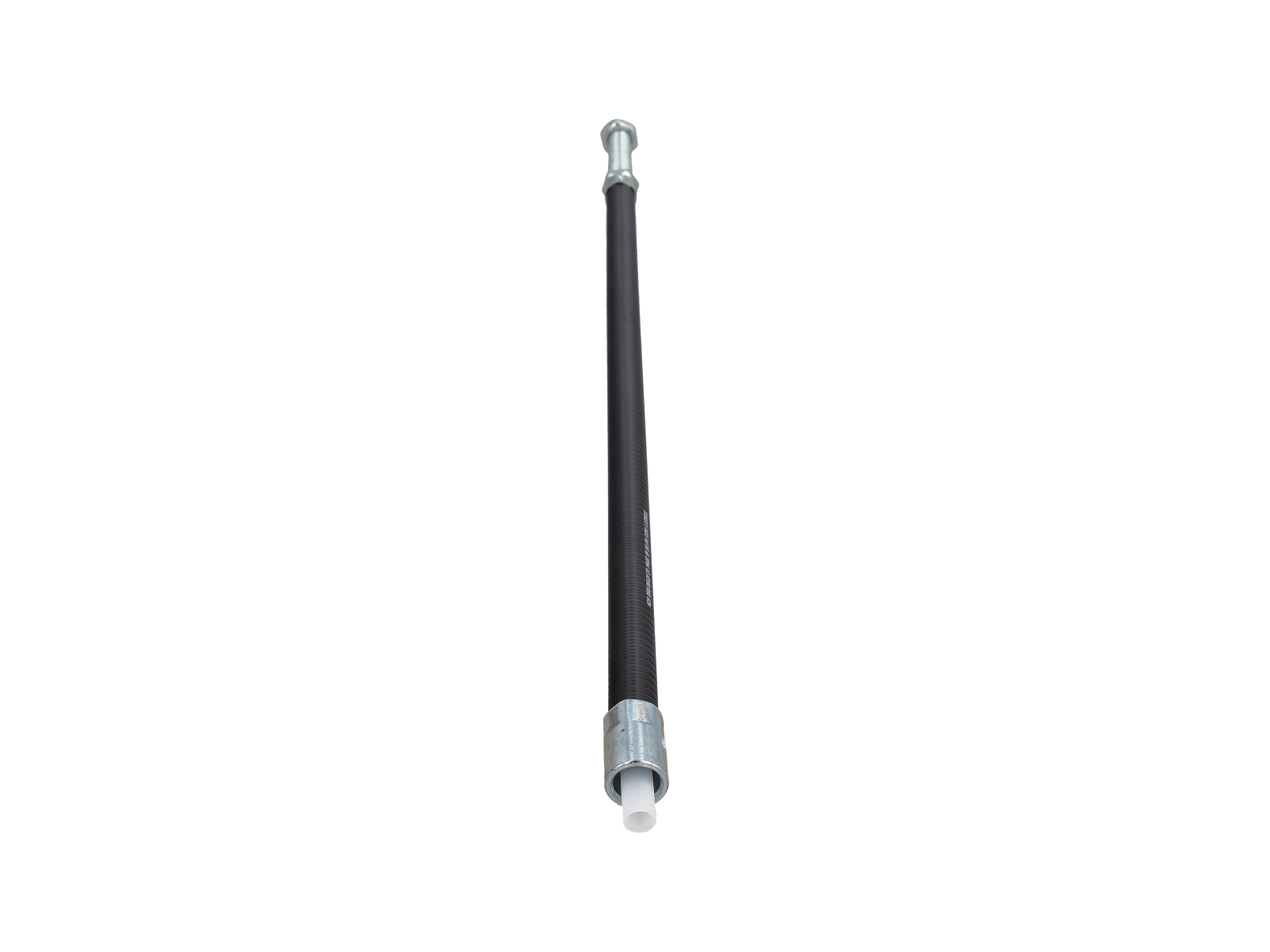
Clutch Cable Outer Sleeve
Restore smooth and dependable clutch operation with this OE
Match clutch cable outer sleeve. This outer sleeve
supports and guides the clutch cable as it travels between the pedal assembly
and clutch operating mechanism. It provides the stable outer casing required
for the inner cable to transmit pedal movement accurately and consistently.
Fits:
- Porsche 356B 1959-63
- Porsche 356C 1963-65
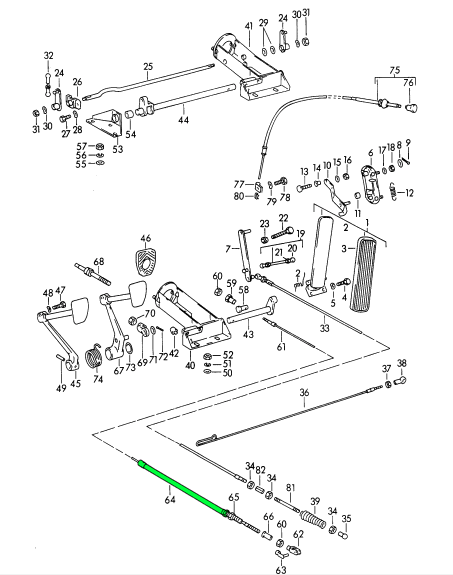
Diagram ref no 64
An aged, damaged or incorrectly routed sleeve can increase friction, affect pedal feel and prevent the clutch cable from operating through its intended range. Replacing the worn component helps restore smooth cable movement and reliable clutch control while maintaining the factory-style mechanical operation of the Porsche 356.
Manufactured to OE specifications, this replacement outer sleeve is designed for correct fitment and dependable service in classic Porsche maintenance and restoration applications.
What Does the Clutch Cable Outer Sleeve Do?
The clutch cable outer sleeve acts as the fixed guide through which the inner clutch cable operates.
When the clutch pedal is pressed, the inner cable moves within the sleeve and transfers that movement to the clutch release mechanism. The sleeve must remain securely located and maintain the correct shape and routing so that the cable can move freely without excessive flexing, rubbing or binding.
A correctly functioning outer sleeve helps provide:
- Smooth clutch pedal movement
- Consistent cable travel
- Accurate transfer of pedal input
- Reduced friction around the inner cable
- Correct clutch engagement and release
- Stable cable routing Improved reliability of the mechanical clutch system
Why Replace the Clutch Cable Outer Sleeve?
The original sleeve can deteriorate after many years of use and exposure to moisture, road debris, heat and repeated movement.
Common causes of failure include:
- Cracking or splitting of the outer casing
- Internal wear
- Corrosion
- Distortion or crushing
- Incorrect routing
- Damaged mounting points
- Contamination inside the sleeve
- Excessive friction around the clutch cable
A damaged sleeve can place additional strain on the clutch cable and pedal assembly, potentially leading to premature cable wear or inconsistent clutch operation.
Symptoms of a Worn or Damaged Outer Sleeve
The clutch cable outer sleeve should be inspected if the
vehicle displays:
- A stiff clutch pedal
- Uneven or notchy pedal movement
- Increased pedal effort
- Inconsistent clutch engagement
- Slow pedal return
- Squeaking or scraping during pedal movement
- Visible cracking or damage to the sleeve
- Excessive clutch cable wear
- Difficulty adjusting the clutch correctly
- Cable movement or flexing where the sleeve should remain fixed
These symptoms may also be caused by a worn clutch cable, pedal assembly, release mechanism or incorrectly adjusted clutch system. All related components should be checked during diagnosis.
Benefits
Installing this OE Match clutch cable outer sleeve can help
to:
- Restore smoother clutch pedal operation
- Improve consistency of clutch cable movement
- Reduce resistance within the cable system
- Protect the inner clutch cable
- Maintain correct clutch cable alignment
- Reduce the risk of premature cable wear Improve clutch adjustment accuracy
- Preserve the original mechanical clutch system
- Support a high-quality Porsche 356 restoration
- Avoid temporary or improvised cable repairs
Installation Recommendations
Professional installation is recommended.
During installation, inspect the complete clutch control
system, including:
- Inner clutch cable
- Pedal assembly
- Cable attachment points
- Clevis pins and retaining clips
- Cable guides
- Clutch release lever
- Adjustment hardware
- Cable routing
- Chassis mounting points
The outer sleeve should be installed following the original routing and secured correctly at each mounting point. Sharp bends, crushing or incorrect positioning may increase friction and affect clutch operation.
Where the clutch cable shows signs of corrosion, fraying, stretching or excessive wear, replacing the cable at the same time is recommended.
Once fitted, the clutch cable should be adjusted according to the correct Porsche workshop procedure to achieve the required pedal free play and clutch release movement.
Related reference numbers
Related, superseded, cross reference or alternative numbers for comparison.
90142342100
The product you are viewing cross references to these numbers
- Porsche 356A 1955-59
- Porsche 356B 1959-63
- Porsche 356C 1963-65
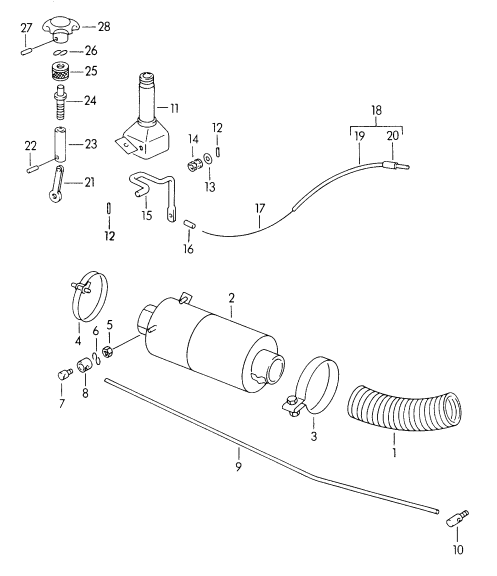
Heater Cable
Restore correct operation of the cabin heating
system in your classic Porsche with this OE Match heater cable. Designed as a
direct replacement for the original heater control cable, helping to transfer
movement from the interior heater control to the heater mechanism. A worn,
stretched, seized or damaged cable can make the heater difficult to operate,
prevent the control from moving through its full range or leave the heating
system stuck in one position.
Fits:
- Porsche 356A 1955-59
- Porsche 356B 1959-63
- Porsche 356C 1963-65
Diagram ref no 17
Manufactured to OE specifications, this replacement cable provides the correct fit, length and operating movement required for a dependable repair while preserving the factory-style function of the original heating controls.
What Does the Heater Cable Do?
The heater cable forms part of the mechanical control system used to regulate the flow of heated air into the cabin.
When the heater control is operated, the cable transfers that movement to the heater mechanism, allowing the driver to open, close or adjust the heating system. The cable must move freely and maintain the correct tension for the control system to work properly.
A correctly functioning cable helps provide:
- Smooth movement of the heater control
- Reliable opening and closing of the heater mechanism
- Accurate adjustment of cabin heat
- Proper control travel
- Consistent operation of the original heating system
Why Replace the Heater Cable?
After decades of use, the original cable can deteriorate through corrosion, repeated movement, contamination or internal wear.
Common problems include:
- Cable stretching
- Frayed inner wire
- Corroded cable sections
- Seized movement
- Bent or damaged ends
- Excessive resistance at the heater control
- Incomplete movement of the heater mechanism
Replacing the damaged cable restores the mechanical connection between the cabin control and the heater system.
Symptoms of a Worn or Failed Heater Cable
A replacement may be required if you
experience:
- A stiff or difficult heater control
- The control moving without operating the heater
- Limited heater control travel
- Heating remaining permanently on
- Heating failing to switch on
- Uneven heater operation
- Excessive play in the control
- A snapped or visibly frayed cable
- The control lever failing to remain in the selected position
The heater valves and related mechanisms should also be inspected, as seized components can place excessive strain on the cable.
Benefits
Installing this OE Match heater cable can help
to:
- Restore correct heater control movement
- Improve cabin heating adjustment
- Replace a stretched or seized original cable
- Reduce stiffness at the control
- Return the heating system to factory-style operation
- Improve reliability during cold-weather driving
- Maintain the originality of the vehicle
- Avoid improvised cable repairs
- Support a high-quality Porsche 356 restoration
Installation Recommendations
Professional installation is recommended, particularly where access to the original cable routing and heater mechanism is restricted.
Before fitting, inspect:
- Heater control lever or knob
- Cable attachment points
- Cable guides and retaining clips
- Heater valves and operating levers
- Cable routing
- Adjacent heating system components
The heater mechanism should move freely before the new cable is connected. Installing a replacement cable onto a seized or excessively stiff mechanism may cause premature wear or failure.
Route the cable in the original position and avoid sharp bends that could increase friction or restrict movement.
Related reference numbers
Related, superseded, cross reference or alternative numbers for comparison.
69542407100
The product you are viewing cross references to these numbers
- Porsche 356 1950-55
- Porsche 356A 1955-59
- Porsche 356B 1959-63
- Porsche 356C 1963-65
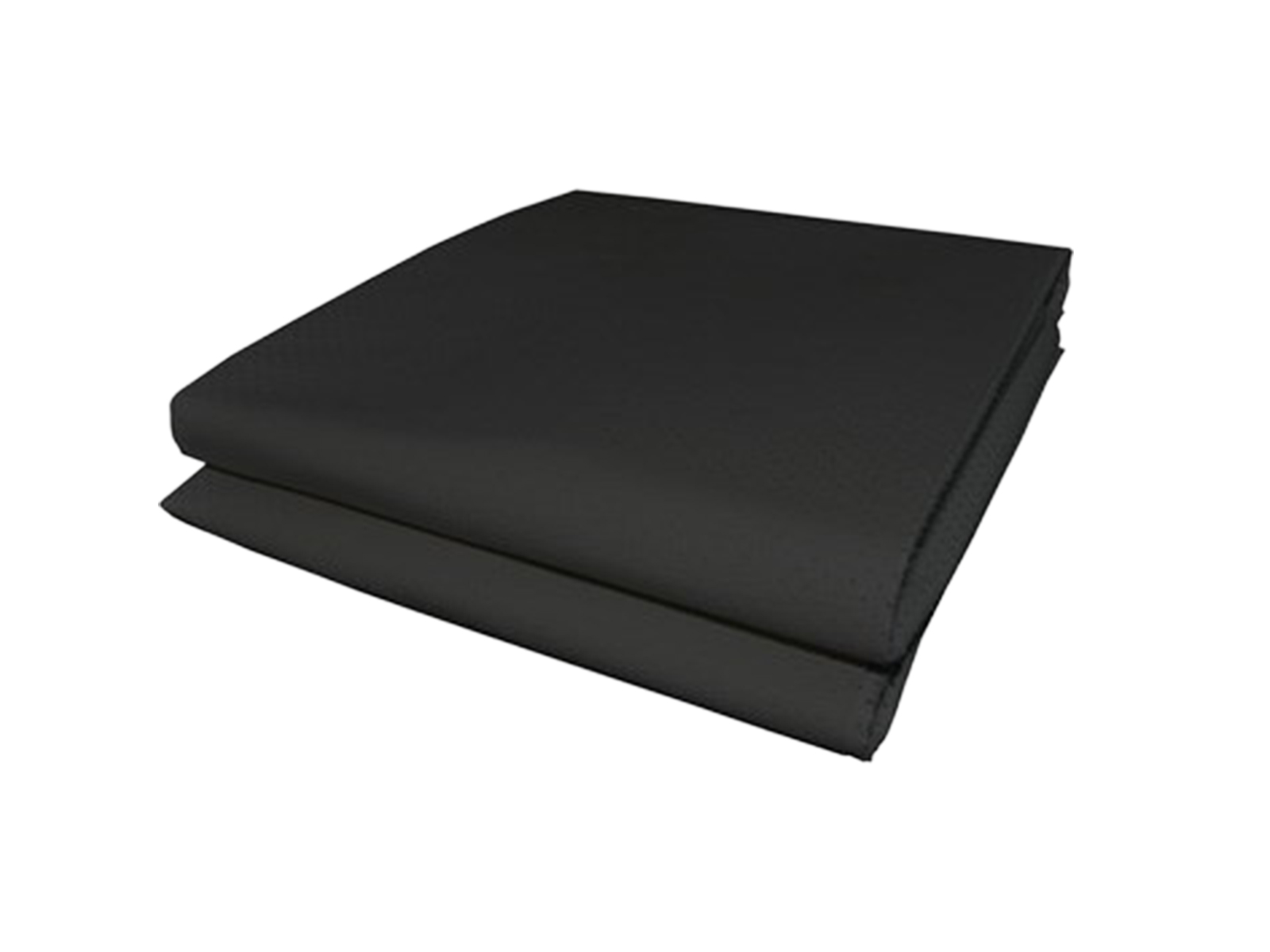
Refresh the interior of your Porsche with this OE Match Black Headliner Kit (Without Sunroof), manufactured as a direct replacement. Produced to OE-style specifications, this complete headliner kit is designed for models without a factory sunroof, restoring the clean, factory-style appearance of the roof lining while enhancing the overall finish and ambience of the cabin.
Fits:
- Porsche 356 1950-55
- Porsche 356A 1955-59
- Porsche 356B 1959-63
- Porsche 356C 1963-65
Over time, the original headliner can sag, tear, stain, shrink, or deteriorate due to age, heat, moisture, and prolonged exposure to sunlight. A damaged headliner can significantly detract from the appearance of an otherwise well-presented interior and reduce the authenticity of a restoration. Replacing the headliner restores the original fit and finish, making this OE Match kit ideal for routine interior refurbishment, repairs, full restorations, and concours preparation.
What This Product Does:
- Restores the original appearance of the vehicle's roof lining.
- Replaces sagging, torn, stained, or deteriorated headliner material.
- Enhances the overall finish of the interior.
- Designed specifically for vehicles without a factory sunroof.
- Helps return the cabin to a factory-style appearance.
- Ideal for complete interior restorations and refurbishment.
- Provides an OE-style fit and dependable quality.
Symptoms Of Wear Or Failure:
- Sagging or loose headliner material.
- Tears, holes, or worn fabric.
- Staining or discolouration.
- Shrinking or poor fit around apertures.
- Water damage or mould staining.
- Detached or failing adhesive.
- Age-related deterioration of the original material.
- Interior appearance no longer matching restoration standards.
Why Replacement Matters:
- The headliner is one of the most visible interior trim components, contributing significantly to the overall appearance, comfort, and originality of the vehicle. A sagging or damaged headliner can make an otherwise well-maintained Porsche appear tired and unfinished, while deteriorated material will continue to worsen over time.
- Replacing the headliner restores a clean, factory-style interior and provides the finishing touch expected during a high-quality restoration. Manufactured as a direct replacement and produced to OE-style specifications, this OE Match black headliner kit offers the correct fit, dependable quality, and authentic appearance, making it an excellent choice for Porsche maintenance, interior refurbishment, concours preparation, and restoration projects.
Related reference numbers
Related, superseded, cross reference or alternative numbers for comparison.
64455550100BLA
The product you are viewing cross references to these numbers
- Porsche 911 1965-1968 2.0L / 912 SWB (F)
- Porsche 911 1968-1973 2.2L / 2.4L / 2.7L RS LWB (F)
- Porsche 356 1950-55
- Porsche 356A 1955-59
- Porsche 356B 1959-63
- Porsche 356C 1963-65
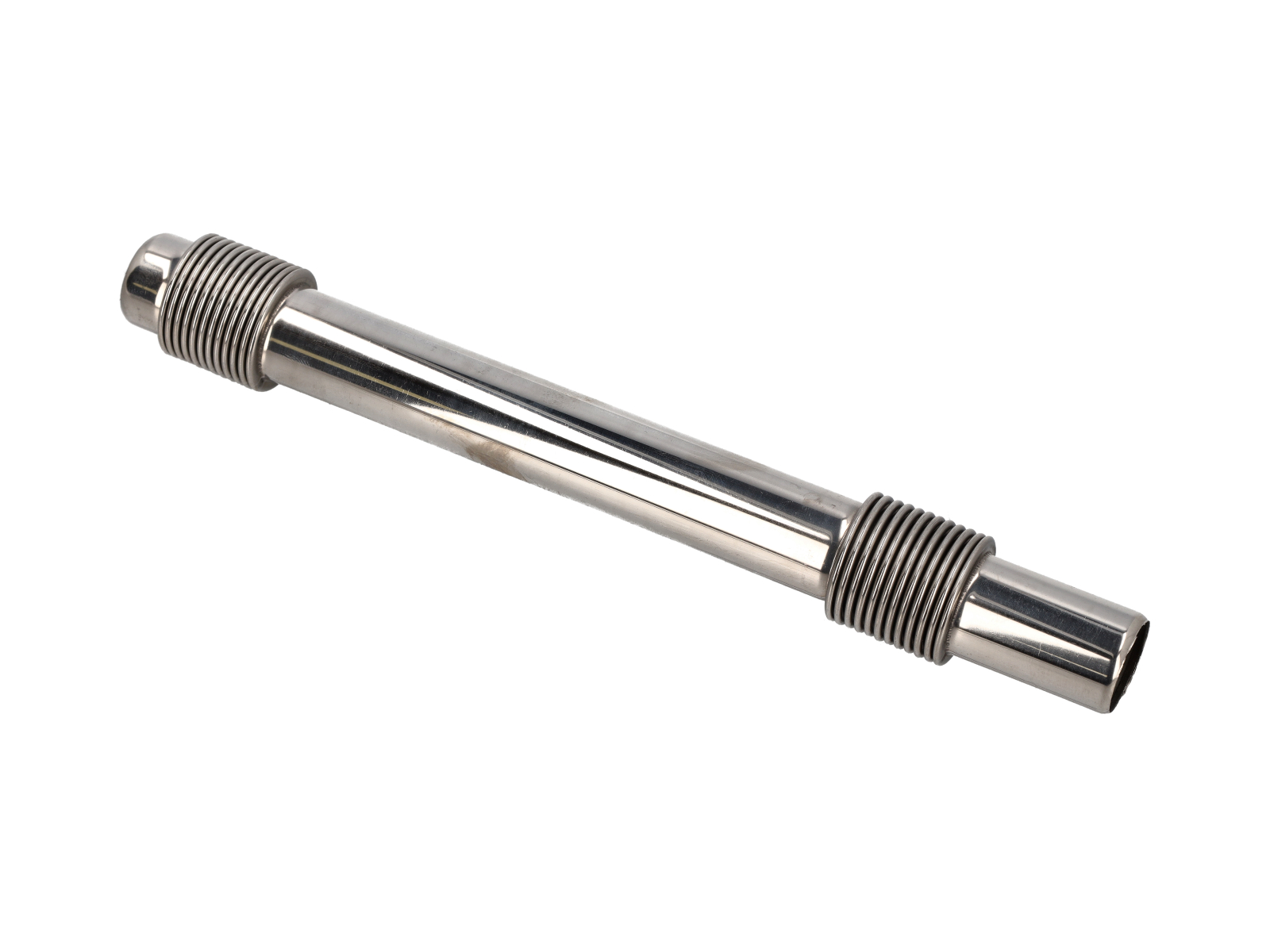
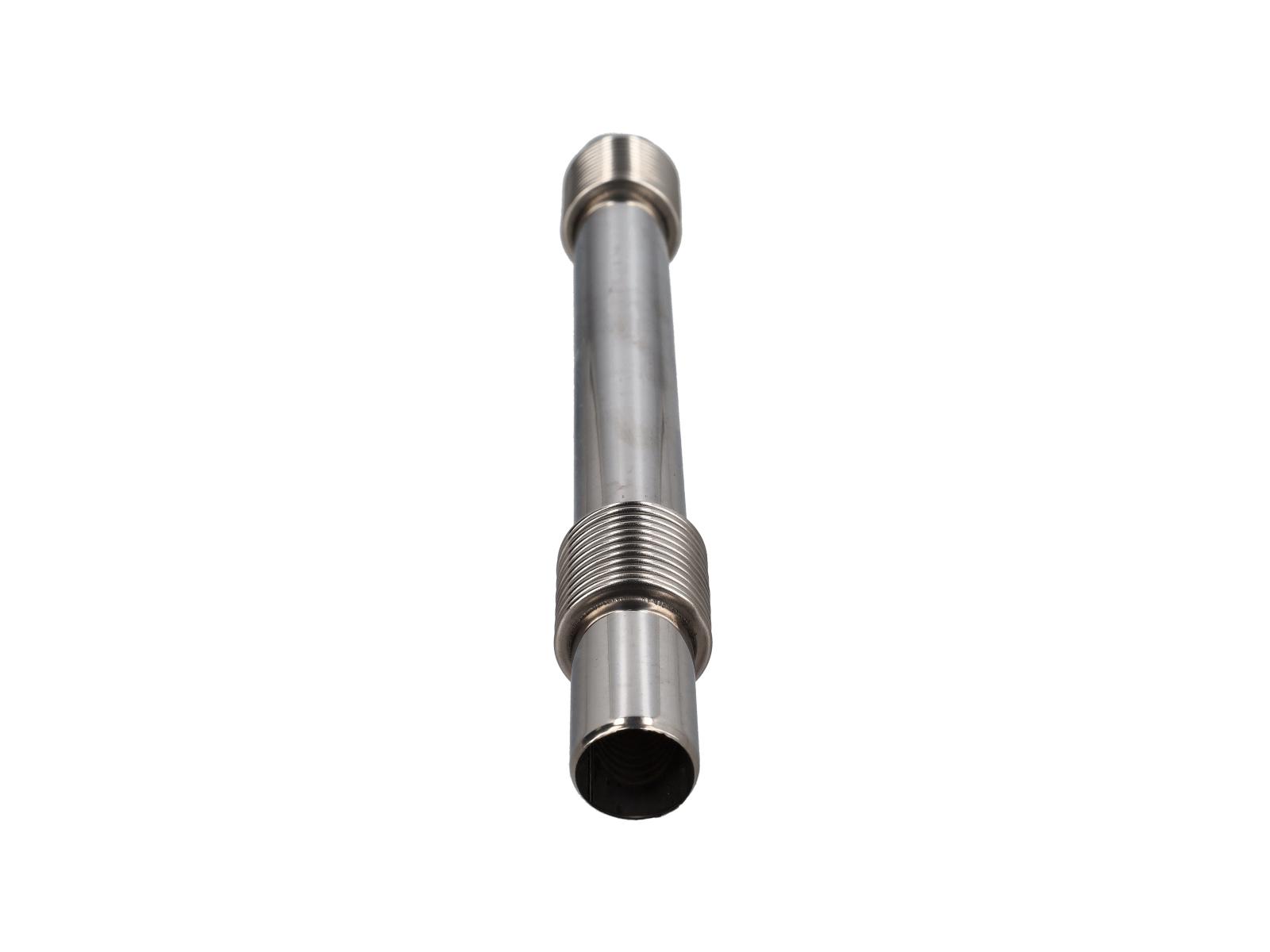
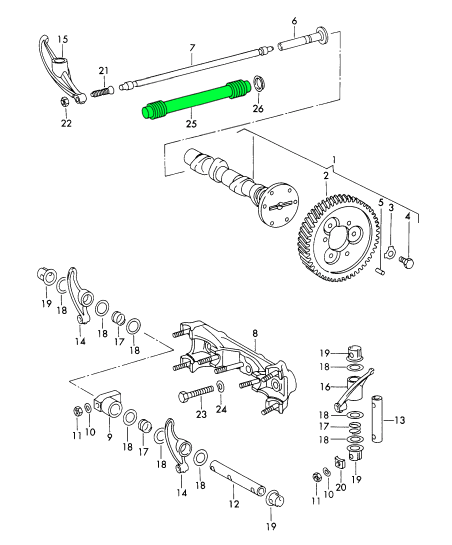
Maintain the integrity of your Porsche's valve train and lubrication system with this OE Match Stainless Steel Push Rod Tube, manufactured as a direct replacement. Produced to OE-style specifications, this stainless steel push rod tube provides a durable housing for the push rods while creating a sealed passage between the engine crankcase and cylinder head, helping to prevent oil leaks and protect vital engine components.
Fits:
- Porsche 911 1965-1968 2.0L / 912 SWB (F)
- Porsche 911 1968-1973 2.2L / 2.4L / 2.7L RS LWB (F)
- Porsche 356 1950-55
- Porsche 356A 1955-59
- Porsche 356B 1959-63
- Porsche 356C 1963-65
Diagram Ref No 25
Unlike original mild steel tubes that can corrode over time, this stainless steel version offers increased resistance to rust and long-term deterioration, making it particularly well suited to rebuilt engines and restoration projects. Exposure to heat cycles, corrosion, vibration, and age can cause original push rod tubes to rust, deform, or leak, resulting in oil loss and contamination. Replacing worn or damaged tubes restores the correct sealing of the valve train and helps ensure reliable engine operation. This OE Match component is ideal for routine maintenance, engine rebuilds, repairs, and Porsche restoration projects.
What This Product Does:
- Houses and protects the engine push rods.
- Provides a sealed passage between the crankcase and cylinder head.
- Helps prevent engine oil leaks.
- Protects the valve train from dirt and contamination.
- Offers improved corrosion resistance compared to standard steel tubes.
- Replaces rusted, damaged, or leaking original push rod tubes.
- Provides an OE-style fit and dependable quality.
Symptoms Of Wear Or Failure:
- Engine oil leaking from the push rod tubes.
- Rust or corrosion on the original tubes.
- Dented or distorted tube bodies.
- Damaged or leaking tube seals.
- Oil contamination around the cylinder barrels.
- Visible deterioration caused by age or heat.
- Oil staining beneath the engine.
- Excessive wear discovered during engine overhaul.
Why Replacement Matters:
- The push rod tube plays a vital role in protecting the push rods while maintaining a sealed oil passage between the engine crankcase and cylinder head. A corroded or leaking tube can result in persistent oil leaks, contamination of the valve train, and unnecessary oil loss, reducing engine cleanliness and reliability.
- Replacing worn push rod tubes with this stainless steel version restores proper sealing while providing improved corrosion resistance for long-term durability. Manufactured as a direct replacement and produced to OE-style specifications, this OE Match stainless steel push rod tube offers the correct fit, dependable quality, and extended service life, making it an excellent choice for Porsche maintenance, engine rebuilds, repairs, and restoration projects.
Related reference numbers
Related, superseded, cross reference or alternative numbers for comparison.
PCG10523101
The product you are viewing cross references to these numbers
- Porsche 356 1950-55
- Porsche 356A 1955-59
- Porsche 356B 1959-63
- Porsche 356C 1963-65
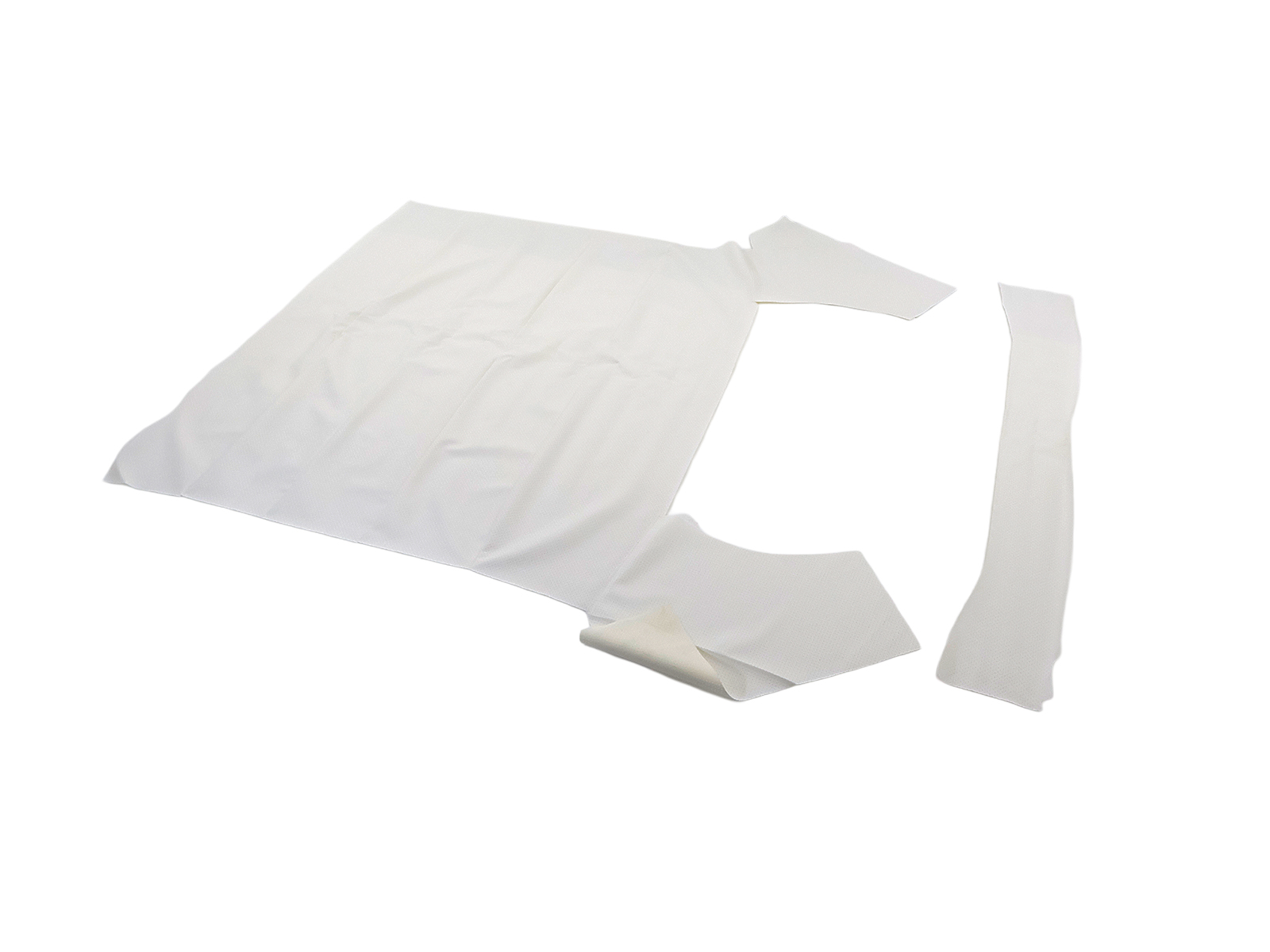
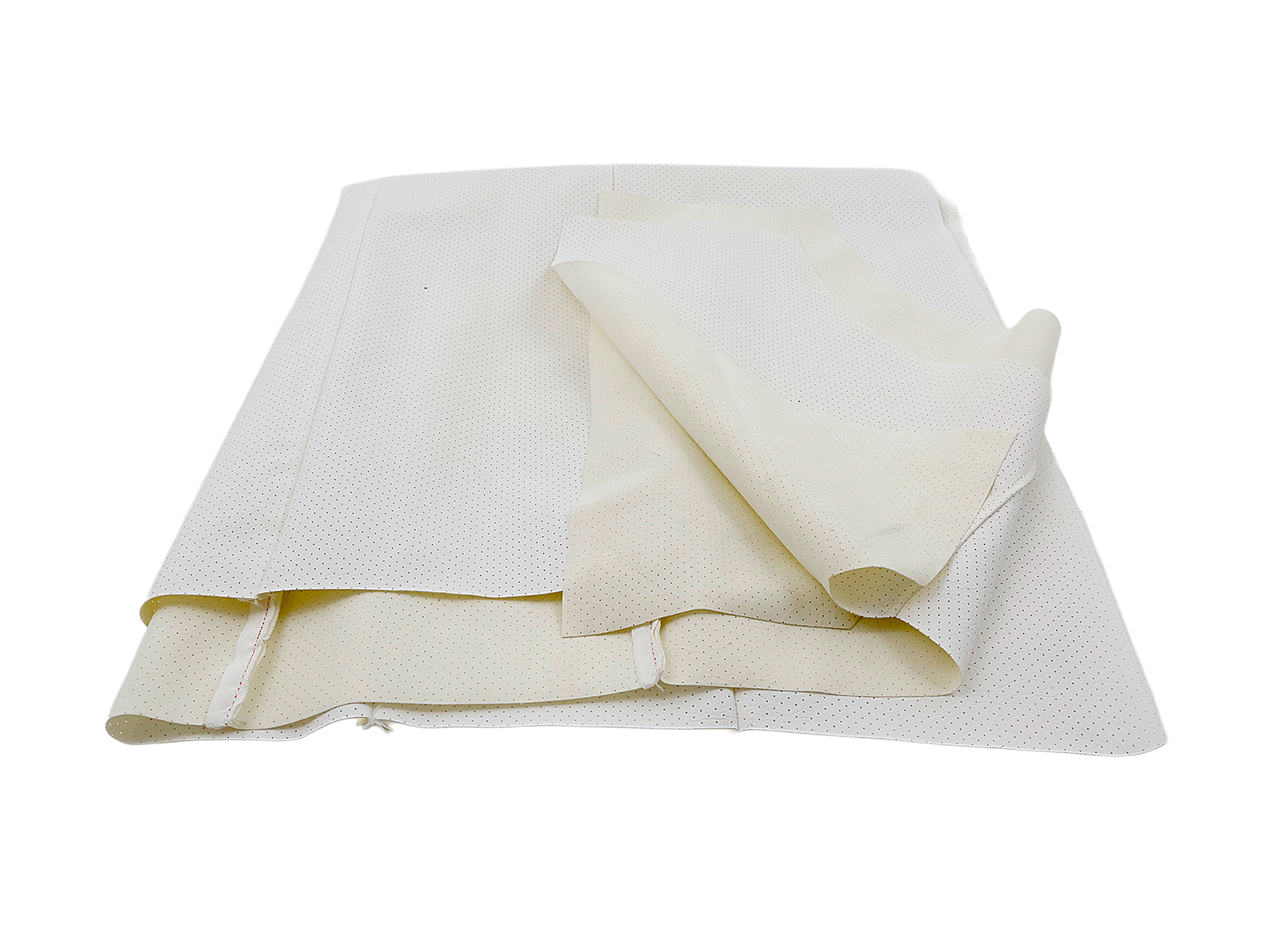
Refresh the interior of your Porsche with this OE Match White Headliner Kit (Without Sunroof), manufactured as a direct replacement. Produced to OE-style specifications, this complete headliner kit is designed for models without a factory sunroof, restoring the clean, factory-correct appearance of the roof lining while enhancing the overall finish of the cabin.
Fits:
- Porsche 356 1950-55
- Porsche 356A 1955-59
- Porsche 356B 1959-63
- Porsche 356C 1963-65
Diagram Ref No 3
Over time, the original headliner can become stained, sag, tear, shrink, or deteriorate due to age, heat, moisture, and prolonged exposure to sunlight. A worn headliner not only detracts from the vehicle's appearance but can also reduce the quality and authenticity of a restoration. Replacing the headliner during an interior refurbishment restores the original look and feel of the cabin. This OE Match kit is ideal for routine interior refurbishment, repairs, full restorations, and concours preparation.
What This Product Does:
- Restores the original appearance of the vehicle's roof lining.
- Replaces sagging, torn, stained, or deteriorated headliner material.
- Enhances the overall finish of the interior.
- Designed specifically for vehicles without a factory sunroof.
- Helps return the cabin to a factory-style appearance.
- Ideal for complete interior restorations and refurbishment.
- Provides an OE-style fit and dependable quality.
Symptoms Of Wear Or Failure:
- Restores the original appearance of the vehicle's roof lining.
- Replaces sagging, torn, stained, or deteriorated headliner material.
- Enhances the overall finish of the interior.
- Designed specifically for vehicles without a factory sunroof.
- Helps return the cabin to a factory-style appearance.
- Ideal for complete interior restorations and refurbishment.
- Provides an OE-style fit and dependable quality.
Why Replacement Matters:
- The headliner is one of the most prominent interior trim components, contributing significantly to the overall appearance, comfort, and originality of the vehicle. A sagging or damaged headliner can make an otherwise well-maintained Porsche appear tired and unfinished, while deteriorated material may continue to worsen with age.
- Replacing the headliner restores a clean, factory-style interior and provides the finishing touch expected during a high-quality restoration. Manufactured as a direct replacement and produced to OE-style specifications, this OE Match white headliner kit offers the correct fit, dependable quality, and authentic appearance, making it an excellent choice for Porsche maintenance, interior refurbishment, concours preparation, and restoration projects.
Related reference numbers
Related, superseded, cross reference or alternative numbers for comparison.
64455550100WHT
The product you are viewing cross references to these numbers
- Porsche 356B 1959-63
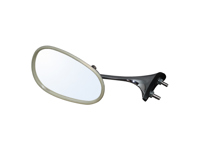
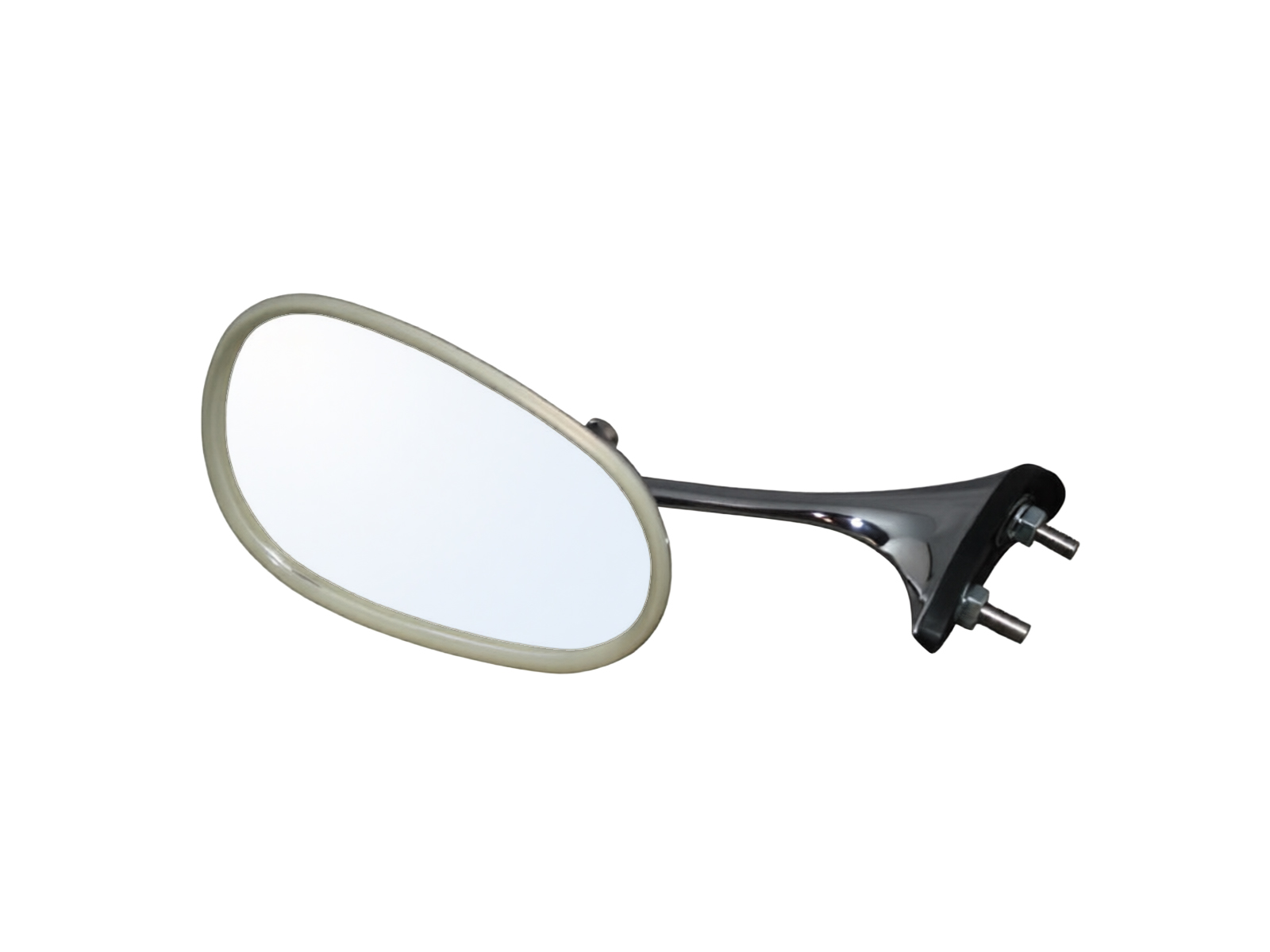
Restore the appearance and functionality of your Porsche with this OE Match PONTO Door Mirror, manufactured as a direct replacement. Produced to OE-style specifications, this mirror replicates the original PONTO-style design fitted to a range of classic Porsche models, providing the correct period appearance while delivering clear rearward visibility for everyday driving and restoration projects.
Fits:
- Porsche 356B 1959-63
Door mirrors are continually exposed to vibration, weather, road debris, and accidental impacts. Over time, the mirror housing can become corroded, the glass damaged, or the adjustment mechanism worn, reducing both visibility and the vehicle's original appearance. Replacing a worn or damaged mirror restores safe rearward vision while maintaining the authentic look of your Porsche. This OE Match component is ideal for routine maintenance, repairs, concours preparation, and Porsche restoration projects.
What This Product Does:
- Provides clear rearward visibility for safer driving.
- Restores the original period-correct appearance.
- Replaces damaged, worn, or corroded door mirrors.
- Supports safe lane changes and manoeuvring.
- Fits as a direct replacement for the original mirror.
- Maintains the authentic exterior styling of the vehicle.
- Provides an OE-style fit and dependable quality.
Symptoms Of Wear Or Failure:
- Cracked, chipped, or missing mirror glass.
- Corroded or damaged mirror housing.
- Loose or unstable mirror assembly.
- Worn or ineffective adjustment mechanism.
- Poor rearward visibility.
- Damage caused by impact or age.
- Excessive vibration while driving.
- Deterioration affecting the vehicle's appearance.
Why Replacement Matters:
- The door mirror is an essential safety component, providing the driver with clear rearward visibility while contributing to the vehicle's original appearance. A damaged or worn mirror can reduce visibility, increase vibration, and detract from the overall presentation of the vehicle.
- Replacing the mirror restores safe rearward vision, improves exterior appearance, and maintains the period-correct styling expected of a classic Porsche. Manufactured as a direct replacement and produced to OE-style specifications, this OE Match PONTO door mirror provides the correct fit, dependable quality, and long-lasting durability, making it an excellent choice for Porsche maintenance, repairs, concours preparation, and restoration projects.
Related reference numbers
Related, superseded, cross reference or alternative numbers for comparison.
64478801
The product you are viewing cross references to these numbers

- Porsche 964 (911) C2 1989-93
- Porsche 964 (911) C4 1989-93
- Porsche 964 (911) RS 3.6L 1991-93
- Porsche 964 (911) RS 3.8L 1991-93
- Porsche 993 (911) C2 1994-97
- Porsche 993 (911) C4 1994-97
- Porsche 993 (911) RS 1994-97
- Porsche 993 (911) C2S 1994-97
- Porsche 993 (911) C4S 1994-97
- Porsche 968 3.0L 1992-94
- Porsche 968 Sport 3.0L 1994-95
- Porsche 968 CS 3.0L 1993-95
- Porsche 968 Turbo S 3.0L 1993-94
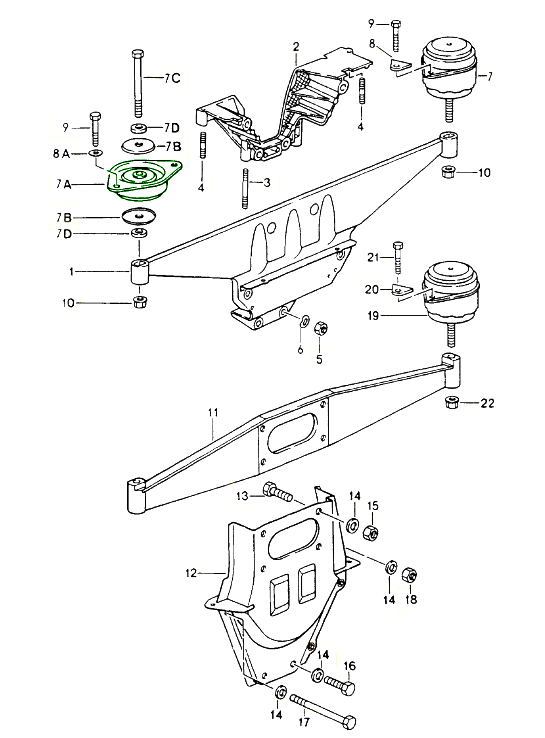
Improve drivetrain stability and engine support with this OE Match Heavy Duty RS Version Engine Mount Kit, supplied as a set of 2 and manufactured as a direct replacement. Produced to OE-style specifications, these upgraded engine mounts are based on the RS design, offering increased stiffness over standard mounts to provide improved engine control while maintaining excellent durability for both road and fast road applications.
Fits:- Porsche 964 (911) C2 1989-93
- Porsche 964 (911) C4 1989-93
- Porsche 964 (911) RS 3.6L 1991-93
- Porsche 964 (911) RS 3.8L 1991-93
- Porsche 993 (911) C2 1994-97
- Porsche 993 (911) C4 1994-97
- Porsche 993 (911) RS 1994-97
- Porsche 993 (911) C2S 1994-97
- Porsche 993 (911) C4S 1994-97
- Porsche 968 3.0L 1992-94
- Porsche 968 Sport 3.0L 1994-95
- Porsche 968 CS 3.0L 1993-95
- Porsche 968 Turbo S 3.0L 1993-94
Diagram Ref No 7A
Engine mounts isolate vibration while securely supporting the engine and gearbox within the chassis. Over time, the original rubber mounts can soften, crack, collapse, or separate due to heat, oil contamination, and age. This allows excessive engine movement, affecting gear changes, drivetrain alignment, throttle response, and overall driving refinement. Replacing worn mounts with this Heavy Duty RS Version kit restores proper engine location and provides enhanced drivetrain stability. This OE Match kit is ideal for routine maintenance, performance upgrades, repairs, and Porsche restoration projects.
What This Product Does:
- Securely supports the engine within the chassis.
- Reduces excessive engine and drivetrain movement.
- Improves drivetrain stability during acceleration and braking.
- Enhances gearshift precision by maintaining engine alignment.
- Offers increased stiffness compared to standard engine mounts.
- Replaces worn, collapsed, or deteriorated original mounts.
- Provides an OE-style fit and dependable quality.
Symptoms Of Wear Or Failure:
- Excessive engine movement under acceleration or braking.
- Increased drivetrain vibration.
- Clunking or knocking from the rear of the vehicle.
- Poor or inconsistent gear selection.
- Sagging or collapsed engine mounts.
- Cracked, split, or oil-contaminated rubber.
- Visible separation of the rubber from the mount housing.
- Age-related deterioration of the original mounts.
Why Replacement Matters:
- The engine mounts play a vital role in supporting the engine while isolating vibration and controlling drivetrain movement. Worn or collapsed mounts allow excessive engine movement, which can affect handling, gearshift quality, drivetrain alignment, and place additional stress on surrounding components.
- Replacing the original mounts with this Heavy Duty RS Version kit restores secure engine support while providing the firmer control associated with the RS specification. The result is improved drivetrain stability, more precise gear changes, and increased confidence during spirited driving. Manufactured as a direct replacement and produced to OE-style specifications, this OE Match engine mount kit provides the correct fit, dependable quality, and long-lasting durability, making it an excellent choice for Porsche maintenance, performance upgrades, repairs, and restoration projects.
Related reference numbers
Related, superseded, cross reference or alternative numbers for comparison.
96437504381KIT
The product you are viewing cross references to these numbers


- Porsche 957 Cayenne S / GTS 4.8L 2007-10
- Porsche 957 Cayenne Turbo / Turbo S 4.8L 2007-10
- Porsche 958 Cayenne S V8 4.8L Petrol (400Hp) 2010-17
- Porsche 958 Cayenne GTS V8 4.8L Petrol (400Hp) 2010-17
- Porsche 958 Cayenne Turbo V8 4.8L Petrol (500Hp) 2010-17
- Porsche 958 Cayenne Turbo S V8 4.8L Petrol (550Hp) 2010-17
- Porsche 970.1 Panamera S V8 4.8L 2009-13
- Porsche 970.1 Panamera 4S V8 4.8L 2009-13
- Porsche 970.1 Panamera GTS V8 4.8L 2011-13
- Porsche 970.1 Panamera Turbo V8 4.8L 2009-13
- Porsche 970.1 Panamera Turbo S V8 4.8L 2009-13
- Porsche 970.2 Panamera S V6 Turbo 3.0L 2WD (420Hp) 2014-16
- Porsche 970.2 Panamera S V6 Turbo 3.0L 2WD Executive 2014-16
- Porsche 970.2 Panamera 4S V6 Turbo 3.0L 4WD (420Hp) 2014-16
- Porsche 970.2 Panamera 4S V6 Turbo 3.0L 4WD Executive 2014-16
- Porsche 970.2 Panamera GTS V8 4.8L 4WD (440Hp) 2014-16
- Porsche 970.2 Panamera Turbo V8 4.8L (520Hp) 2014-16
- Porsche 970.2 Panamera Turbo V8 Executive 2014-16
- Porsche 970.2 Panamera Turbo S V8 4.8L 2014-16
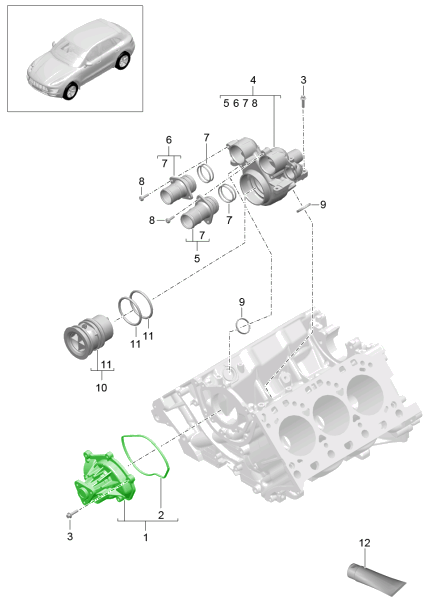
Maintain efficient engine cooling with this OE Match Water Pump, manufactured as a direct replacement. Produced to OE-style specifications, this water pump is designed to circulate coolant throughout the engine and cooling system, helping to regulate operating temperatures and protect the engine from overheating under all driving conditions.
Fits:
- Porsche 957 Cayenne S / GTS 4.8L 2007-10
- Porsche 957 Cayenne Turbo / Turbo S 4.8L 2007-10
- Porsche 958 Cayenne S V8 4.8L Petrol (400Hp) 2010-17
- Porsche 958 Cayenne GTS V8 4.8L Petrol (400Hp) 2010-17
- Porsche 958 Cayenne Turbo V8 4.8L Petrol (500Hp) 2010-17
- Porsche 958 Cayenne Turbo S V8 4.8L Petrol (550Hp) 2010-17
- Porsche 970.1 Panamera S V8 4.8L 2009-13
- Porsche 970.1 Panamera 4S V8 4.8L 2009-13
- Porsche 970.1 Panamera GTS V8 4.8L 2011-13
- Porsche 970.1 Panamera Turbo V8 4.8L 2009-13
- Porsche 970.1 Panamera Turbo S V8 4.8L 2009-13
- Porsche 970.2 Panamera S V6 Turbo 3.0L 2WD (420Hp) 2014-16
- Porsche 970.2 Panamera S V6 Turbo 3.0L 2WD Executive 2014-16
- Porsche 970.2 Panamera 4S V6 Turbo 3.0L 4WD (420Hp) 2014-16
- Porsche 970.2 Panamera 4S V6 Turbo 3.0L 4WD Executive 2014-16
- Porsche 970.2 Panamera GTS V8 4.8L 4WD (440Hp) 2014-16
- Porsche 970.2 Panamera Turbo V8 4.8L (520Hp) 2014-16
- Porsche 970.2 Panamera Turbo V8 Executive 2014-16
- Porsche 970.2 Panamera Turbo S V8 4.8L 2014-16
Diagram Ref No 1
The water pump is a critical component of the cooling system, continuously driven whenever the engine is running. Over time, the internal bearings, shaft seal, and impeller can wear due to heat, coolant exposure, and high mileage. This can lead to coolant leaks, reduced coolant circulation, bearing noise, or complete pump failure. Replacing a worn water pump helps restore cooling system efficiency and provides reliable engine temperature control. This OE Match component is ideal for routine maintenance, cooling system repairs, engine overhauls, and Porsche restoration projects.
What This Product Does:
- Circulates coolant throughout the engine and radiator.
- Maintains correct engine operating temperature.
- Helps prevent engine overheating.
- Supports efficient heat transfer from the engine.
- Replaces worn or leaking original water pumps.
- Restores reliable cooling system performance.
- Provides an OE-style fit and dependable quality.
Symptoms Of Wear Or Failure:
- Coolant leaking from the water pump.
- Bearing noise or whining from the pump.
- Engine running hotter than normal.
- Overheating under load or in traffic.
- Excessive play in the water pump pulley.
- Visible corrosion or coolant staining around the pump.
- Poor coolant circulation.
- Age-related deterioration of the original component.
Why Replacement Matters:
- The water pump is responsible for maintaining continuous coolant circulation through the engine and radiator, ensuring heat is efficiently removed from the engine. A worn or failing water pump can lead to coolant leaks, reduced circulation, engine overheating, and potentially severe engine damage if left unresolved.
- Replacing the water pump restores reliable coolant flow, helping maintain correct operating temperatures and protecting the engine from unnecessary wear and overheating. Manufactured as a direct replacement and produced to OE-style specifications, this OE Match water pump provides the correct fit, dependable quality, and long-lasting durability, making it an excellent choice for Porsche maintenance, cooling system repairs, engine rebuilds, and restoration projects.
Related reference numbers
Related, superseded, cross reference or alternative numbers for comparison.
94810603301
The product you are viewing cross references to these numbers
- Porsche 911 1974-1977 2.7L / 1976-77 3.0 Carrera
- Porsche 911 1978-1983 3.0L / SC
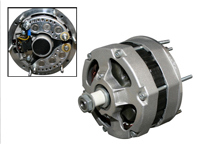
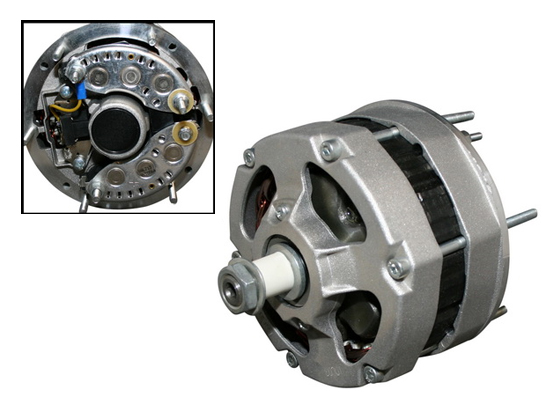
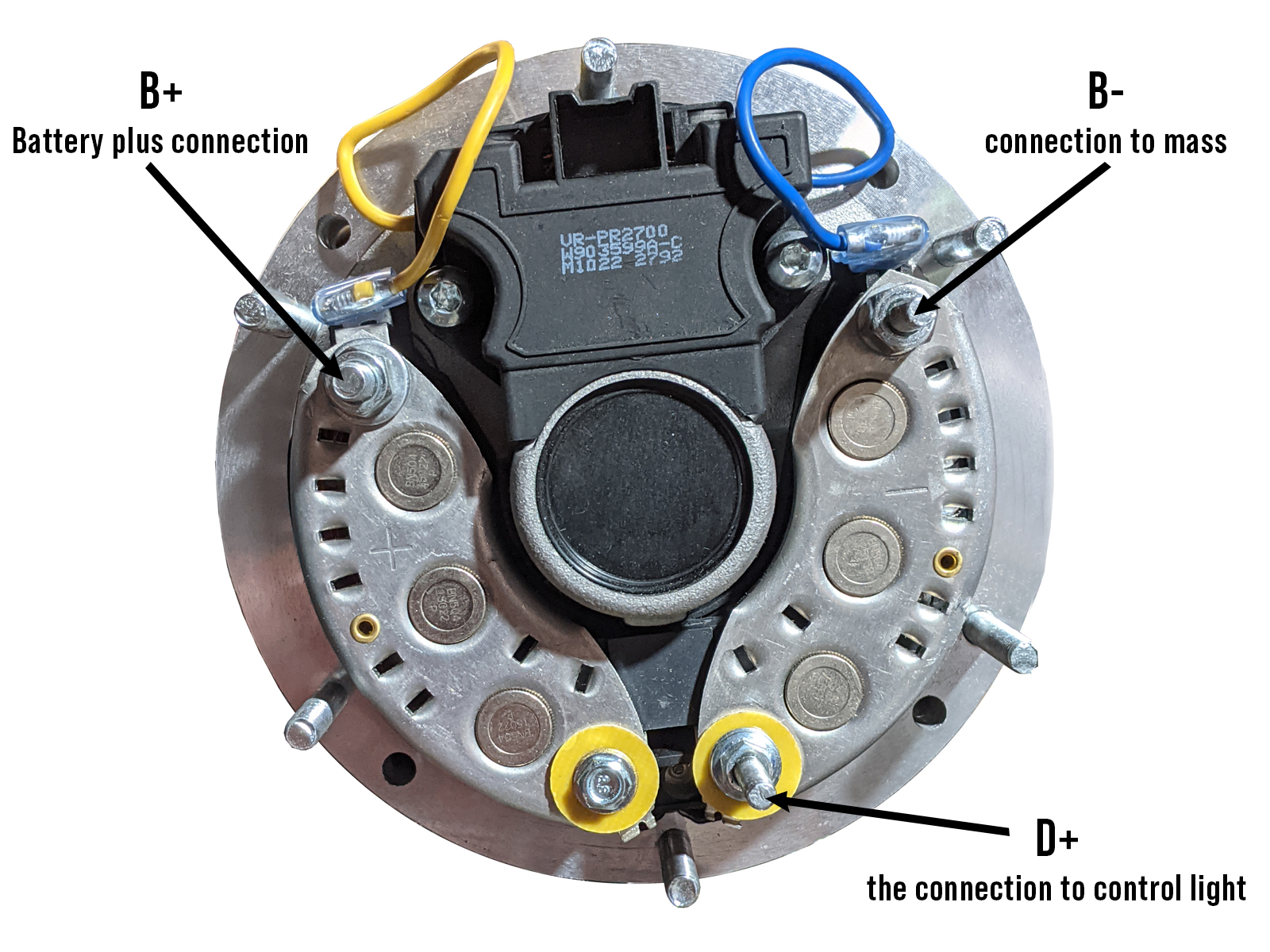
Keep your Porsche's charging system operating reliably with this OE Match Alternator, manufactured as a direct replacement. Produced to OE-style specifications, this alternator is designed to generate electrical power while the engine is running, supplying electricity to the vehicle's electrical systems and maintaining the battery at the correct state of charge.
Fits:
- Porsche 911 1974-1977 2.7L / 1976-77 3.0 Carrera
- Porsche 911 1978-1983 3.0L / SC
The alternator is a vital component that powers everything from the ignition and lighting system to fuel delivery, instrumentation, and charging functions. Over time, internal bearings, brushes, voltage regulation components, or windings can wear through continuous operation, heat, and age, leading to reduced charging performance or complete failure. Replacing a worn alternator restores dependable electrical output and helps ensure reliable starting and operation. This OE Match component is ideal for routine maintenance, electrical system repairs, and Porsche restoration projects.
What This Product Does:
- Generates electrical power while the engine is running.
- Charges the vehicle's battery during operation.
- Supplies power to the ignition and electrical systems.
- Maintains consistent charging voltage.
- Supports reliable engine starting and vehicle operation.
- Replaces worn or failing original alternators.
- Provides an OE-style fit and dependable quality.
Symptoms Of Wear Or Failure:
- Battery warning light illuminated.
- Battery repeatedly losing charge.
- Dim or flickering headlights.
- Electrical accessories operating intermittently.
- Whining, grinding, or bearing noise from the alternator.
- Difficulty starting due to low battery charge.
- Low or inconsistent charging voltage.
- Visible damage or excessive wear to the alternator.
Why Replacement Matters:
- The alternator is responsible for supplying electrical power to the vehicle while simultaneously recharging the battery. A failing alternator can lead to poor charging performance, battery drain, unreliable starting, and the eventual loss of essential electrical systems, potentially leaving the vehicle unable to operate.
- Replacing the alternator restores the correct charging capacity, ensuring dependable electrical performance and protecting the battery from unnecessary strain. Manufactured as a direct replacement and produced to OE-style specifications, this OE Match alternator provides the correct fit, dependable quality, and long-lasting durability, making it an excellent choice for Porsche maintenance, electrical system repairs, and restoration projects.
Related reference numbers
Related, superseded, cross reference or alternative numbers for comparison.
91160312002
The product you are viewing cross references to these numbers
- Porsche 996 C2 3.4L 1997-08/01
- Porsche 996 C4 3.4L 1997-08/01
- Porsche 996 C2 3.6L 09/01-2005
- Porsche 996 C4 3.6L 09/01-2005
- Porsche 996 C4S 3.6L 09/01-2005
- Porsche 996 TURBO 2000-05
- Porsche 996 GT2 2001-05
- Porsche 996 GT3 MKI 1999-02
- Porsche 996 GT3 MKII 2003>>
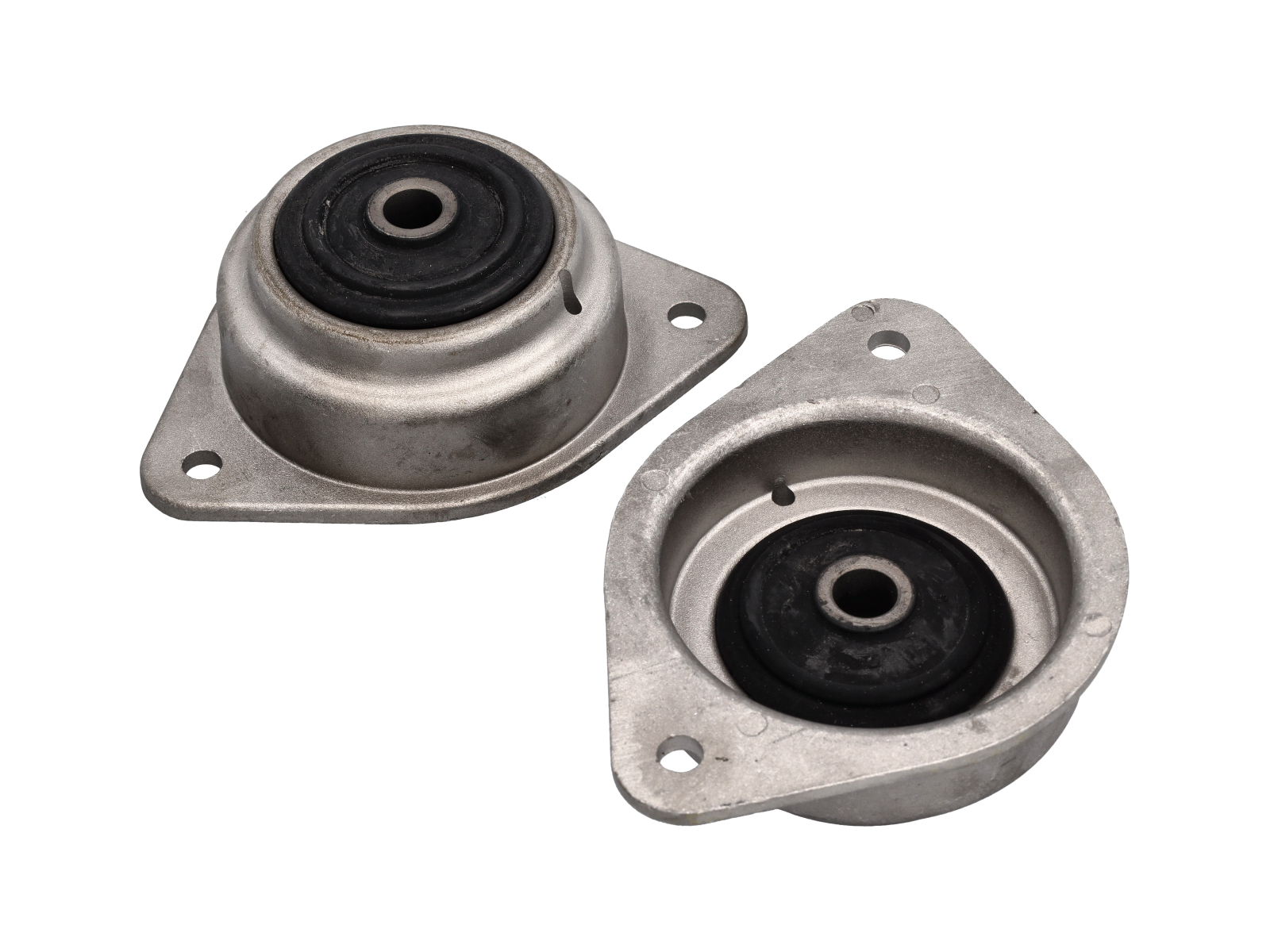
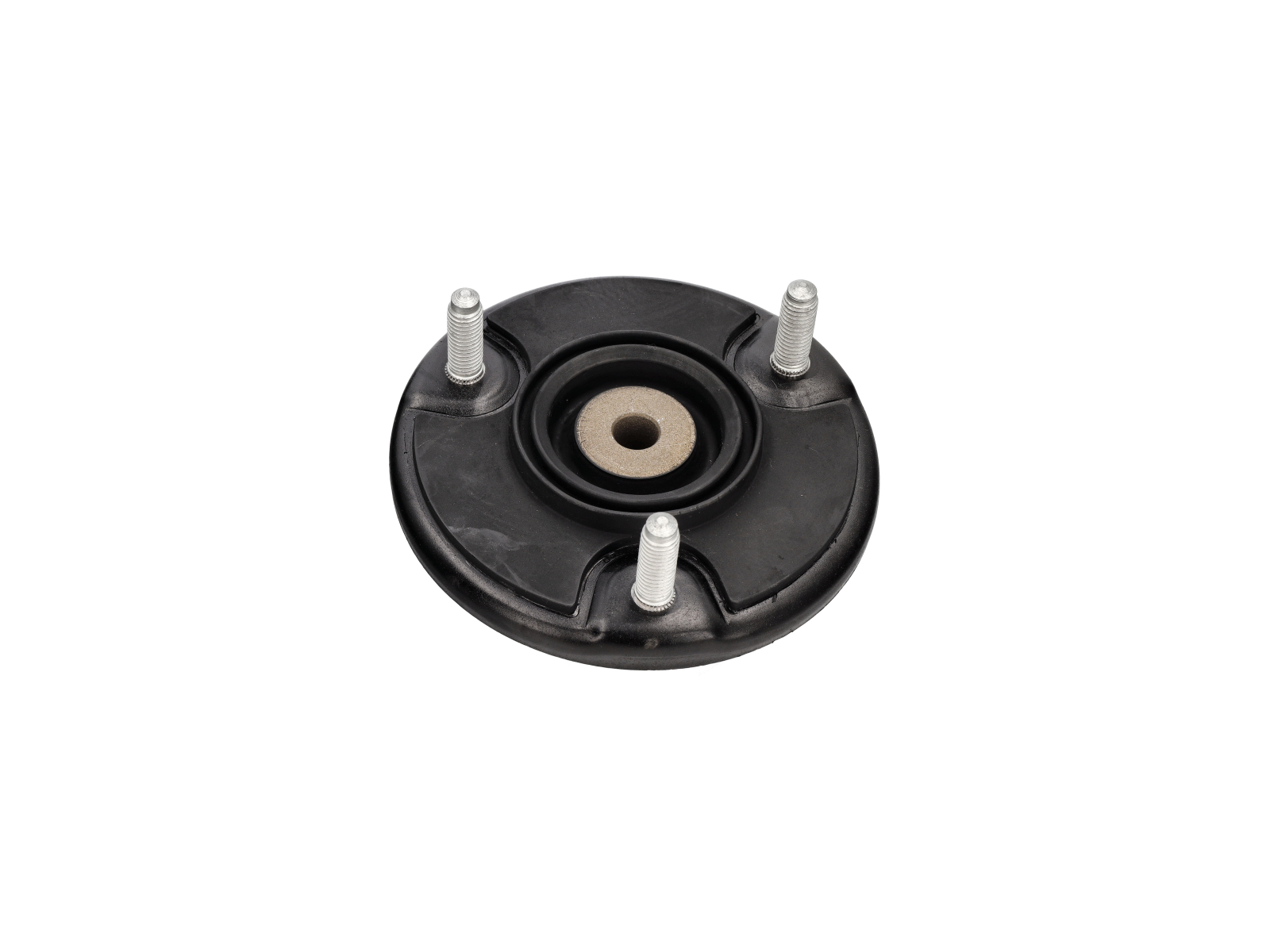
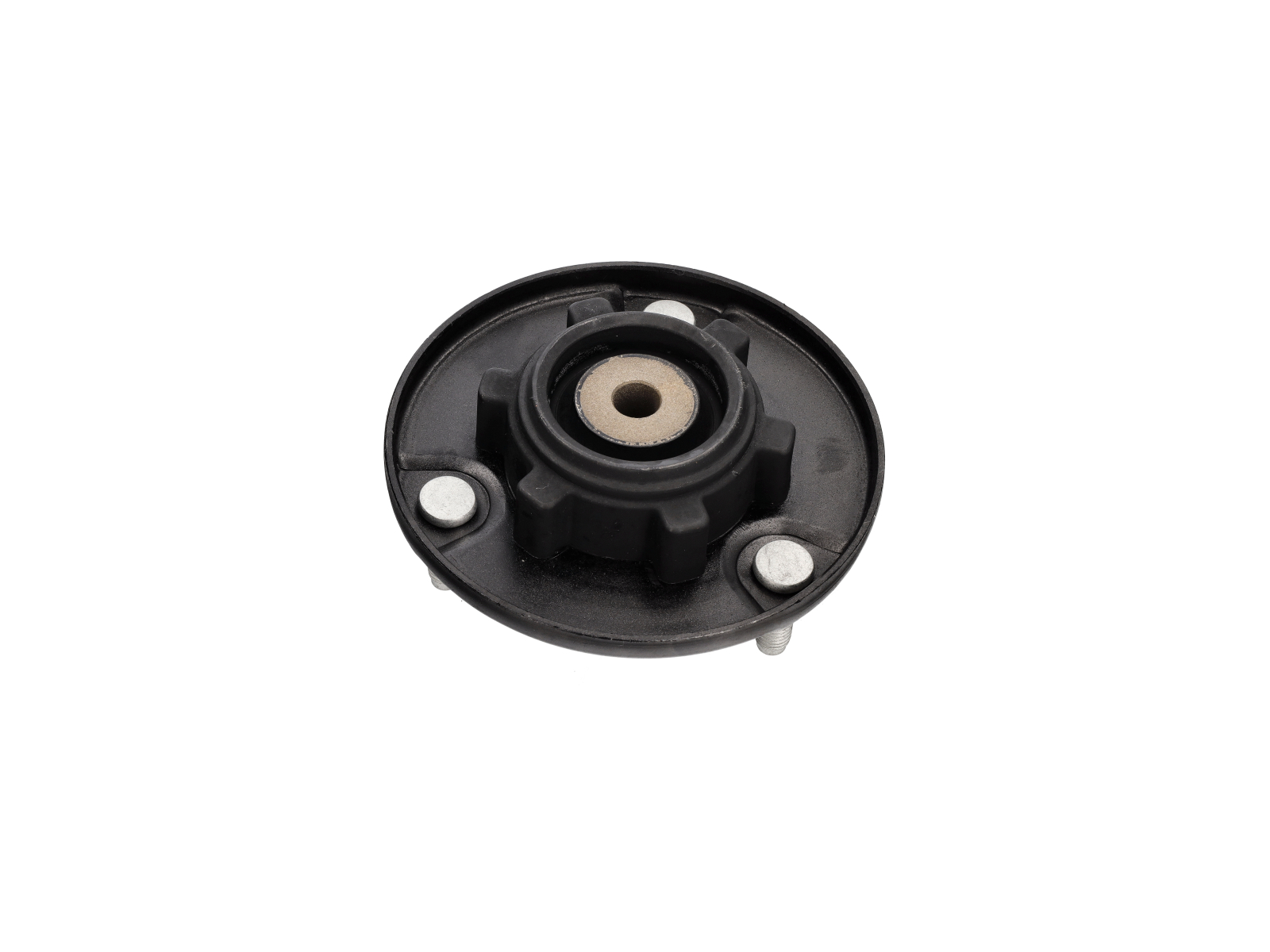
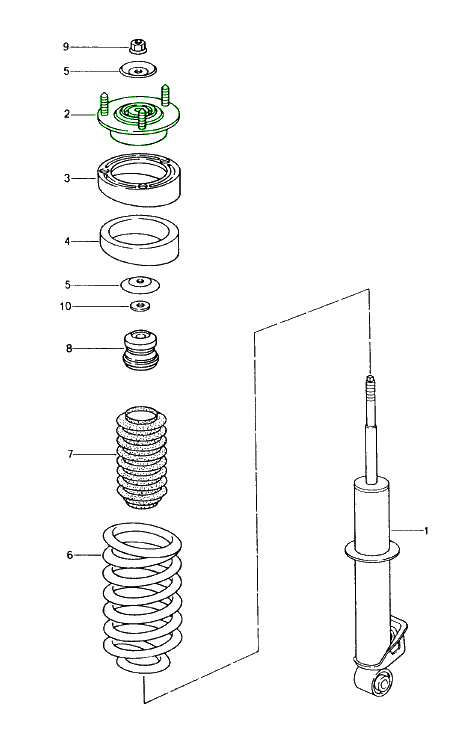
This rear upper shock/strut mount designed for the rear suspension of the Porsche 911 (996) series (1998-2005). This mount positions the rear shock absorber and provides a secure interface between the suspension unit and the chassis. Built to original dimensions and quality standards, it reduces road noise, ensures proper shock alignment and preserves the smooth Porsche ride you expect.
Sold each, 2 required per vehicle.
Fits:
Porsche 996 C2 / C4 / C4S 1998 - 2005
Porsche 996 Turbo / GT2 2001 - 2005
Porsche 996 GT3 MKI
Diagram ref no 2
• Position on Vehicle: Rear suspension – upper mount for the shock absorber / strut (left or right side).
• Cross-Reference / Alternative Numbers: OEM part number 996 333 059 03 (often written 99633305903)
• Applications: Replacement mount for the rear suspension of 996-series Porsche vehicles; used when original mount shows wear, deformation or poor isolation.
The rear shock/strut mount plays a pivotal role in aligning your suspension and isolating vibration. Over time the bonded rubber can deteriorate, the mount flange may corrode, or studs may loosen — all affecting ride comfort and handling. A worn mount can transmit noise and harshness, alter suspension geometry and ultimately compromise stability. In short, replacing a deteriorated mount restores quiet cabin performance and secure handling.
When to replace:
• Noticeable noise, clunks or creaks from the rear suspension.
• Visible cracks in the rubber isolator or separation at the bond.
• Poor ride comfort, increased vibration or harshness.
• Aftershock/strut replacement – when disassembly makes future replacement easier.
• High-mileage or original mount still in service after many years.
Related reference numbers
Related, superseded, cross reference or alternative numbers for comparison.
99633305903
The product you are viewing cross references to these numbers