
Your Porsche




Enter your VAT number here and click Verify:
Your details have been verified. VAT number registered to:
,
.
Your order will now be zero rated for VAT purposes. We reserve the right to verify these details after your order request has been made and reinstate VAT if required.
Your VAT details were not recognised or were invalid. Your VAT number must be matched to your Billing Country as specified above. This is currently specified as . You do not need to enter the country code part of your VAT number as this has already been selected in your billing address details above.
The VAT number checking service is currently offline. Please supply your VAT details within the comments or special instructions field below and we will apply a VAT discount after placing your order request.
PORSCHE IN THE PARK - PRODUCT SHOP
Welcome to our parts website. We are delighted to be able to provide you access to thousands of competitively priced Porsche Parts.

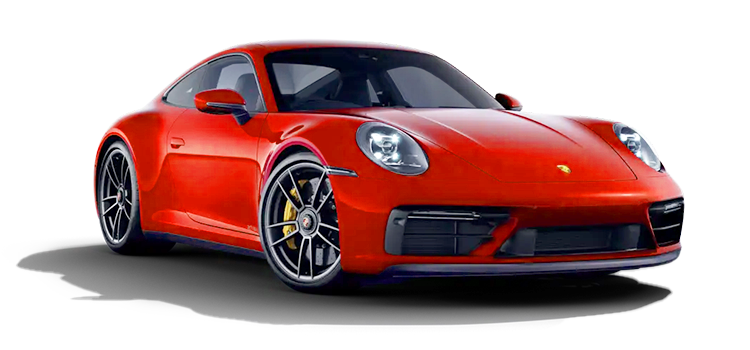
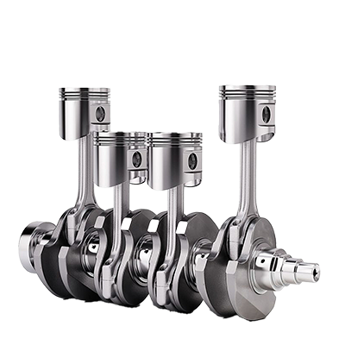
Engine Parts
Performance cooling parts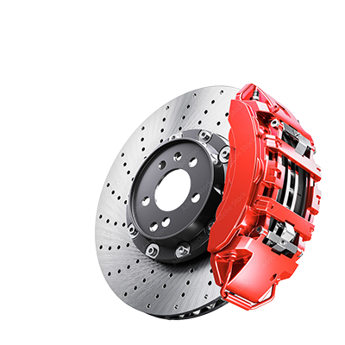
Brakes
Quality brake power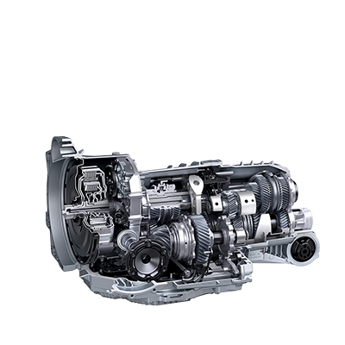
Gearbox & Transmission
Power under the hood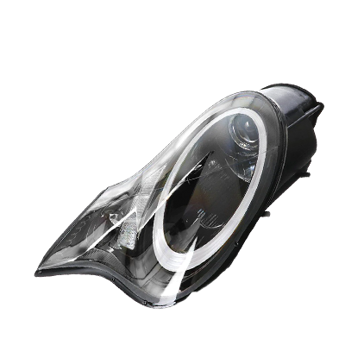
Electrical & Relays
Lighting fast responseSub5 Porsche shop is available worldwide. Our parts shop is fulfilled by UK's premier Porsche Parts supplier, Design911.
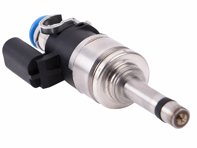

- Porsche 958 Cayenne V6 3.6L Petrol (300Hp) 2010-17
- Porsche 95B.1 Macan GTS Petrol 3.0L V6 (360Bhp) 2014-18
- Porsche 95B.1 Macan Turbo 3.6L V6 (400Bhp) 2014-18
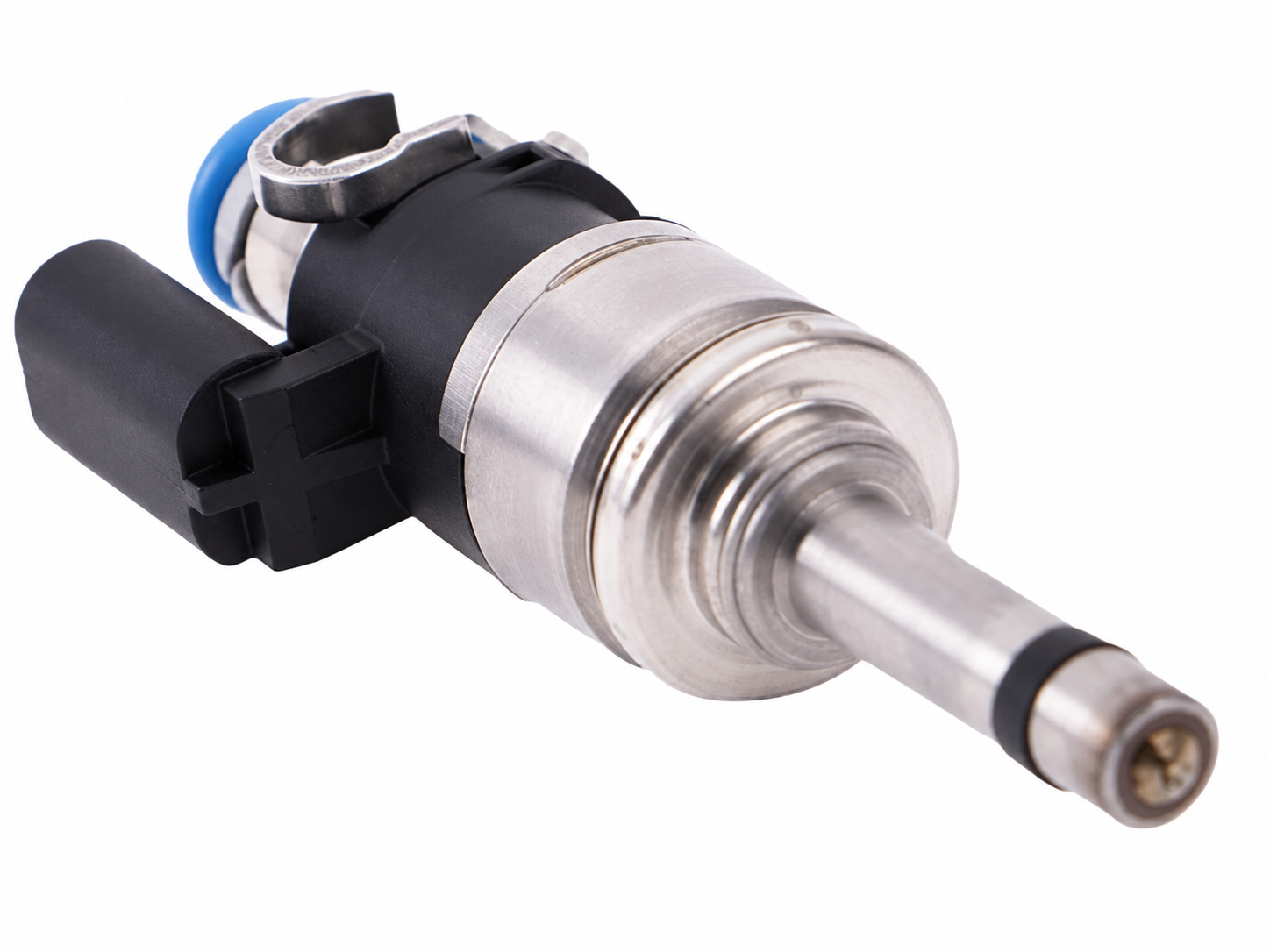
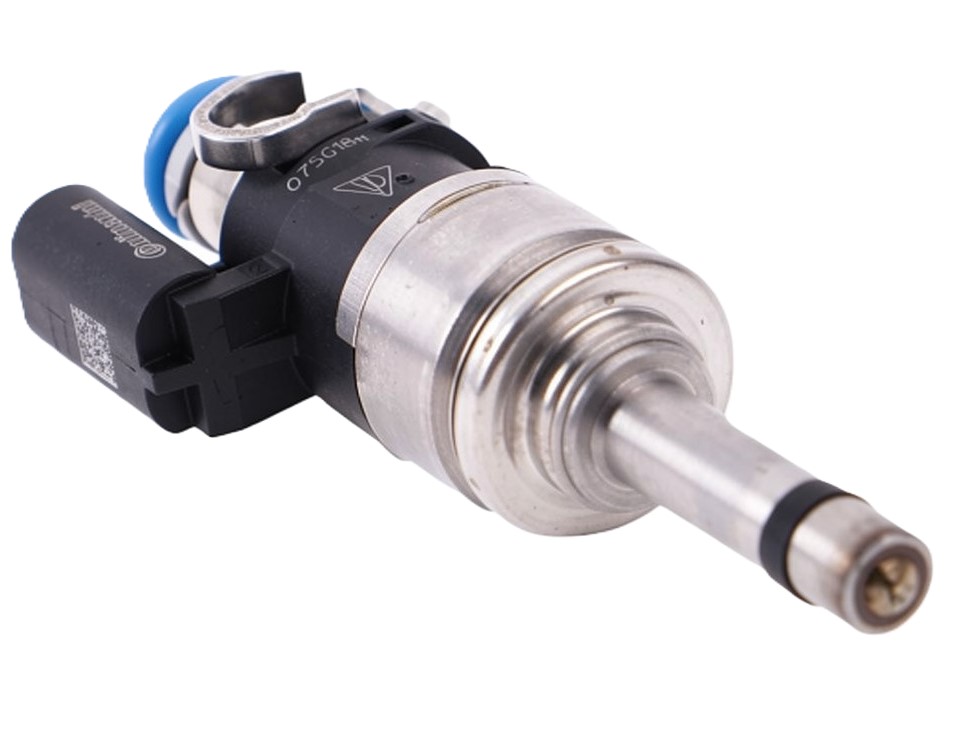
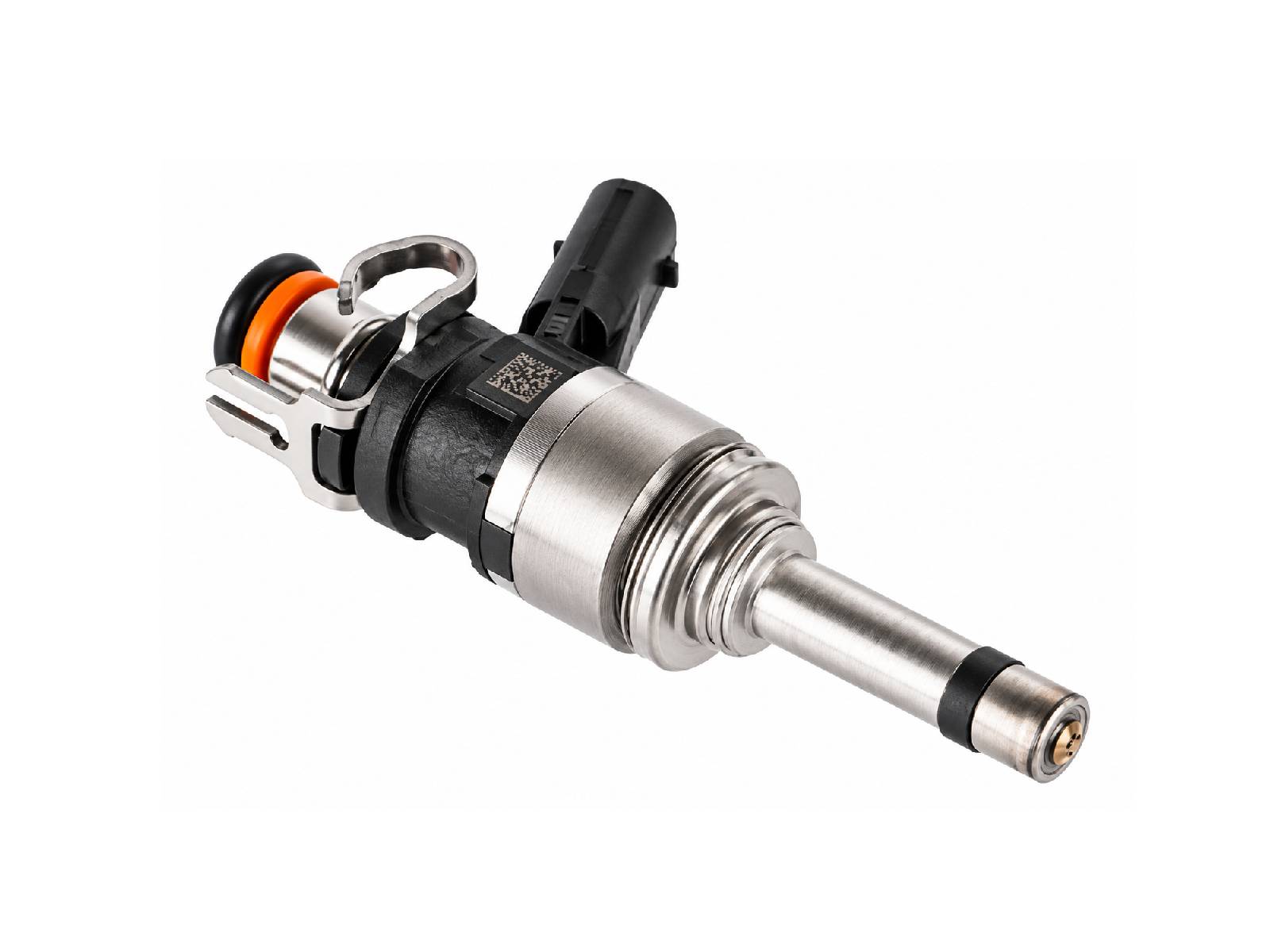
The Porsche High Pressure Fuel Injector – OE Match (Part Number: 94611012832/1) is a precision-engineered replacement component designed to provide accurate and consistent fuel delivery for selected Porsche Macan and Cayenne petrol engines.
Sold Each.
x6 Required Per Car.
Fits:
- Porsche 958 Cayenne V6 3.6L Petrol (300Hp) 2017
- Porsche 95B.1 Macan GTS Petrol 3.0L V6 (360Bhp) 2014-18
- Porsche 95B.1 Macan Turbo 3.6L V6 (400Bhp) 2014-18
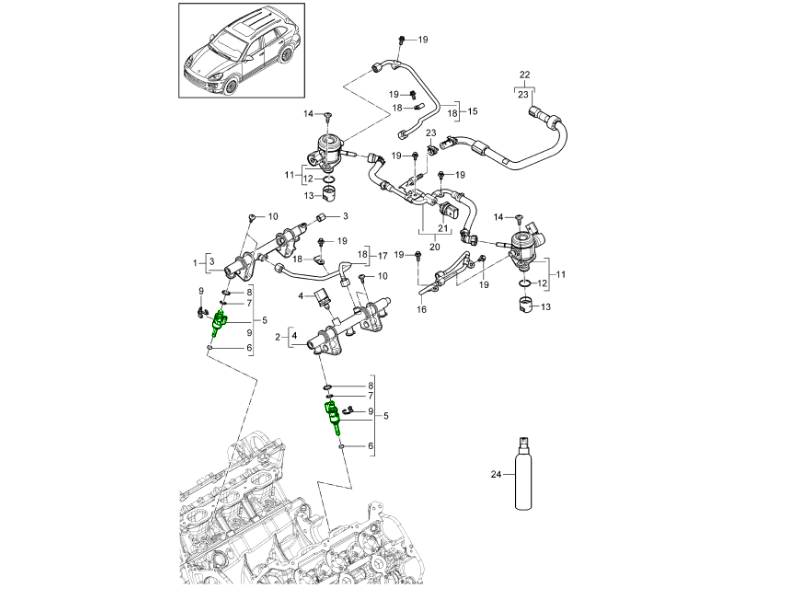
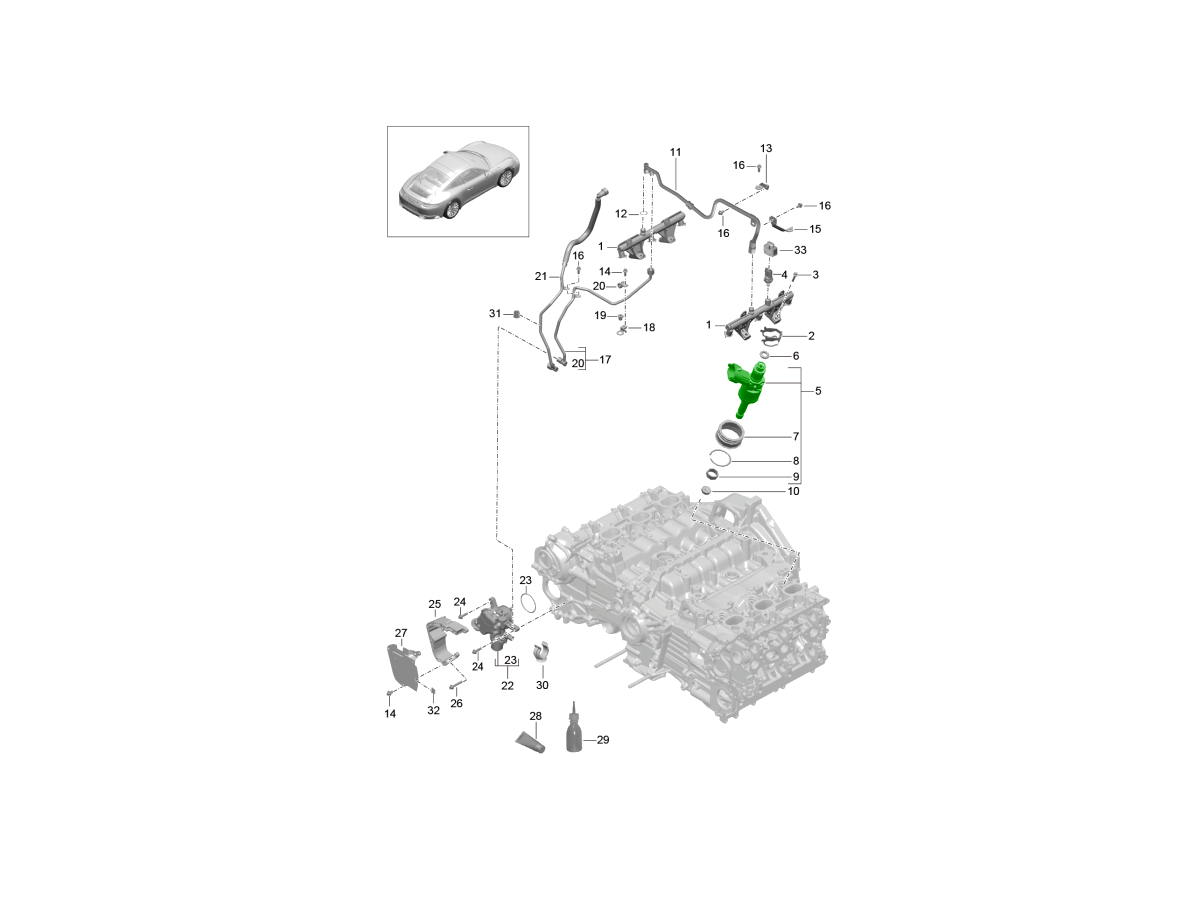
Diagram Ref No 5
Designed to match the fitment and functional requirements of the original Porsche fuel injector, this OE Match alternative offers a cost-effective solution for restoring engine performance, fuel efficiency and reliability without the expense of a Genuine Porsche-branded replacement.
The injector delivers finely atomised fuel directly into the combustion chamber under high pressure, ensuring efficient combustion, smooth engine operation and responsive acceleration.
Ideal for replacing worn, clogged or malfunctioning injectors, this OE Match component helps maintain dependable fuel system operation and consistent engine performance.
What This Product Does:The high-pressure fuel injector is a vital component of the engine's direct fuel injection system. Its primary function is to deliver precisely measured quantities of pressurised fuel into the combustion chamber at the correct moment during the combustion cycle.
Controlled electronically by the engine control unit (ECU), the injector adjusts fuel delivery according to engine speed, load and driving conditions.
A correctly functioning fuel injector helps to:
- Optimise fuel combustion: Deliver a finely atomised fuel spray for efficient ignition and combustion.
- Maintain engine performance: Support smooth acceleration, consistent power delivery and responsive throttle operation.
- Improve fuel efficiency: Ensure accurate fuel metering to minimise unnecessary fuel consumption.
- Reduce exhaust emissions: Promote cleaner and more complete combustion.
- Support smooth engine operation: Maintain stable idling and consistent combustion across all cylinders.
Symptoms Of Wear Or Failure:
High-pressure fuel injectors operate under demanding conditions, including extreme temperatures and high fuel pressures. Over time, internal components may wear, fuel deposits may accumulate or injector seals may deteriorate.
Common symptoms of a faulty fuel injector include:
- Rough or uneven idling: Inconsistent fuel delivery may cause engine vibration, unstable idle speed or irregular running.
- Engine misfires: A blocked or malfunctioning injector may prevent sufficient fuel from reaching the combustion chamber, resulting in incomplete combustion.
- Reduced engine power: Incorrect fuel delivery can cause sluggish acceleration, hesitation or reduced engine responsiveness.
- Increased fuel consumption: A leaking or poorly performing injector may deliver excessive fuel, reducing overall efficiency.
- Difficulty starting the engine: Incorrect fuel pressure or injector leakage may cause extended cranking or unreliable starting.
- Illuminated engine warning light: Injector-related faults may trigger engine management fault codes or misfire warnings.
- Fuel odours or excessive exhaust emissions: A leaking injector may cause an excessively rich fuel mixture, potentially producing noticeable fuel smells, smoke or increased emissions.
- Engine hesitation under acceleration: Poor injector spray patterns or restricted fuel flow may cause intermittent hesitation under load.
Why Replacement Matters:
Replacing a damaged or malfunctioning high-pressure fuel injector is important for preserving engine reliability, fuel efficiency and long-term performance.
A defective injector can disrupt the correct air-fuel mixture, leading to incomplete combustion, reduced power and increased fuel consumption. Continued operation with a faulty injector may also contribute to excessive carbon deposits, catalytic converter damage and potentially serious internal engine problems.
Installing a replacement OE Match high-pressure fuel injector helps to:
- Restore correct fuel delivery: Maintain accurate fuel injection for efficient combustion.
- Improve engine smoothness: Reduce misfires, unstable idling and hesitation caused by defective injectors.
- Recover lost performance: Restore consistent power output and throttle response.
- Maintain fuel economy: Help prevent excessive fuel consumption associated with incorrect injection.
- Protect engine components: Reduce the risk of damage caused by leaking injectors or poor combustion.
- Offer a cost-effective repair: Provide an alternative to a Genuine Porsche-branded component while maintaining the intended fitment and function.
Related reference numbers
Related, superseded, cross reference or alternative numbers for comparison.
94611012832
The product you are viewing cross references to these numbers
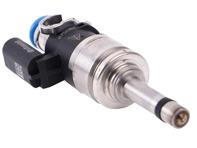

- Porsche 958 Cayenne V6 3.6L Petrol (300Hp) 2010-17
- Porsche 95B.1 Macan GTS Petrol 3.0L V6 (360Bhp) 2014-18
- Porsche 95B.1 Macan Turbo 3.6L V6 (400Bhp) 2014-18
The Genuine Porsche High Pressure Fuel Injector (part number 94611012832) is a precision-engineered component designed to deliver the correct quantity of fuel directly into the engine's combustion chamber at high pressure. Essential for maintaining optimal engine performance, fuel efficiency and smooth operation, this injector ensures accurate fuel atomisation and consistent combustion under varying driving conditions.
Sold Each.
x6 Required Per Car.
Fits:
- Porsche 958 Cayenne V6 3.6L Petrol (300Hp) 2017
- Porsche 95B.1 Macan GTS Petrol 3.0L V6 (360Bhp) 2014-18
- Porsche 95B.1 Macan Turbo 3.6L V6 (400Bhp) 2014-18
Diagram Ref No 5
Manufactured to Porsche's original equipment specifications, this high-pressure fuel injector is designed for selected Porsche Macan and Cayenne petrol engines, providing reliable fuel delivery and precise engine management.
What This Product Does:
- The high-pressure fuel injector plays a critical role in the engine's direct fuel injection system. It receives pressurised fuel from the fuel rail and delivers a finely atomised spray into the combustion chamber at precisely controlled intervals.
- The engine control unit (ECU) regulates the injector's operation to ensure the correct air-fuel mixture for efficient combustion. Proper injector performance helps maintain smooth acceleration, responsive throttle operation, consistent power output, reduced emissions and efficient fuel consumption.
Symptoms Of Wear Or Failure:
Over time, fuel injectors can become clogged, contaminated, worn or develop internal electrical or mechanical faults. Common symptoms of a failing high-pressure fuel injector include:
- Rough idling: Uneven fuel delivery can cause engine vibration or unstable idle speed.
- Engine misfires: An injector that fails to deliver the correct amount of fuel may cause incomplete combustion and intermittent misfires.
- Reduced engine performance: Poor fuel atomisation can result in sluggish acceleration, hesitation and loss of power.
- Increased fuel consumption: A leaking or poorly functioning injector may cause excessive fuel delivery and reduced efficiency.
- Difficulty starting: Faulty injectors can disrupt fuel delivery during engine start-up, causing prolonged cranking or unreliable starting.
- Engine warning light: Injector-related faults or combustion irregularities may trigger the check engine light.
- Fuel smell or excessive exhaust emissions: A leaking injector may cause an overly rich fuel mixture, potentially producing noticeable fuel odours or increased emissions.
Why Replacement Matters:
- Replacing a worn or defective high-pressure fuel injector is essential for maintaining engine reliability, performance and fuel efficiency.
- A malfunctioning injector can cause an incorrect air-fuel mixture, leading to poor combustion, engine misfires and increased fuel consumption. If left unresolved, these issues may contribute to carbon deposits, catalytic converter damage and, in severe cases, internal engine damage caused by excessive fuel entering the combustion chamber.
- Installing a Genuine Porsche replacement injector helps restore accurate fuel delivery, smooth engine operation and consistent performance while reducing the risk of further fuel system or engine-related problems.
Related reference numbers
Related, superseded, cross reference or alternative numbers for comparison.
94611012832
The product you are viewing cross references to these numbers
- Porsche 991.2 Turbo Coupe 3.8L (540 Bhp) 2016-19
- Porsche 991.2 Turbo S Coupe 3.8L (580 Bhp) 2016-19
- Porsche 991.2 Turbo Cabriolet 3.8L (540 Bhp) 2016-19
- Porsche 991.2 Turbo S Cabriolet 3.8L (580 Bhp) 2016-19
- Porsche 991.2 GT2 RS 3.8L PDK (700 bhp) 2018-19
High Pressure Fuel Injector
Sold each - 6 required per car
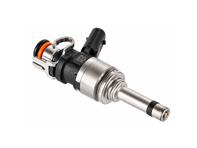
This OE Match High Pressure Fuel Injector is a replacement for the original injector fitted to the Porsche 991.2 Turbo, Turbo S and GT2 RS 3.8-litre twin-turbocharged petrol engines.
Fits:
- Porsche 991.2 Turbo Coupe 3.8L (540 Bhp) 2016-19
- Porsche 991.2 Turbo S Coupe 3.8L (580 Bhp) 2016-19
- Porsche 991.2 Turbo Cabriolet 3.8L (540 Bhp) 2016-19
- Porsche 991.2 Turbo S Cabriolet 3.8L (580 Bhp) 2016-19
- Porsche 991.2 GT2 RS 3.8L PDK (700 bhp) 2018-19
Diagram Ref No 5
Designed to deliver precisely controlled quantities of fuel directly into the combustion chamber, it helps maintain efficient combustion, smooth engine operation and consistent power delivery.
An OE Match alternative to the Genuine Porsche injector, it provides a replacement option for restoring correct fuel injection performance.
What Does the High Pressure Fuel Injector Do?
The injector delivers a precisely measured spray of petrol directly into the combustion chamber.
Working with the high-pressure fuel pump and engine management system, it controls fuel delivery during idling, acceleration and high engine loads.
Accurate injection is essential for maintaining engine performance, fuel efficiency and smooth combustion.
Why Do High Pressure Fuel Injectors Fail?
Fuel injectors operate under extreme pressures and temperatures, making them susceptible to wear and contamination.
Common causes include:
- Carbon deposits restricting injector nozzles.
- Contaminated petrol damaging internal components.
- Wear of injector valves and sealing surfaces.
- Electrical faults affecting injector operation.
- Prolonged exposure to high temperatures and engine vibration.
A failing injector can cause uneven fuel delivery, rough running, engine misfires and reduced performance.
When Should the Injector Be Replaced?
Replacement is recommended when an injector is diagnosed as faulty, leaking or unable to deliver the correct fuel quantity.
Common warning signs include:
- Rough idling or engine misfires.
- Hesitation or loss of power during acceleration.
- Increased fuel consumption.
- Difficult starting.
- Engine management warning light.
- Fuel mixture or cylinder misfire fault codes.
- Irregular engine operation under load.
A defective injector can cause incorrect combustion and potentially damage the engine or catalytic converter if left unresolved.
Checks and Diagnosis
Before replacing the injector, check for stored engine fault codes, inspect fuel rail pressure and identify any cylinder-specific misfires.
Injector electrical connections, fuel delivery and leakage should also be checked to confirm the fault.
High-pressure fuel systems require specialist installation procedures. Associated seals and mounting components should be replaced where specified by Porsche.
Key Features
- OE Match replacement high-pressure fuel injector.
- Suitable for 3.8L twin-turbocharged DFI engines.
- Provides precise fuel delivery into the combustion chamber.
- Supports efficient combustion and engine performance.
- Helps restore smooth idling and throttle response.
- Replacement alternative to the Genuine Porsche injector.
- Six injectors required for a complete engine set.
Product Category Description – Porsche 991.2 Turbo & GT2 RS Fuel Injectors
OE Match high-pressure fuel injectors provide a replacement solution for the direct fuel injection systems fitted to Porsche 991.2 Turbo, Turbo S and GT2 RS engines.
These precision components deliver accurately measured fuel quantities directly into the combustion chambers, supporting efficient combustion, consistent power delivery and smooth engine operation.
Faulty or contaminated injectors can cause misfires, poor acceleration, increased fuel consumption and reduced engine performance.
Related reference numbers
Related, superseded, cross reference or alternative numbers for comparison.
9A111022231
The product you are viewing cross references to these numbers
- Porsche 991.2 Turbo Coupe 3.8L (540 Bhp) 2016-19
- Porsche 991.2 Turbo S Coupe 3.8L (580 Bhp) 2016-19
- Porsche 991.2 Turbo Cabriolet 3.8L (540 Bhp) 2016-19
- Porsche 991.2 Turbo S Cabriolet 3.8L (580 Bhp) 2016-19
- Porsche 991.2 GT2 RS 3.8L PDK (700 bhp) 2018-19
High Pressure Fuel Injector
Sold each - 6 required per car
The injector delivers precisely measured fuel directly into
the combustion chamber under high pressure, ensuring efficient combustion, smooth
engine operation and consistent performance.
Fits:
- Porsche 991.2 Turbo Coupe 3.8L (540 Bhp) 2016-19
- Porsche 991.2 Turbo S Coupe 3.8L (580 Bhp) 2016-19
- Porsche 991.2 Turbo Cabriolet 3.8L (540 Bhp) 2016-19
- Porsche 991.2 Turbo S Cabriolet 3.8L (580 Bhp) 2016-19
- Porsche 991.2 GT2 RS 3.8L PDK (700 bhp) 2018-19
Diagram Ref No 5
Manufactured to Porsche's original specifications, it provides the correct fuel delivery characteristics for these high-performance engines.
What Does the High Pressure Fuel Injector Do?
The injector sprays a precisely controlled quantity of petrol directly into the engine's combustion chamber.
Working with the engine management system and high-pressure fuel pump, it ensures accurate fuel delivery during idling, acceleration and high engine loads.
Correct injector operation is essential for maintaining engine power, fuel efficiency, smooth running and reliable combustion.
Why Do High Pressure Fuel Injectors Fail?
Fuel injectors operate under extreme pressure and
temperature conditions. Over time, they can develop problems caused by:
- Carbon deposits restricting the injector spray nozzle.
- Contaminated fuel or fine particles damaging internal components.
- Wear of internal injector valves and seals.
- Electrical faults affecting injector operation.
- Heat
cycling and prolonged high-performance engine use
A faulty injector can cause uneven fuel delivery, misfires, poor acceleration and increased fuel consumption.
When Should the Injector Be Replaced?
Replacement should be considered when an injector is confirmed faulty, leaking or unable to deliver the correct quantity of fuel.
Common symptoms include:
- Rough idling or engine misfires.
- Hesitation during acceleration.
- Reduced engine performance.
- Increased fuel consumption.
- Engine warning light illumination.
- Fuel mixture or cylinder misfire fault codes.
- Difficult starting or excessive exhaust emissions.
A malfunctioning injector can cause incorrect air-fuel mixtures and potentially damage the engine or catalytic converter if left unresolved.
Checks and Diagnosis
Before replacing an injector, check the engine fault codes, fuel rail pressure and individual cylinder misfire data.
Inspect the fuel supply system and injector electrical connections. Where necessary, carry out injector performance and leakage testing to confirm the fault.
High-pressure fuel systems require specialist depressurisation and installation procedures. Replace associated seals and mounting components as specified by Porsche.
Key Features
- Provides precise high-pressure fuel delivery.
- Supports accurate combustion and engine performance.
- Helps restore smooth idling and acceleration.
- Manufactured to original Porsche specifications.
- Six injectors required for a complete engine set.
Product Category Description – Porsche 991.2 Turbo & GT2 RS Fuel Injectors
High-pressure fuel injectors are essential components of the Porsche 991.2 Turbo, Turbo S and GT2 RS direct fuel injection systems. They deliver precisely controlled fuel quantities into each cylinder, ensuring efficient combustion and consistent engine performance.
Faulty or contaminated injectors can cause misfires, poor throttle response, increased fuel consumption and reduced engine power.
Replacing a defective injector helps restore accurate fuel delivery, reliable combustion and the performance expected from Porsche's turbocharged engines.
Related reference numbers
Related, superseded, cross reference or alternative numbers for comparison.
9A111022231
The product you are viewing cross references to these numbers
.jpg?width=197 "Fabspeed XperTune Performance Software ECU Upgrade. Porsche 997.2 GT2 RS - FS.POR.9972GT2RS.ET")
- Porsche 997 MKII GT2 RS 2011-13
The Fabspeed Porsche 997.2 GT2 RS XperTune Performance Software is a specialist ECU tuning upgrade developed for the 2011 Porsche 911 GT2 RS (997.2), equipped with the 3.6-litre twin-turbocharged flat-six engine.
Fits:
Developed by Fabspeed Motorsport, XperTune is designed to enhance horsepower, torque, throttle response and overall engine performance by optimising selected parameters within the vehicle's factory Engine Control Unit (ECU).
The Porsche 997.2 GT2 RS is one of the most performance-focused versions of the 997-generation 911, combining lightweight construction, rear-wheel drive and a powerful twin-turbocharged engine.
Fabspeed's XperTune Performance Software builds upon these characteristics by providing a revised engine management calibration designed to improve power delivery without requiring replacement of the original ECU.
The system includes a handheld OBD-II tuning device, allowing the original ECU information to be read and a vehicle-specific performance calibration to be installed through the diagnostic port.
Unlike traditional ECU tuning procedures that may require the control unit to be removed and sent to a specialist, the Fabspeed handheld system enables the programming process to be completed without removing the ECU.
The software modifies applicable engine management parameters, including fuelling, sensor-related calibration and turbocharger boost-control settings, where supported by the vehicle's ECU.
The aim is to improve acceleration and engine responsiveness while retaining practical drivability.
Fabspeed advertises performance gains of +64 horsepower and +89 lb-ft of torque on its product page.
However, the detailed power table appears to repeat figures associated with the earlier 997 GT2 rather than the 997.2 GT2 RS. The advertised gains should therefore be treated as unverified for this specific application until Fabspeed confirms the relevant GT2 RS test results.
Each calibration is prepared using data read from the vehicle's original ECU, along with information supplied about its specification and any existing performance modifications.
The handheld device also stores the factory calibration, allowing the vehicle to be returned to its original software configuration when required.
Ideal for Porsche GT2 RS owners seeking greater performance from an otherwise healthy engine, the Fabspeed XperTune system provides a specialist, reversible software upgrade without requiring extensive mechanical modifications.
What This Product Does:
The Fabspeed XperTune Performance Software modifies selected operating parameters stored within the Porsche 997.2 GT2 RS engine control unit.
The ECU uses information from engine sensors to manage combustion, fuel delivery and turbocharger operation.
By revising the relevant calibration settings, Fabspeed aims to improve the engine's performance characteristics.
- Engine Performance Optimisation: Revises selected ECU calibration parameters to increase performance potential.
- Increased Horsepower Potential: Designed to deliver greater engine power compared with the original calibration.
- Improved Torque Delivery: Intended to enhance torque output and acceleration.
- Sharper Throttle Response: Helps provide a more responsive reaction to accelerator input.
- Turbocharger Boost Optimisation: Adjusts applicable boost-control parameters to support the intended power delivery.
- Fuel Calibration: Refines relevant fuel-management settings for the specified tuning configuration.
- Enhanced Acceleration: Increased engine output can support stronger acceleration under suitable conditions.
- Vehicle-Specific Calibration: Uses the vehicle's original ECU information and details of its existing modifications.
- OBD-II Programming: Allows ECU data to be read and the performance tune installed through the diagnostic port.
- No ECU Removal Required: Eliminates the need to remove the ECU for the standard handheld programming process.
- Factory Software Backup: Saves the original ECU calibration.
- Return-to-Stock Function: Allows the original factory software to be restored using the handheld device.
- Support for Compatible Modifications: Enables Fabspeed to consider relevant intake, exhaust and other modifications when preparing the tune.
- Convenient Programming Process: Uses a handheld device and compatible Windows computer.
- Improved Driving Experience: Designed to enhance the GT2 RS's already substantial turbocharged performance.
- The Porsche 997.2 GT2 RS was designed as a lightweight, highly focused performance version of the 911.
- Its 3.6-litre twin-turbocharged engine delivers substantial power through the rear wheels, creating a distinctive and demanding driving experience.
- ECU tuning offers a way to modify the characteristics of the engine without replacing the original control unit or carrying out extensive mechanical upgrades.
- Porsche 997 MK1 GT2 2007-09
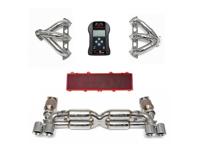
The Fabspeed Porsche 997 GT2 Performance Package is a comprehensive high-performance exhaust, intake and ECU tuning upgrade designed specifically for the Porsche 911 GT2 (997.1), manufactured between 2008 and 2009.
Fits:
- Porsche 997 MK1 GT2 2007-09
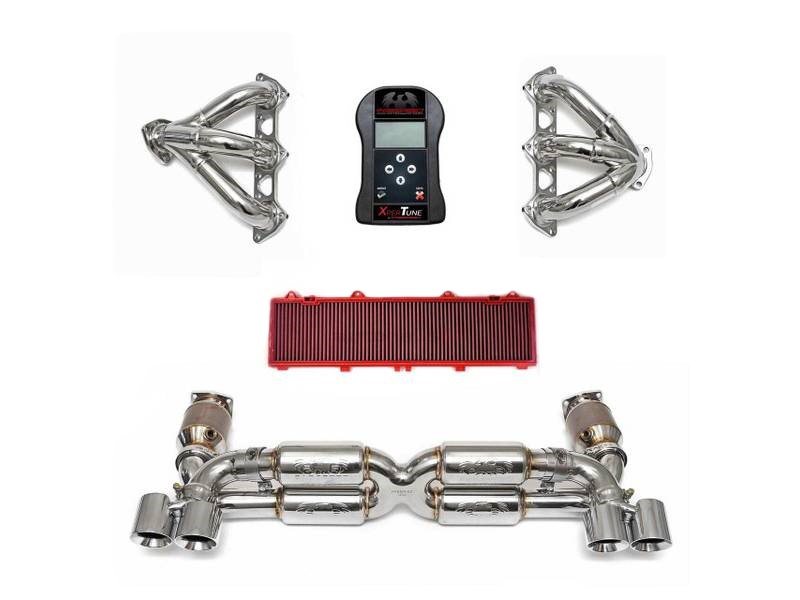
Kit Includes:
- Supersport X-Pipe Exhaust (Incl. Sport Cats & Tips)
- Sport Headers
- BMC F1 Air Filter
- XperTune Performance Software
Developed by Fabspeed Motorsport, this package combines several performance-oriented components engineered to improve exhaust gas flow, reduce intake restriction, enhance turbocharger response and deliver a more distinctive sports exhaust sound from the Porsche GT2's twin-turbocharged 3.6-litre flat-six engine.
The package includes the Fabspeed Supersport 70mm X-Pipe Exhaust System with 200-cell HJS Sport Catalytic Converters and Deluxe GT2 Style Exhaust Tips, together with Fabspeed Sport Headers and a BMC F1 High Performance Air Filter.
Fabspeed XperTune Performance Software with Handheld Tuner, allowing the engine management calibration to be optimised for the vehicle's configuration.
The Supersport X-Pipe exhaust system is designed to improve exhaust gas evacuation while producing a louder, sharper and more engaging exhaust note than the original factory system.
The Sport Headers are engineered to improve the movement of exhaust gases towards the turbochargers, helping support efficient exhaust flow and the engine's performance potential.
The BMC F1 High Performance Air Filter provides an upgraded air filtration solution designed to improve intake airflow while maintaining filtration functionality.
Fabspeed manufactures the stainless steel exhaust components from high-quality 14–16 gauge T304L stainless steel, using CNC mandrel-bent tubing to promote smooth exhaust flow and long-term durability.
The package's 200-cell HJS German sport catalytic converters are designed to provide lower exhaust restriction than conventional factory catalytic converter arrangements.
XperTune Performance Software allows applicable engine management parameters to be recalibrated, helping complement the performance characteristics of the upgraded intake and exhaust components.
The result is a coordinated performance package intended to enhance the Porsche 997 GT2's acceleration, exhaust sound, throttle response and overall driving character.
What This Product Does:
The Fabspeed Porsche 997 GT2 Performance Package upgrades several components involved in the movement of air into the engine and exhaust gases out of it.
By coordinating the intake filter, exhaust manifolds, sport catalytic converters and exhaust system, the package is designed to support more efficient engine breathing and stronger performance characteristics.
Its main functions and benefits include:
- Improved Exhaust Flow: Reduces restriction through the performance headers and Supersport exhaust arrangement.
- Enhanced Turbocharger Response: Supports improved exhaust gas flow conditions around the twin-turbocharged engine.
- Increased Performance Potential: Designed to support greater horsepower and torque in suitable configurations.
- Improved Intake Airflow: The BMC F1 air filter offers a performance-oriented replacement for the original filter.
- Reduced Exhaust Backpressure: High-flow exhaust components are intended to reduce unnecessary exhaust restriction.
- Sportier Exhaust Sound: Produces a stronger and more pronounced GT2 exhaust note.
- High-Flow Sport Catalysts: Uses 200-cell HJS sport catalytic converters.
- Improved Throttle Response: The coordinated hardware and optional ECU software are intended to sharpen engine response.
- Durable Stainless Steel Construction: Uses T304L stainless steel for corrosion resistance and thermal durability.
- Precision Exhaust Construction: CNC mandrel-bent tubing helps maintain consistent internal pipe geometry.
- Enhanced Rear Appearance: Deluxe GT2 Style Exhaust Tips complement the vehicle's styling.
- Optional ECU Optimisation: XperTune allows a performance calibration to be developed for the vehicle.
- Coordinated Performance Upgrade: Provides complementary intake and exhaust components in one package.
- Bolt-On Installation: The manufacturer describes the system as using direct replacement components without cutting or welding.
Symptoms Of Wear Or Failure:
The Fabspeed Performance Package is designed principally for performance enhancement.
However, deterioration of the original exhaust and intake components can also lead owners to investigate replacement options.
- Original exhaust pipes, manifolds, flanges and associated hardware are exposed to repeated heating and cooling, moisture and road contamination.
- Over time, corrosion can weaken metal components and cause damage around joints or mounting points.
- Damaged gaskets, cracked manifolds or corroded exhaust connections can allow gases to escape before reaching the intended exhaust outlets.
- Symptoms may include blowing or ticking noises, visible soot deposits and unusual exhaust smells.
- The exhaust headers experience significant thermal cycling.
- Cracks or damaged welds can affect exhaust integrity and cause leakage.
- An ageing or damaged catalytic converter may develop an internal restriction.
- Significant exhaust restriction can affect engine performance and increase backpressure.
- A suspected catalytic converter fault should be diagnosed before replacing components.
- Internal catalytic converter deterioration can cause rattling or metallic noises.
- These sounds may become more noticeable during acceleration or as engine speed changes.
- Damaged mounting hardware, loose brackets or worn exhaust components can cause unwanted movement and vibration.
- A rattling exhaust may also contact nearby heat shields or bodywork.
- An exhaust restriction or intake fault may contribute to reduced engine output.
- However, power loss can also result from ignition faults, boost leaks, fuel delivery problems or turbocharger issues.
- A heavily contaminated engine air filter may reduce the amount of air entering the intake system.
- Replacing or correctly servicing the filter helps maintain proper airflow and engine protection.
- Cracked intake housings, damaged connections or deteriorated seals can affect filtration and airflow.
- Unmetered air or boost-related leaks may cause driveability problems depending on where the damage occurs.
- Slow or inconsistent boost delivery may indicate exhaust restriction, boost-control faults, intake leaks or worn turbocharger components.
- A performance package cannot repair defective turbochargers or pressure-control components.
- Hesitation may arise from ignition, fuelling, sensor or boost-control faults.
- These issues should be investigated before modifying the engine's performance.
- An illuminated warning light may indicate an emissions, fuelling, ignition or boost-related fault.
- Diagnostic trouble codes should be read and the cause resolved before performance ECU software is installed.
- Unexpectedly loud exhaust noise can indicate a leak or damaged component rather than normal sports exhaust behaviour.
- Thermal expansion, vibration and ageing can contribute to loosening or deterioration of exhaust fasteners.
- Damaged bolts, studs or nuts can affect sealing and component alignment.
- A vehicle fitted with aftermarket engine components may have an unsuitable ECU calibration or incompatible parts.
- Existing modifications should be inspected before adding further upgrades.
- Unusual heat, exhaust fumes or evidence of leakage around the engine compartment may indicate a problem requiring prompt attention.
Why Replacement / Upgrading Matters:
- The Porsche 997 GT2 is one of the most performance-focused versions of the 997-generation 911.
- Its twin-turbocharged 3.6-litre flat-six engine, rear-wheel-drive layout and motorsport-inspired construction make it particularly responsive to carefully developed performance modifications.
- The Fabspeed Performance Package is designed to improve engine breathing and exhaust efficiency while enhancing the vehicle's characteristic sound and response.
Related reference numbers
Related, superseded, cross reference or alternative numbers for comparison.
FSPOR997GT2SPKGE
The product you are viewing cross references to these numbers
This kit is comprised of the following items:

.jpg?width=197 "Fabspeed STREET Exhaust Performance Package, WITHOUT ECU Upgrade. Porsche 997 GT2 (2008-2009) - 99711102680, 99711300980, 99711301080, 99611110176, 99611110276 - FS.POR.997GT2.SSX, FS.POR.997GT2.SHDR, FB473/04")
- Porsche 997 MK1 GT2 2007-09
The Fabspeed Porsche 997 GT2 Performance Package is a comprehensive high-performance exhaust, intake designed specifically for the Porsche 911 GT2 (997.1), manufactured between 2008 and 2009.
Fits:
- Porsche 997 MK1 GT2 2007-09
Kit Includes:
- Supersport X-Pipe Exhaust (Incl. Sport Cats & Tips)
- Sport Headers
- BMC F1 Air Filter
Developed by Fabspeed Motorsport, this package combines several performance-oriented components engineered to improve exhaust gas flow, reduce intake restriction, enhance turbocharger response and deliver a more distinctive sports exhaust sound from the Porsche GT2's twin-turbocharged 3.6-litre flat-six engine.
The package includes the Fabspeed Supersport 70mm X-Pipe Exhaust System with 200-cell HJS Sport Catalytic Converters and Deluxe GT2 Style Exhaust Tips, together with Fabspeed Sport Headers and a BMC F1 High Performance Air Filter.
The Supersport X-Pipe exhaust system is designed to improve exhaust gas evacuation while producing a louder, sharper and more engaging exhaust note than the original factory system.
The Sport Headers are engineered to improve the movement of exhaust gases towards the turbochargers, helping support efficient exhaust flow and the engine's performance potential.
The BMC F1 High Performance Air Filter provides an upgraded air filtration solution designed to improve intake airflow while maintaining filtration functionality.
Fabspeed manufactures the stainless steel exhaust components from high-quality 14–16 gauge T304L stainless steel, using CNC mandrel-bent tubing to promote smooth exhaust flow and long-term durability.
The package's 200-cell HJS German sport catalytic converters are designed to provide lower exhaust restriction than conventional factory catalytic converter arrangements.
The result is a coordinated performance package intended to enhance the Porsche 997 GT2's acceleration, exhaust sound, throttle response and overall driving character.
What This Product Does:
The Fabspeed Porsche 997 GT2 Performance Package upgrades several components involved in the movement of air into the engine and exhaust gases out of it.
By coordinating the intake filter, exhaust manifolds, sport catalytic converters and exhaust system, the package is designed to support more efficient engine breathing and stronger performance characteristics.
Its main functions and benefits include:
- Improved Exhaust Flow: Reduces restriction through the performance headers and Supersport exhaust arrangement.
- Enhanced Turbocharger Response: Supports improved exhaust gas flow conditions around the twin-turbocharged engine.
- Increased Performance Potential: Designed to support greater horsepower and torque in suitable configurations.
- Improved Intake Airflow: The BMC F1 air filter offers a performance-oriented replacement for the original filter.
- Reduced Exhaust Backpressure: High-flow exhaust components are intended to reduce unnecessary exhaust restriction.
- Sportier Exhaust Sound: Produces a stronger and more pronounced GT2 exhaust note.
- High-Flow Sport Catalysts: Uses 200-cell HJS sport catalytic converters.
- Improved Throttle Response: The coordinated hardware and optional ECU software are intended to sharpen engine response.
- Durable Stainless Steel Construction: Uses T304L stainless steel for corrosion resistance and thermal durability.
- Precision Exhaust Construction: CNC mandrel-bent tubing helps maintain consistent internal pipe geometry.
- Enhanced Rear Appearance: Deluxe GT2 Style Exhaust Tips complement the vehicle's styling.
- Coordinated Performance Upgrade: Provides complementary intake and exhaust components in one package.
- Bolt-On Installation: The manufacturer describes the system as using direct replacement components without cutting or welding.
Symptoms Of Wear Or Failure:
The Fabspeed Performance Package is designed principally for performance enhancement.
However, deterioration of the original exhaust and intake components can also lead owners to investigate replacement options.
- Original exhaust pipes, manifolds, flanges and associated hardware are exposed to repeated heating and cooling, moisture and road contamination.
- Over time, corrosion can weaken metal components and cause damage around joints or mounting points.
- Damaged gaskets, cracked manifolds or corroded exhaust connections can allow gases to escape before reaching the intended exhaust outlets.
- Symptoms may include blowing or ticking noises, visible soot deposits and unusual exhaust smells.
- The exhaust headers experience significant thermal cycling.
- Cracks or damaged welds can affect exhaust integrity and cause leakage.
- An ageing or damaged catalytic converter may develop an internal restriction.
- Significant exhaust restriction can affect engine performance and increase backpressure.
- A suspected catalytic converter fault should be diagnosed before replacing components.
- Internal catalytic converter deterioration can cause rattling or metallic noises.
- These sounds may become more noticeable during acceleration or as engine speed changes.
- Damaged mounting hardware, loose brackets or worn exhaust components can cause unwanted movement and vibration.
- A rattling exhaust may also contact nearby heat shields or bodywork.
- An exhaust restriction or intake fault may contribute to reduced engine output.
- However, power loss can also result from ignition faults, boost leaks, fuel delivery problems or turbocharger issues.
- A heavily contaminated engine air filter may reduce the amount of air entering the intake system.
- Replacing or correctly servicing the filter helps maintain proper airflow and engine protection.
- Cracked intake housings, damaged connections or deteriorated seals can affect filtration and airflow.
- Unmetered air or boost-related leaks may cause driveability problems depending on where the damage occurs.
- Slow or inconsistent boost delivery may indicate exhaust restriction, boost-control faults, intake leaks or worn turbocharger components.
- A performance package cannot repair defective turbochargers or pressure-control components.
- Hesitation may arise from ignition, fuelling, sensor or boost-control faults.
- These issues should be investigated before modifying the engine's performance.
- An illuminated warning light may indicate an emissions, fuelling, ignition or boost-related fault.
- Diagnostic trouble codes should be read and the cause resolved before performance ECU software is installed.
- Unexpectedly loud exhaust noise can indicate a leak or damaged component rather than normal sports exhaust behaviour.
- Thermal expansion, vibration and ageing can contribute to loosening or deterioration of exhaust fasteners.
- Damaged bolts, studs or nuts can affect sealing and component alignment.
- A vehicle fitted with aftermarket engine components may have an unsuitable ECU calibration or incompatible parts.
- Existing modifications should be inspected before adding further upgrades.
- Unusual heat, exhaust fumes or evidence of leakage around the engine compartment may indicate a problem requiring prompt attention.
Why Replacement / Upgrading Matters:
- The Porsche 997 GT2 is one of the most performance-focused versions of the 997-generation 911.
- Its twin-turbocharged 3.6-litre flat-six engine, rear-wheel-drive layout and motorsport-inspired construction make it particularly responsive to carefully developed performance modifications.
- The Fabspeed Performance Package is designed to improve engine breathing and exhaust efficiency while enhancing the vehicle's characteristic sound and response.
Related reference numbers
Related, superseded, cross reference or alternative numbers for comparison.
FSPOR997GT2SPKG
The product you are viewing cross references to these numbers
This kit is comprised of the following items:
- Porsche 997 MK1 GT2 2007-09
The Fabspeed Porsche 997 GT2 XperTune Performance Software is a specialist ECU tuning upgrade designed for the Porsche 911 GT2 (997) manufactured between 2008 and 2009.
Fits:
Developed by Fabspeed Motorsport, this performance software is engineered to optimise the engine management calibration of the Porsche 997 GT2's 3.6-litre twin-turbocharged flat-six engine, increasing horsepower, torque and throttle responsiveness without requiring major mechanical engine modifications.
The Porsche 997 GT2 is a high-performance, rear-wheel-drive version of the 911, combining a powerful twin-turbocharged engine with lightweight construction and a motorsport-inspired driving character.
Fabspeed XperTune builds upon these characteristics by modifying selected parameters within the factory Engine Control Unit (ECU), including air/fuel calibration, engine sensor-related settings and turbocharger boost management.
The software is supplied with a handheld OBD-II tuning device, which allows owners to read the original ECU calibration and install the customised Fabspeed performance tune through the vehicle's diagnostic port.
Unlike ECU upgrades that require the engine control unit to be physically removed and sent away for bench programming, the XperTune system provides a convenient programming process using the supplied handheld device and a Windows computer.
Fabspeed advertises an increase from 500 hp to 564 hp, representing a gain of 64 horsepower.
The manufacturer also publishes an increase from 500 lb-ft to 589 lb-ft of torque, representing a gain of 89 lb-ft.
These figures are based on Fabspeed's tested configuration and may vary depending on the individual vehicle, engine condition, fuel quality, installed modifications and operating conditions.
The XperTune system also allows the original factory ECU calibration to be saved, providing the option to return the vehicle to its original software configuration using the handheld device.
Designed for owners seeking enhanced performance while retaining the vehicle's existing engine hardware, Fabspeed XperTune provides a vehicle-specific software solution for improving the acceleration and driving characteristics of the Porsche 997 GT2.
What This Product Does:
The Fabspeed XperTune Performance Software modifies selected calibration parameters within the Porsche 997 GT2's existing engine control unit.
The ECU controls and coordinates engine functions using information from various sensors, allowing it to manage combustion and turbocharger operation under different driving conditions.
By recalibrating relevant settings, Fabspeed XperTune is designed to increase the engine's performance potential and improve its response to driver inputs.
- Increased Horsepower: Fabspeed advertises a gain of 64 hp over its stated standard GT2 reference output.
- Increased Torque: Manufacturer-published figures show an improvement of 89 lb-ft.
- Enhanced Throttle Response: Designed to provide a more responsive reaction to accelerator input.
- Optimised Turbocharger Boost: Adjusts applicable boost-control parameters to support increased engine output.
- Improved Acceleration Potential: Higher engine output can support stronger acceleration under suitable driving conditions.
- Engine Management Optimisation: Revises selected ECU parameters to enhance performance characteristics.
- Air/Fuel Calibration: Adjusts relevant fuelling parameters to complement the performance tune.
- Vehicle-Specific Tuning: The calibration is prepared using the vehicle's original ECU data and information about existing modifications.
- OBD-II Programming: Allows the software to be installed through the vehicle's diagnostic port.
- No ECU Removal Required: Avoids the need to remove and ship the ECU for standard programming.
- Factory Software Backup: Saves the original calibration for future restoration.
- Reversible Upgrade: Allows switching between the original and Fabspeed calibrations using the handheld device.
- Compatibility with Supported Modifications: The tune can be prepared with relevant exhaust, intake and other disclosed performance upgrades in mind.
- Improved Driving Character: Designed to make the GT2's twin-turbocharged engine feel stronger and more responsive.
- Upgrading the ECU calibration can significantly change the performance characteristics of a turbocharged engine.
- The original Porsche 997 GT2 engine management system is developed to balance performance, emissions requirements, fuel quality, thermal protection and durability under a range of driving conditions.
- Fabspeed XperTune offers a performance-oriented alternative for owners seeking increased power and a more responsive driving experience.
- Porsche 996 TURBO 2000-05
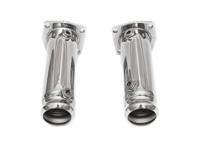
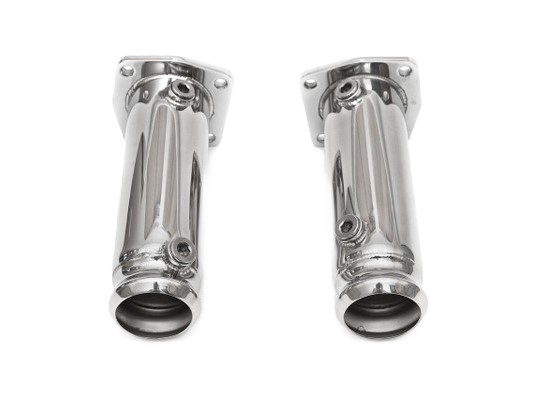
The Fabspeed Porsche 996 Turbo Cat Bypass Pipes are high-performance exhaust components developed for the Porsche 911 Turbo (996), designed specifically for use with compatible existing Fabspeed exhaust systems.
Fits:
- Porsche 996 TURBO 2000-05
Manufactured from premium 14–16 gauge T304L stainless steel, these catalyst-bypass pipes replace the sport catalytic converter sections of the Fabspeed exhaust with straight-through pipework.
Their purpose is to provide a less restrictive exhaust path, producing a more aggressive exhaust note and supporting improved exhaust gas flow from the Porsche 996 Turbo's twin-turbocharged 3.6-litre flat-six engine.
By removing the catalytic converter elements from the exhaust path, the bypass pipes eliminate a source of exhaust restriction and create a more direct route for gases leaving the turbochargers.
Fabspeed designs these pipes for owners seeking a more extreme, motorsport-oriented exhaust configuration.
The system uses CNC mandrel-bent stainless steel tubing to provide smooth internal pipe geometry, consistent exhaust routing and durable construction.
Fabspeed describes the pipes as a direct bolt-on alternative to the corresponding catalytic converter sections in its compatible exhaust systems.
A key feature of this product is its modular compatibility with existing Fabspeed exhaust components, including suitable Maxflo and Supersport X-Pipe configurations.
However, these are not universal catalyst replacement pipes.
They do not fit directly onto the original Porsche factory exhaust or exhaust systems manufactured by other aftermarket suppliers.
Fabspeed lists a weight reduction of approximately 25 lb (11.3 kg), although the precise saving will depend on the configuration being replaced.
The manufacturer also states that the pipes can improve power delivery and throttle response, but does not publish a confirmed horsepower or torque increase for this standalone product.
What This Product Does:
The Fabspeed Cat Bypass Pipes replace the catalytic converter sections of a compatible Fabspeed Porsche 996 Turbo exhaust.
In a conventional catalytic exhaust, exhaust gases pass through a catalytic converter containing a coated internal substrate.
The converter treats pollutants in the exhaust gases, but its internal structure also creates a degree of flow resistance.
Fabspeed's bypass pipes replace those sections with straight-through tubing, eliminating the catalytic converter substrate from the exhaust path.
The main functions and benefits include:
- Creates a Straight-Through Exhaust Route: Replaces the existing Fabspeed sport catalytic converter sections with unrestricted pipework.
- Reduces Exhaust Restriction: Removes the catalytic substrate from the exhaust gas path.
- Supports Increased Exhaust Flow: Provides a less restrictive route for gases leaving the turbochargers.
- Enhances Motorsport Exhaust Sound: Produces a louder, sharper and more aggressive exhaust character.
- Improves Performance Potential: Designed to support stronger power delivery in suitable performance configurations.
- Supports Throttle Responsiveness: Fabspeed advertises improved throttle response.
- Reduces Exhaust System Weight: Fabspeed lists a weight reduction of approximately 25 lb.
- Uses Corrosion-Resistant Stainless Steel: T304L construction offers durability under high exhaust temperatures.
- Maintains Smooth Pipe Geometry: CNC mandrel bending helps preserve consistent internal tubing dimensions.
- Integrates with Compatible Fabspeed Systems: Designed for selected existing Maxflo and Supersport X-Pipe exhaust configurations.
- Supports Motorsport Preparation: Provides a catalyst-free configuration for vehicles used in permitted competition or closed-course environments.
- Allows Modular Exhaust Configuration: Enables compatible Fabspeed exhaust systems to use either the appropriate catalytic converter sections or the bypass configuration.
Symptoms Of Wear Or Failure:
The Fabspeed Cat Bypass Pipes are primarily a motorsport performance modification, not a standard maintenance replacement.
However, owners may be considering them while inspecting deteriorated exhaust components or preparing a dedicated track vehicle.
1. Corroded Exhaust Pipework
Exposure to moisture, heat and environmental contamination can cause corrosion around exhaust pipes, joints and flanges.
Advanced corrosion may weaken the affected sections and lead to leakage.
2. Cracked Exhaust Welds
Repeated heating and cooling, vibration or mechanical stress can contribute to cracks around welded joints.
Possible signs include exhaust blowing noises and visible soot deposits.
3. Exhaust Leaks
Damaged flanges, failed gaskets or cracked pipework can allow exhaust gases to escape before reaching the tailpipes.
Exhaust leaks may create hissing, blowing or ticking sounds.
4. Restricted Catalytic Converters
A damaged or internally deteriorated catalyst may become partially blocked.
A significant restriction can increase exhaust backpressure and reduce engine performance.
5. Loose Catalytic Converter Substrate
Damage within a catalytic converter may cause internal rattling or metallic vibration.
These noises can sometimes change with engine speed or load.
6. Reduced Engine Performance
Excessive exhaust restriction may contribute to reduced power or sluggish acceleration.
However, poor performance can also be caused by ignition faults, boost leaks, faulty sensors or turbocharger problems.
7. Unusual Exhaust Temperatures
Severe restrictions or engine combustion faults may contribute to abnormal exhaust temperatures.
The cause should be diagnosed before any performance modification is made.
8. Damaged Exhaust Flanges
Corroded or distorted flanges may prevent exhaust sections from sealing correctly.
9. Deteriorated Mounting Hardware
Loose or damaged exhaust fasteners can cause movement, rattling and leaks.
10. Unwanted Exhaust Vibration
Poor alignment, damaged supports or cracked components may produce vibration or metallic contact with the surrounding bodywork.
11. Exhaust-Related Diagnostic Faults
Catalytic converter efficiency faults or exhaust sensor problems may trigger an engine warning light.
The underlying cause requires proper diagnosis rather than simply removing the converter.
12. Visible Impact Damage
Exhaust pipes or catalytic converter housings may be damaged by road debris, contact with obstacles or incorrect lifting procedures.
Why Replacement / Upgrading Matters:
- The exhaust system is an important part of the Porsche 996 Turbo's engine operation.
- Exhaust gases drive the turbochargers before passing through the downstream exhaust components.
- The design of the exhaust system can influence gas flow, pressure and the sound characteristics of the vehicle.
- For a dedicated competition or closed-track Porsche 996 Turbo, Fabspeed Cat Bypass Pipes provide a way to configure an existing Fabspeed exhaust for reduced downstream restriction.
NOTE: In the United Kingdom, sports catalytic converters and bypass pipes do not have type approval and are not legally permitted for use on vehicles manufactured after 1st March 2001. They are not MOT compliant and cannot be used on public roads. These components are intended solely for race and track use.
For vehicles manufactured before 1st March 2001, a non-type approved sports catalytic converter may be fitted, provided it offers comparable performance to the original and the vehicle continues to meet the applicable emissions standards for its age. The vehicle must still pass an MOT test.
If you are located outside the UK, please check your local laws and regulations to ensure compliance.
Related reference numbers
Related, superseded, cross reference or alternative numbers for comparison.
FSPOR996TCB
The product you are viewing cross references to these numbers

.jpg)
.jpg)
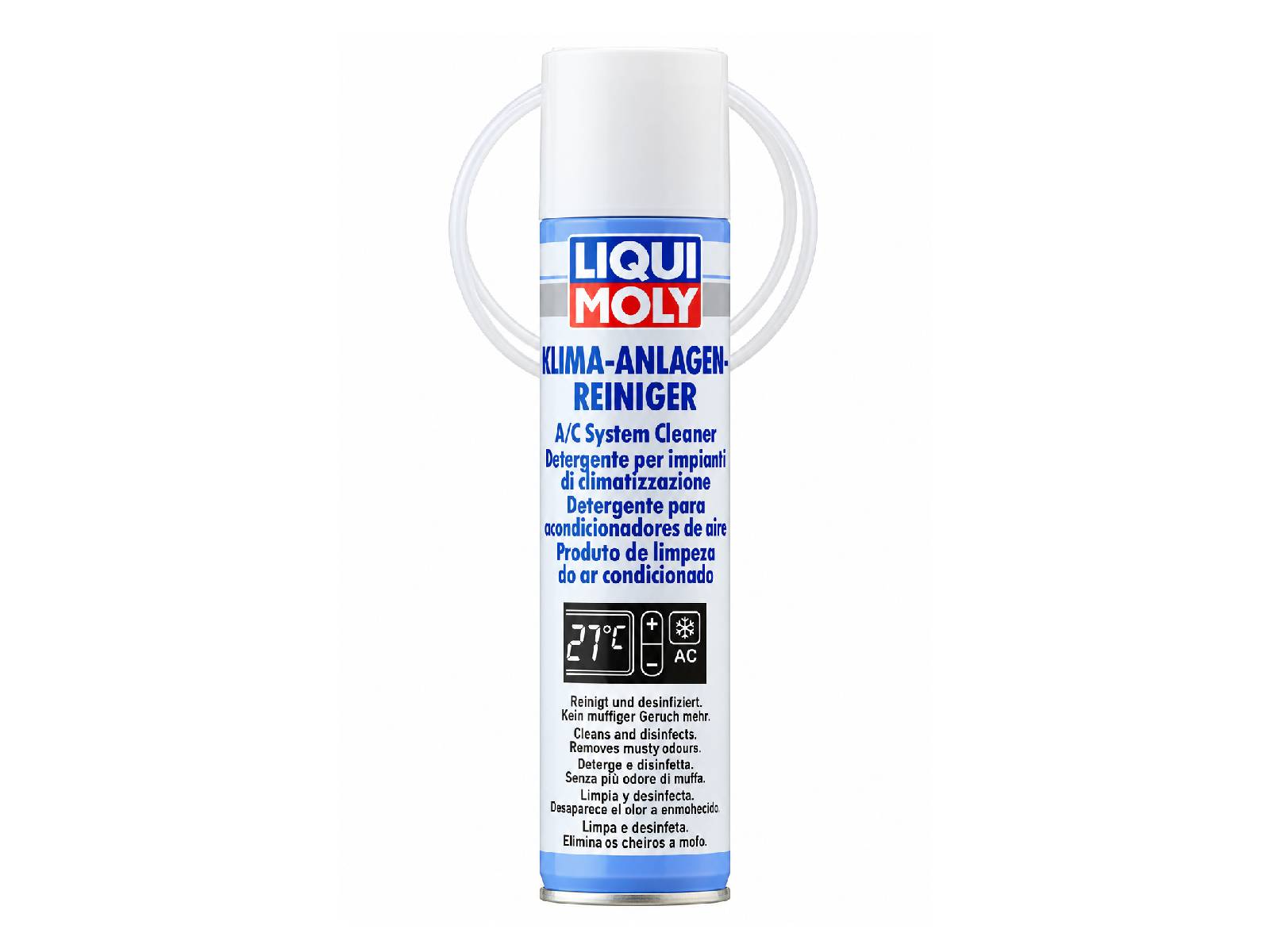
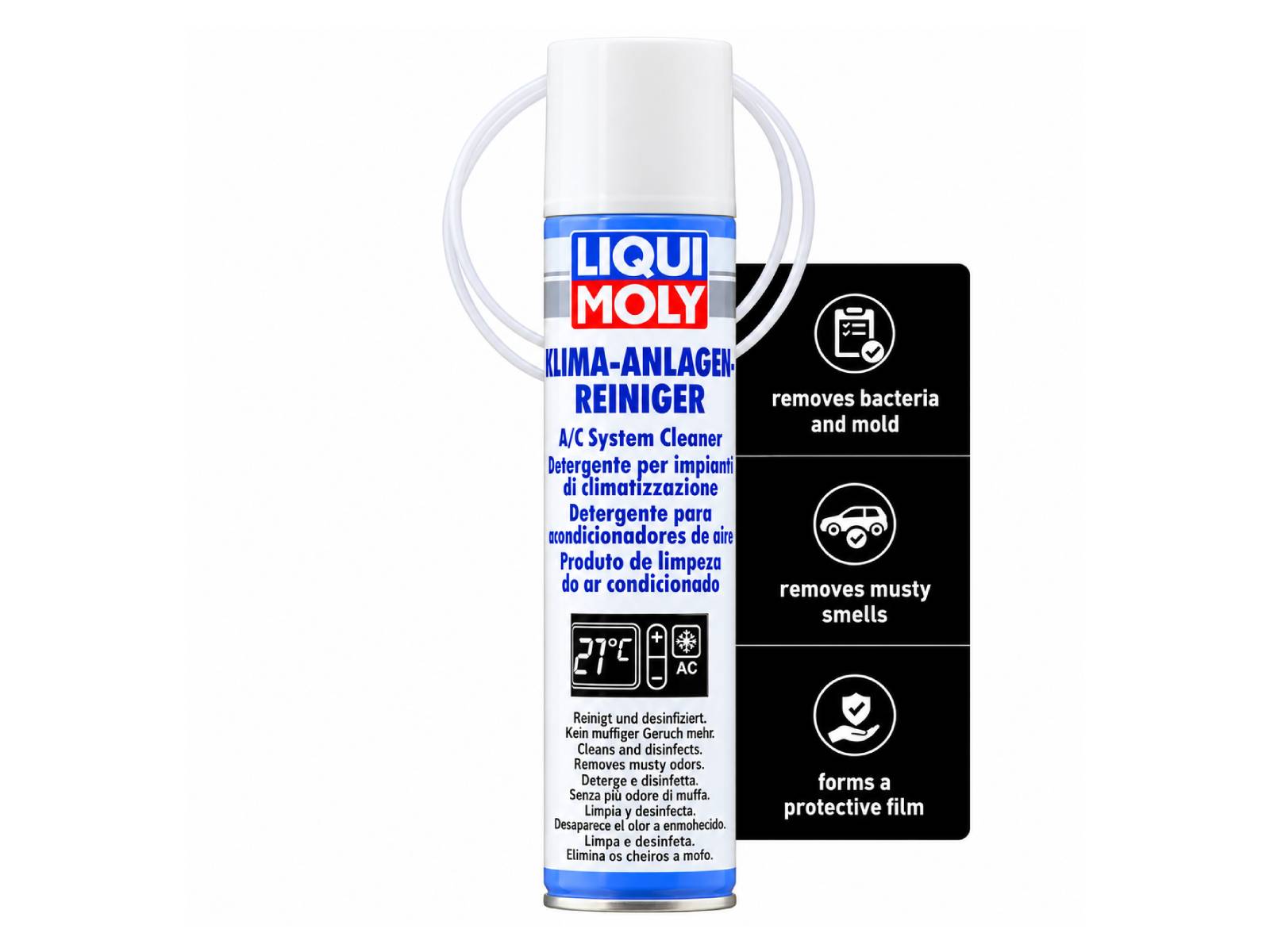
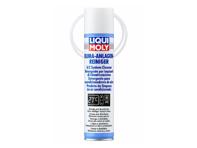
LIQUI MOLY A/C System Cleaner Spray - 250ml
LIQUI MOLY A/C System Cleaner is a specialist cleaning spray designed to remove bacteria, mould and unpleasant odours from vehicle air conditioning and ventilation systems.
Its effective formula cleans the air conditioning evaporator and air inlet ducts, leaving a protective film and a pleasantly fresh fragrance. It helps maintain a cleaner cabin environment without requiring complete removal of the air conditioning system.
What Does LIQUI MOLY A/C System Cleaner Do?
The cleaner removes mould and bacteria that accumulate on air conditioning evaporators and inside ventilation ducts. It helps eliminate musty smells at their source, leaving the system cleaner and the cabin air fresher.
Why Do Air Conditioning Systems Become Contaminated?
Moisture produced during air conditioning operation can collect around the evaporator, creating conditions where bacteria and mould develop.
Over time, this contamination can cause unpleasant smells when the air conditioning or ventilation system is switched on.
When Should It Be Used?
A/C System Cleaner is recommended when musty or unpleasant smells are noticeable from the ventilation system.
It can also be used during routine air conditioning servicing, particularly on vehicles frequently driven in humid conditions or used for short journeys.
Key
Features
- Removes bacteria and mould from air conditioning systems.
- Eliminates unpleasant and musty ventilation smells.
- Cleans evaporators and air inlet ducts.
- Leaves a pleasantly fresh fragrance.
- Forms a protective film after cleaning.
- Helps maintain cleaner cabin air.
- No complete air conditioning system removal required.
- Suitable for petrol, diesel, hybrid and electric vehicles.
- One 250ml can treats one vehicle's air conditioning system.
Application
Instructions
- Open a vehicle window and ensure the air conditioning condensate drains are clear.
- Switch off the air conditioning, select recirculation and footwell airflow, then run the engine with temperature and blower settings at maximum for 10 minutes to dry the evaporator.
- Insert the supplied spray probe towards the evaporator following vehicle-specific access instructions.
- Spray the cleaner across the evaporator surface, moving the probe carefully to distribute the product.
- Allow the cleaner to work for 15–20 minutes.
- Dry the evaporator for a further 10 minutes using the same heating and ventilation settings.
- Replace the cabin dust and pollen filter.
Important: Follow Porsche-specific service
instructions where available. Keep a window open, avoid inhaling cleaning
vapours and read the product's biocide safety information before use. The
manufacturer recommends one 250ml container per vehicle.
Product Category Description – Porsche Air
Conditioning & Cabin Ventilation Cleaners
LIQUI MOLY A/C System Cleaner provides an effective solution for cleaning Porsche air conditioning evaporators and ventilation systems, helping eliminate bacteria, mould and unpleasant cabin smells.
Suitable for compatible Porsche 911, 944, 968, 928, Boxster, Cayman, Cayenne, Macan, Panamera and Taycan models, this specialist treatment helps maintain fresh cabin air and cleaner ventilation components.
- Porsche 996 TURBO 2000-05
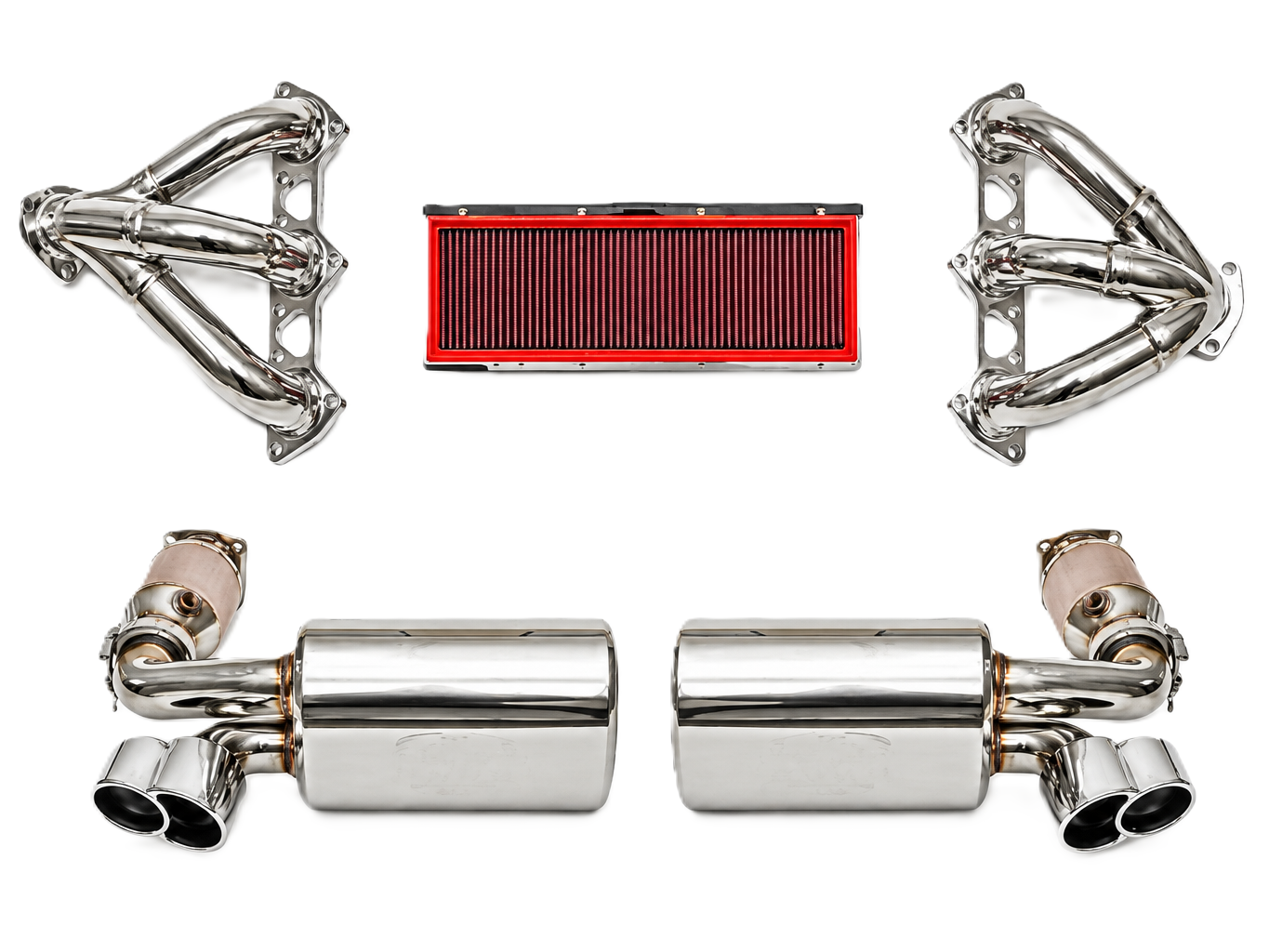
The Fabspeed Porsche 996 Turbo STREET Performance Package is a comprehensive exhaust, air intake developed for Porsche 911 Turbo (996) models manufactured between 2000 and 2005.
Fits:
- Porsche 996 TURBO 2000-05
Kit Includes:
- Maxflo Performance Mufflers
- Sport Performance Headers
- Deluxe X-50 Style Tips
- High Performance Air Intake
Designed by Fabspeed Motorsport, this performance package combines high-quality stainless steel exhaust components, performance headers, a competition-style air intake to enhance the driving characteristics of the Porsche 996's 3.6-litre twin-turbocharged flat-six engine.
The package is engineered to improve exhaust gas flow, reduce intake restrictions, enhance turbocharger response and deliver a deeper, more distinctive sports exhaust note.
Fabspeed's STREET Performance Package includes Maxflo Performance Mufflers, Sport Performance Headers, Deluxe X-50 Style Exhaust Tips and a High Performance Air Intake System.
The exhaust components use premium T304 stainless steel and precision engineering techniques designed to improve durability and exhaust efficiency.
The performance headers incorporate high-velocity 3-into-1 merge collectors, helping exhaust gases flow efficiently towards the turbochargers.
The Maxflo mufflers feature specially designed hydro-formed housings, TIG-welded construction and high-temperature acoustic packing to deliver a sportier exhaust tone while retaining controlled sound characteristics.
The High Performance Air Intake System uses dual-conical dry-style filters designed to improve intake airflow and support the engine's increased performance potential.
Fabspeed advertises gains of up to 80 wheel horsepower and 130 lb-ft of torque, together with an approximate 25 lb (11.3 kg) weight reduction.
The Fabspeed Porsche 996 Turbo STREET Performance Package is particularly suited to enthusiasts seeking a coordinated performance upgrade rather than purchasing separate intake, exhaust and tuning components individually.
What This Product Does:
The Fabspeed STREET Performance Package upgrades the intake and exhaust systems of the Porsche 996 Turbo.
Its key functions and benefits include:
- Improved Exhaust Gas Flow: Performance headers and Maxflo mufflers are designed to reduce restrictions in the exhaust system.
- Enhanced Turbocharger Response: More efficient exhaust routing may support quicker turbocharger response under suitable operating conditions.
- Increased Performance Potential: Fabspeed advertises gains of up to 80 wheel horsepower for its tested package configuration.
- Improved Torque Output: Manufacturer-reported gains reach 130 lb-ft of torque.
- Reduced Exhaust Backpressure: High-flow exhaust components help reduce unnecessary downstream restriction.
- Enhanced Intake Airflow: Dual-conical performance filters support improved airflow into the engine.
- Sharper Throttle Response: The coordinated upgrades are intended to make the engine feel more responsive.
- Sportier Exhaust Sound: Maxflo mufflers produce a deeper, more engaging turbocharged flat-six exhaust note.
- Reduced Vehicle Weight: Fabspeed advertises approximately 25 lb (11.3 kg) of weight savings.
- Durable Stainless Steel Construction: T304 stainless steel provides corrosion resistance and thermal durability.
- Performance Exhaust Appearance: Deluxe X-50 Style Tips enhance the vehicle's rear styling.
- Reusable Air Filters: The dry-style filters can be cleaned and reused according to the manufacturer's instructions.
The Fabspeed STREET Performance Package is primarily a performance upgrade rather than a routine replacement or fault-repair kit.
However, deterioration of the factory exhaust or intake components may prompt owners to investigate replacement options.
1. Corrosion on Exhaust Components
The original exhaust manifolds, mufflers, pipes and mounting hardware are exposed to high temperatures, moisture and environmental contamination.
Severe corrosion can weaken these components and cause leaks.
2. Exhaust Leaks
Cracked manifolds, deteriorated gaskets or damaged pipe connections may allow exhaust gases to escape.
Common symptoms include blowing noises, soot deposits and unusual exhaust smells.
3. Damaged Exhaust Mufflers
Internal deterioration can produce metallic rattling, unwanted vibration or changes in exhaust sound.
4. Restricted Catalytic Converters
Damaged or internally restricted catalytic converters may create excessive exhaust backpressure.
This can affect engine performance and turbocharger operating conditions.
5. Damaged Exhaust Headers
Cracks, distorted flanges or impact damage can compromise the integrity of the original exhaust manifolds.
6. Loose Exhaust Mountings
Worn brackets or corroded fasteners may allow unwanted exhaust movement, vibration or rattling.
7. Unexpected Exhaust Noise
An unusually loud or harsh exhaust note may indicate leakage or component failure rather than normal operation.
8. Dirty or Restricted Air Filter
A heavily contaminated filter can restrict the airflow entering the engine.
9. Damaged Intake Housing
Cracks, broken connections or deteriorated intake components may affect proper airflow and filtration.
10. Loose or Damaged Intake Connections
Air leaks within the intake system may contribute to inconsistent engine operation, depending on their location.
11. Deteriorated Intake Seals
Ageing rubber seals may lose flexibility, potentially allowing unwanted air movement or contamination.
12. Reduced Engine Power
A noticeable loss of performance may be associated with exhaust restrictions, intake faults, boost leaks or other engine problems.
13. Sluggish Turbocharger Response
Reduced boost response may be caused by damaged boost hoses, faulty pressure-control components, turbocharger deterioration or exhaust restriction.
14. Hesitation During Acceleration
Ignition faults, fuel delivery issues, intake leaks or engine management problems can cause hesitation.
15. Engine Management Warning Lights
Stored diagnostic trouble codes may indicate sensor, fuelling, emissions or boost-control issues.
16. Inconsistent Power Delivery
Unexpected changes in performance can indicate underlying mechanical or electronic faults.
Why Replacement Matters:
- Upgrading the intake and exhaust systems of the Porsche 996 Turbo can enhance engine responsiveness, exhaust sound and performance potential.
- The original Porsche 996 Turbo was developed to balance strong acceleration, emissions control, refinement and everyday usability.
- The Fabspeed STREET Performance Package offers a more performance-focused combination of components for owners seeking additional power and a more engaging driving experience.
Related reference numbers
Related, superseded, cross reference or alternative numbers for comparison.
FSPOR996TSPKGM
The product you are viewing cross references to these numbers
This kit is comprised of the following items:
- Porsche 996 TURBO 2000-05
The Fabspeed Porsche 996 Turbo STREET Performance Package is a comprehensive exhaust, air intake developed for Porsche 911 Turbo (996) models manufactured between 2000 and 2005.
Fits:
- Porsche 996 TURBO 2000-05
Kit Includes:
- Maxflo Performance Mufflers
- Sport Performance Headers
- Deluxe X-50 Style Tips
- High Performance Air Intake
Designed by Fabspeed Motorsport, this performance package combines high-quality stainless steel exhaust components, performance headers, a competition-style air intake to enhance the driving characteristics of the Porsche 996's 3.6-litre twin-turbocharged flat-six engine.
The package is engineered to improve exhaust gas flow, reduce intake restrictions, enhance turbocharger response and deliver a deeper, more distinctive sports exhaust note.
Fabspeed's STREET Performance Package includes Maxflo Performance Mufflers, Sport Performance Headers, Deluxe X-50 Style Exhaust Tips and a High Performance Air Intake System.
The exhaust components use premium T304 stainless steel and precision engineering techniques designed to improve durability and exhaust efficiency.
The performance headers incorporate high-velocity 3-into-1 merge collectors, helping exhaust gases flow efficiently towards the turbochargers.
The Maxflo mufflers feature specially designed hydro-formed housings, TIG-welded construction and high-temperature acoustic packing to deliver a sportier exhaust tone while retaining controlled sound characteristics.
The High Performance Air Intake System uses dual-conical dry-style filters designed to improve intake airflow and support the engine's increased performance potential.
Fabspeed advertises gains of up to 80 wheel horsepower and 130 lb-ft of torque, together with an approximate 25 lb (11.3 kg) weight reduction.
The Fabspeed Porsche 996 Turbo STREET Performance Package is particularly suited to enthusiasts seeking a coordinated performance upgrade rather than purchasing separate intake, exhaust and tuning components individually.
What This Product Does:
The Fabspeed STREET Performance Package upgrades the intake and exhaust systems of the Porsche 996 Turbo.
Its key functions and benefits include:
- Improved Exhaust Gas Flow: Performance headers and Maxflo mufflers are designed to reduce restrictions in the exhaust system.
- Enhanced Turbocharger Response: More efficient exhaust routing may support quicker turbocharger response under suitable operating conditions.
- Increased Performance Potential: Fabspeed advertises gains of up to 80 wheel horsepower for its tested package configuration.
- Improved Torque Output: Manufacturer-reported gains reach 130 lb-ft of torque.
- Reduced Exhaust Backpressure: High-flow exhaust components help reduce unnecessary downstream restriction.
- Enhanced Intake Airflow: Dual-conical performance filters support improved airflow into the engine.
- Sharper Throttle Response: The coordinated upgrades are intended to make the engine feel more responsive.
- Sportier Exhaust Sound: Maxflo mufflers produce a deeper, more engaging turbocharged flat-six exhaust note.
- Reduced Vehicle Weight: Fabspeed advertises approximately 25 lb (11.3 kg) of weight savings.
- Durable Stainless Steel Construction: T304 stainless steel provides corrosion resistance and thermal durability.
- Performance Exhaust Appearance: Deluxe X-50 Style Tips enhance the vehicle's rear styling.
- Reusable Air Filters: The dry-style filters can be cleaned and reused according to the manufacturer's instructions.
The Fabspeed STREET Performance Package is primarily a performance upgrade rather than a routine replacement or fault-repair kit.
However, deterioration of the factory exhaust or intake components may prompt owners to investigate replacement options.
1. Corrosion on Exhaust Components
The original exhaust manifolds, mufflers, pipes and mounting hardware are exposed to high temperatures, moisture and environmental contamination.
Severe corrosion can weaken these components and cause leaks.
2. Exhaust Leaks
Cracked manifolds, deteriorated gaskets or damaged pipe connections may allow exhaust gases to escape.
Common symptoms include blowing noises, soot deposits and unusual exhaust smells.
3. Damaged Exhaust Mufflers
Internal deterioration can produce metallic rattling, unwanted vibration or changes in exhaust sound.
4. Restricted Catalytic Converters
Damaged or internally restricted catalytic converters may create excessive exhaust backpressure.
This can affect engine performance and turbocharger operating conditions.
5. Damaged Exhaust Headers
Cracks, distorted flanges or impact damage can compromise the integrity of the original exhaust manifolds.
6. Loose Exhaust Mountings
Worn brackets or corroded fasteners may allow unwanted exhaust movement, vibration or rattling.
7. Unexpected Exhaust Noise
An unusually loud or harsh exhaust note may indicate leakage or component failure rather than normal operation.
8. Dirty or Restricted Air Filter
A heavily contaminated filter can restrict the airflow entering the engine.
9. Damaged Intake Housing
Cracks, broken connections or deteriorated intake components may affect proper airflow and filtration.
10. Loose or Damaged Intake Connections
Air leaks within the intake system may contribute to inconsistent engine operation, depending on their location.
11. Deteriorated Intake Seals
Ageing rubber seals may lose flexibility, potentially allowing unwanted air movement or contamination.
12. Reduced Engine Power
A noticeable loss of performance may be associated with exhaust restrictions, intake faults, boost leaks or other engine problems.
13. Sluggish Turbocharger Response
Reduced boost response may be caused by damaged boost hoses, faulty pressure-control components, turbocharger deterioration or exhaust restriction.
14. Hesitation During Acceleration
Ignition faults, fuel delivery issues, intake leaks or engine management problems can cause hesitation.
15. Engine Management Warning Lights
Stored diagnostic trouble codes may indicate sensor, fuelling, emissions or boost-control issues.
16. Inconsistent Power Delivery
Unexpected changes in performance can indicate underlying mechanical or electronic faults.
Why Replacement Matters:
- Upgrading the intake and exhaust systems of the Porsche 996 Turbo can enhance engine responsiveness, exhaust sound and performance potential.
- The original Porsche 996 Turbo was developed to balance strong acceleration, emissions control, refinement and everyday usability.
- The Fabspeed STREET Performance Package offers a more performance-focused combination of components for owners seeking additional power and a more engaging driving experience.
Related reference numbers
Related, superseded, cross reference or alternative numbers for comparison.
FSPOR996TSPKGS
The product you are viewing cross references to these numbers
This kit is comprised of the following items: