





Enter your VAT number here and click Verify:
Your details have been verified. VAT number registered to:
,
.
Your order will now be zero rated for VAT purposes. We reserve the right to verify these details after your order request has been made and reinstate VAT if required.
Your VAT details were not recognised or were invalid. Your VAT number must be matched to your Billing Country as specified above. This is currently specified as . You do not need to enter the country code part of your VAT number as this has already been selected in your billing address details above.
The VAT number checking service is currently offline. Please supply your VAT details within the comments or special instructions field below and we will apply a VAT discount after placing your order request.
Fabspeed

Fabspeed for Porsche
Here at Fabspeed Motorsport, we are dedicated to delivering our customers the highest quality performance upgrades with the industry’s best lifetime warranty. We have over 29 years experience designing, engineering and installing high performance Porsche exhaust systems, air intake systems and ECU tuning for the world’s most coveted exotic cars. All of our products are designed and engineered right here in Fort Washington, Pennsylvania by our very skilled and passionate fabricators
A Quick Look at Fabspeed
Fabspeed information on this page is based on details supplied by the manufacturer or distributor, plus any OE references provided with the parts.
Choosing the Right Fit for Your Porsche
Where Fabspeed is listed for Porsche, use the supplied model coverage and OE references to confirm suitability. Check details that commonly affect fitment such as model year, side/position, and connector type where relevant.
- Typical reasons people replace these parts include upgrading tired or corroded factory exhaust components, tailoring sound and response for fast-road or track use, and supporting wider tuning packages.
- Common symptoms that lead owners to inspect or change related parts include exhaust leaks, rattles, drone, heat-related fatigue, and loss of performance that may also be linked to boost or vacuum issues.
- After installation, it is sensible to refresh mounts and hardware where worn, and to carry out a careful check for leaks once everything has heat-cycled.
- Consider whether supporting ECU mapping or health checks are appropriate for your Porsche, depending on how extensive your hardware changes are.
Browse by Category
If you already know the area you are working on, start with the category and then filter by Porsche model. Where real-world symptoms and typical reasons to replace are provided, use them to keep the wording grounded.
Engine Tuning — Engine tuning parts and upgrades for Porsche are used to improve drivability, throttle response and power, or to support changes such as intake, exhaust, or forced induction. They are typically chosen once the engine is in good health, as tuning cannot compensate for underlying mechanical faults.
- Before any significant tuning work, check overall engine condition, including compression or leak-down where appropriate, fuel system health, sensor data, and that there are no boost or vacuum leaks.
- Avoid using calibration changes to hide rough running or misfires, as the mechanical root cause still needs to be addressed.
Air Filters — Air filters for Porsche protect the engine from dirt while maintaining the airflow that correct fuelling and performance depend on. Owners often replace or upgrade filters to restore airflow, support tuning work, or improve serviceability while keeping good filtration.
- Service intervals depend on use: dusty environments or frequent track days may justify more frequent inspection and cleaning or replacement.
- If using oiled performance filters, follow the manufacturer’s oiling instructions carefully to avoid contaminating sensitive airflow sensors.
Air Induction Kits — Induction kits for Porsche replace or re-route parts of the intake system to change airflow, response and sound. They are usually part of a wider tuning package and are selected to balance intake temperatures, flow and sensor stability.
- When fitting an induction kit, ensure joints and connections are well sealed to prevent unmetered air entering the engine or causing drivability issues.
- Positioning and heat management are important: shielding from hot engine-bay air helps keep intake temperatures, and therefore performance, more consistent.
Exhausts — Exhaust upgrades for Porsche are commonly chosen to replace corroded or leaking factory systems, refine the car’s sound, reduce weight or improve gas flow as part of a tuning package. The right choice depends on how the car is used and the balance you want between sound, comfort and responsiveness.
- When planning an exhaust change, consider the complete system, including catalytic converters, to keep within your local emissions and noise requirements.
- Replacing aged gaskets, clamps, mounts and rusted fixings at the same time as the exhaust usually improves fitment and reduces the chance of future leaks or rattles.
All Silencers / Mufflers — This category covers a range of Porsche silencer and muffler layouts, from standard-style replacements to sport and valved options. Selection is usually guided by corrosion or damage to existing parts, unwanted noise or drone, or a desire to change the exhaust character while staying within comfort and usage needs.
- To narrow down the correct layout, compare inlet and outlet positions, hanger locations and pipe diameters on your current system against the product details.
- When choosing between standard, sport or switchable systems, think about typical journeys and cabin noise tolerance so you end up with a sound level that suits day-to-day use.
Explore Fabspeed at Design911
View the current Fabspeed range for Porsche at Design911, then filter by model and category to narrow down to the right parts.


- Porsche 964 (911) C2 1989-93
- Porsche 964 (911) C4 1989-93
The Fabspeed RSR Muffler Bypass Pipes are a motorsport-inspired exhaust upgrade for Porsche 911 964 Carrera models already equipped with the Fabspeed Maxflo RSR Header/Muffler Kit in its Non-Sport-Cat configuration.
Fits:
- Porsche 964 (911) C2 1989-94
- Porsche 964 (911) C4 1989-94
Designed to replace the Fabspeed mufflers with direct stainless-steel outlet pipes, they create a considerably less silenced exhaust path and give the air-cooled flat-six a much louder, more aggressive race-car character.
Rather than routing exhaust gases through conventional mufflers, the bypass pipes connect directly to the existing Fabspeed RSR headers. This reduces rear exhaust restriction and removes much of the sound attenuation provided by the mufflers.
The result is a raw, highly audible air-cooled exhaust note inspired by Porsche competition cars and intended primarily for drivers seeking maximum sound and a more direct motorsport experience.
Manufactured in-house by Fabspeed from T304L stainless steel, the pipes are designed for durability, heat resistance and straightforward bolt-on installation.
What This Product Does:
The RSR Muffler Bypass Pipes replace the muffler sections of the compatible Fabspeed exhaust with direct outlet pipes.
They are designed to:
- Eliminate the Fabspeed rear mufflers.
- Reduce rear exhaust restriction.
- Create a more direct exhaust path.
- Increase exhaust volume substantially.
- Produce a raw air-cooled flat-six sound.
- Give the vehicle an RSR / Cup-car-inspired exhaust character.
- Reduce the amount of sound attenuation in the exhaust system.
- Provide a lightweight and mechanically simple exhaust arrangement.
- Allow straightforward conversion back to the Fabspeed mufflers.
- Provide a bolt-on modification requiring no cutting or welding.
Symptoms Of Wear Or Failure:~
Possible symptoms include:
- Exhaust leaks.
- Ticking or blowing noises.
- Visible cracks.
- Cracked welds.
- Soot around joints.
- Loose V-band clamps.
- Excessive pipe movement.
- Exhaust vibration.
- Metallic rattling.
- Misaligned exhaust outlets.
- Pipework contacting bodywork.
- Dented or crushed tubing.
- Corrosion around mounting hardware.
- Exhaust smell around the rear of the vehicle.
- Increasing exhaust noise from an unintended leak rather than the outlet.
Because the pipes are intentionally loud, small leaks may be harder to identify by sound alone and should also be checked visually.
Why Replacement Matters:
Replacing damaged bypass pipes helps restore:
- Correct exhaust sealing.
- Proper system alignment.
- Unrestricted exhaust flow.
- Reliable V-band connections.
- Correct clearance from surrounding components.
- Structural integrity.
- Consistent exhaust sound.
On a vehicle used for performance driving or track events, maintaining exhaust integrity is particularly important because sustained high engine speeds create considerable exhaust heat.
NOTE: In the United Kingdom, sports catalytic converters and bypass pipes do not have type approval and are not legally permitted for use on vehicles manufactured after 1st March 2001. They are not MOT compliant and cannot be used on public roads. These components are intended solely for race and track use.
For vehicles manufactured before 1st March 2001, a non-type approved sports catalytic converter may be fitted, provided it offers comparable performance to the original and the vehicle continues to meet the applicable emissions standards for its age. The vehicle must still pass an MOT test.
If you are located outside the UK, please check your local laws and regulations to ensure compliance.
Related reference numbers
Related, superseded, cross reference or alternative numbers for comparison.
FSPOR964RSRMB
The product you are viewing cross references to these numbers


- Porsche 997 MK1 TURBO 2007-09
The Fabspeed Competition Link Pipes are high-flow, catalyst-bypass exhaust pipes developed for the Porsche 911 997 Turbo from 2006–2009 equipped with a compatible Fabspeed exhaust system.
Fits:
- Porsche 997 MK1 TURBO 2006-09
Designed specifically for competition and closed-course applications, the pipes replace the catalytic-converter section of a compatible Fabspeed exhaust with straight-through stainless-steel tubing.
Removing the catalyst substrate creates a significantly less restrictive exhaust path for the twin-turbocharged flat-six engine, helping reduce post-turbo backpressure, improve exhaust gas evacuation and sharpen throttle response.
The reduction in exhaust restriction also produces a much more aggressive exhaust note, with increased turbocharger sound and greater overall exhaust volume.
The Competition Link Pipes are manufactured from 14–16 gauge CNC mandrel-bent T304L stainless steel, providing high-temperature durability, corrosion resistance and a smooth internal exhaust path.
What This Product Does:
The Competition Link Pipes replace the catalytic-converter section of the compatible exhaust system with straight-through tubing.
They are designed to:
- Remove catalyst-related exhaust restriction.
- Increase exhaust gas flow.
- Reduce post-turbo backpressure.
- Improve throttle response.
- Support quicker turbocharger response.
- Provide greater exhaust-flow capacity.
- Increase turbocharger sound.
- Produce a louder and more aggressive exhaust note.
- Reduce the mass associated with catalytic-converter assemblies.
- Complement compatible Fabspeed performance exhaust systems.
- Provide a competition-focused exhaust configuration.
Symptoms Of Wear Or Failure:
One reason for replacing an existing catalytic-converter section may be internal catalyst deterioration.
Possible symptoms include:
- Loss of engine performance.
- Reduced high-RPM power.
- Sluggish turbo response.
- Engine feeling restricted under boost.
- Excessive exhaust backpressure.
- Metallic rattling inside a catalytic converter.
- Check Engine Light.
- Catalyst-efficiency fault codes.
- Excessive exhaust temperature.
- Unusual exhaust smell.
- Internal catalyst substrate breaking apart.
- Melted or collapsed catalyst material.
Catalyst failure should always be diagnosed properly because it may be caused by an underlying engine fault.
Why Replacement Matters:
Replacing damaged competition link pipes helps restore:
- Proper exhaust sealing.
- Correct exhaust alignment.
- Maximum intended gas flow.
- Safe routing of hot exhaust gases.
- Structural integrity.
- Reliable track performance.
Where the original or sport catalytic converters have become restricted or mechanically damaged, moving to a bypass configuration for a permitted competition application can also remove that restriction completely.
NOTE: In the United Kingdom, sports catalytic converters and bypass pipes do not have type approval and are not legally permitted for use on vehicles manufactured after 1st March 2001. They are not MOT compliant and cannot be used on public roads. These components are intended solely for race and track use.
For vehicles manufactured before 1st March 2001, a non-type approved sports catalytic converter may be fitted, provided it offers comparable performance to the original and the vehicle continues to meet the applicable emissions standards for its age. The vehicle must still pass an MOT test.
If you are located outside the UK, please check your local laws and regulations to ensure compliance.
Related reference numbers
Related, superseded, cross reference or alternative numbers for comparison.
FSPOR997TCB
The product you are viewing cross references to these numbers


- Porsche 991.2 GT2 RS 3.8L PDK (700 bhp) 2018-19
The Fabspeed Non-Valved Sport Cats are a high-performance exhaust and catalytic-converter upgrade developed specifically for the Porsche 911 991.2 GT2 RS from 2018 onward.
Fits:
- Porsche 991.2 GT2 RS 3.8L PDK (700 bhp) 2018-19
Designed for owners who want significantly improved exhaust flow and a more aggressive sound while retaining catalytic converters, the system replaces the restrictive factory 700-cell ceramic catalysts and OEM titanium centre muffler with large German HJS 200-cell high-flow catalytic converters and direct rear exhaust outlets.
Unlike Fabspeed's valved GT2 RS sport-cat system, this version contains no exhaust valves. Exhaust gases therefore follow a direct, unrestricted path through the high-flow catalysts and towards the rear outlets at all times.
The HJS catalysts use a high-performance tri-metallic substrate and are designed to provide very high exhaust flow while maintaining catalytic treatment. Fabspeed states that the 200 CPSI HJS cores can flow approximately 90–93% of a straight pipe in suitable applications.
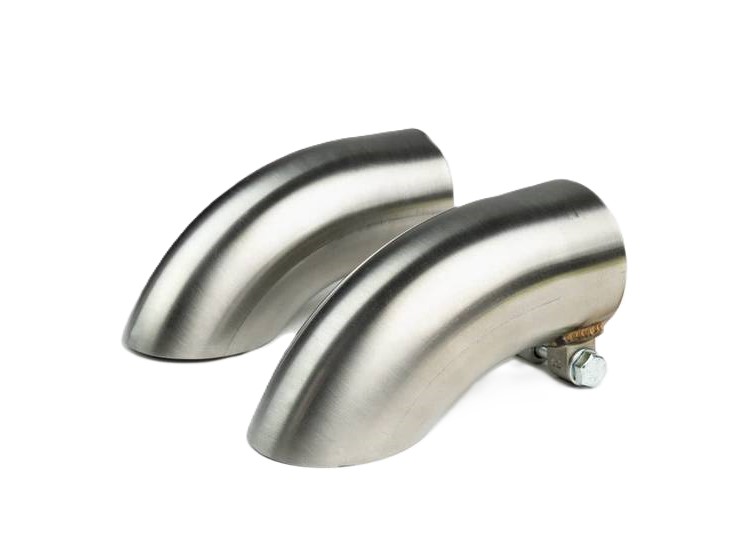
The system is fabricated from 14–16 gauge CNC mandrel-bent T304 stainless steel and includes both angle-cut outlets and slip-on 90-degree turn-down outlets.
Fabspeed currently reports hardware-only gains of:
+7 WHP
+10 lb-ft of torque
Approximately +8.5 HP and +12 lb-ft at the engine
Approximately 12 lb weight reduction
When combined with Fabspeed ECU tuning, the manufacturer also states that its test configuration has produced over 740 HP at the wheels and approximately 850–888 HP at the crank on pump fuel.
Actual performance will vary according to vehicle condition, fuel, calibration, environmental conditions and other modifications.
What This Product Does:
The Fabspeed Non-Valved Sport Cat system replaces the factory catalytic-converter and centre-muffler arrangement downstream of the GT2 RS turbochargers.
It is designed to:
- Reduce exhaust restriction.
- Replace the factory 700-cell catalysts.
- Replace the OEM titanium centre muffler.
- Retain catalytic exhaust treatment.
- Reduce post-turbo backpressure.
- Improve exhaust gas flow.
- Improve turbocharger response.
- Sharpen throttle response.
- Increase engine performance potential.
- Produce a significantly stronger exhaust note.
- Increase audible turbocharger spool and whistle.
- Reduce exhaust-system weight.
- Eliminate exhaust-valve restriction.
- Provide a direct exhaust route from the turbochargers to the rear outlets.
Symptoms Of Wear Or Failure:
Possible signs of catalytic-converter deterioration include:
- Check Engine Light.
- Catalyst-efficiency fault codes.
- Loss of engine performance.
- Sluggish throttle response.
- Slower turbocharger response.
- Engine feeling restricted under boost.
- Reduced high-RPM power.
- Increased exhaust backpressure.
- Metallic rattling from inside the catalyst.
- Unusual exhaust smells.
- Excessive catalyst temperature.
- Internal substrate breaking apart.
- Melted or collapsed catalyst material.
- Failed emissions testing where applicable.
Why Replacement Matters:
Replacing a failed or restricted catalytic converter helps restore:
- Correct exhaust flow.
- Turbocharger efficiency.
- Engine performance.
- Exhaust-system sealing.
- Reliable catalytic operation.
Upgrading to the Fabspeed system additionally provides:
- Significantly reduced catalyst restriction.
- Improved throttle and turbo response.
- More aggressive exhaust sound.
- Lower exhaust-system weight.
- Durable stainless-steel construction.
- Catalytic treatment without a fully catalyst-free race-pipe configuration.
NOTE: In the United Kingdom, sports catalytic converters and bypass pipes do not have type approval and are not legally permitted for use on vehicles manufactured after 1st March 2001. They are not MOT compliant and cannot be used on public roads. These components are intended solely for race and track use.
For vehicles manufactured before 1st March 2001, a non-type approved sports catalytic converter may be fitted, provided it offers comparable performance to the original and the vehicle continues to meet the applicable emissions standards for its age. The vehicle must still pass an MOT test.
If you are located outside the UK, please check your local laws and regulations to ensure compliance.
Related reference numbers
Related, superseded, cross reference or alternative numbers for comparison.
FSPOR9912GT2RSRACESC
The product you are viewing cross references to these numbers


- Porsche 991.2 GT2 RS 3.8L PDK (700 bhp) 2018-19
The Fabspeed Competition Cat Bypass Race Pipes are an extreme motorsport exhaust upgrade designed specifically for the Porsche 911 991.2 GT2 RS from 2018 onward.
Fits:
- Porsche 991.2 GT2 RS 3.8L PDK (700 bhp) 2018-19
The Fabspeed Competition Cat Bypass Race Pipes are an extreme motorsport exhaust upgrade designed specifically for the Porsche 911 991.2 GT2 RS from 2018 onward.
Developed for maximum exhaust flow, minimum restriction and significant weight reduction, the system replaces both the restrictive factory 700-cell ceramic catalytic converters and the original titanium centre muffler with lightweight straight-through race pipes.
Unlike Fabspeed's PSE-compatible Competition Link Pipes, this version uses no exhaust valves. Removing the catalytic converters, centre muffler and valve assemblies creates the most direct possible exhaust route from each turbocharger to the rear outlets.
The result is substantially reduced backpressure, faster turbo response, significantly increased exhaust volume and a much more aggressive motorsport-style character.
Fabspeed currently lists gains of approximately:
+24 WHP
+29 lb-ft of torque
19 lb weight reduction
Fabspeed also states that when the Competition Cat Bypass Race Pipes are combined with its ECU calibration, its test vehicle produced more than 750 HP at the wheels and approximately 863 HP at the crank.
Actual performance will vary according to vehicle condition, fuel, calibration, environmental conditions and supporting modifications.
What This Product Does:
The Fabspeed Competition Race Pipe system replaces a substantial portion of the original GT2 RS exhaust system.
It is designed to:
- Remove the restrictive factory catalytic converters.
- Remove the factory titanium centre muffler.
- Eliminate exhaust valve restrictions.
- Create an essentially straight-through exhaust path.
- Reduce post-turbo exhaust backpressure.
- Increase exhaust gas flow.
- Improve turbocharger spool.
- Improve throttle response.
- Reduce exhaust-system weight.
- Produce maximum GT2 RS exhaust volume.
- Increase audible turbocharger whistle and spool.
- Support highly tuned competition vehicles.
- Provide quick conversion between race and original exhaust configurations.
Symptoms Of Wear Or Failure:
Race pipes have fewer internal components than catalytic converter assemblies, but they can still suffer mechanical damage.
Possible symptoms include:
- Exhaust leaks.
- Ticking or blowing noises.
- Cracked welds.
- Damaged tubing.
- Loose clamps.
- Soot around joints.
- Excessive vibration.
- Pipes becoming misaligned.
- Exhaust outlets moving out of position.
- Rattling against surrounding components.
- Excessive exhaust movement.
- Impact damage.
- Heat-related stress cracking.
Why Replacement Matters:
Replacing a damaged competition pipe helps restore:
- Maximum intended exhaust flow.
- Correct exhaust sealing.
- Safe hot-gas routing.
- Proper component alignment.
- Structural integrity.
- Correct outlet positioning.
- Reduced risk of heat damage.
For a GT2 RS used regularly on circuit, exhaust inspection should form part of routine maintenance.
NOTE: In the United Kingdom, sports catalytic converters and bypass pipes do not have type approval and are not legally permitted for use on vehicles manufactured after 1st March 2001. They are not MOT compliant and cannot be used on public roads. These components are intended solely for race and track use.
For vehicles manufactured before 1st March 2001, a non-type approved sports catalytic converter may be fitted, provided it offers comparable performance to the original and the vehicle continues to meet the applicable emissions standards for its age. The vehicle must still pass an MOT test.
If you are located outside the UK, please check your local laws and regulations to ensure compliance.
Related reference numbers
Related, superseded, cross reference or alternative numbers for comparison.
FSPOR9912GT2RSRACECB
The product you are viewing cross references to these numbers


- Porsche 971.1 Panamera V6 3.0L 2WD (330 Hp) 2017-20
- Porsche 971.1 Panamera 4 V6 3.0L 4WD (330 Hp) 2017-20
- Porsche 971.1 Panamera 4 V6 3.0L 4WD Executive 2017-20
- Porsche 971.1 Panamera 4 3.0L Turbocharged V6 Sport Turismo 2017-20
- Porsche 971.1 Panamera 4S V6 3.0L 4WD (440 Hp) 2017-20
- Porsche 971.1 Panamera 4S V6 3.0L 4WD Executive 2017-20
The Fabspeed Primary Sport Catalytic Converter Downpipe is a high-performance replacement for the restrictive factory catalytic-converter downpipe fitted to the Porsche 971 Panamera Base V6 single-turbo model from 2017 onward.
Fits:
- Porsche 971.1 Panamera V6 3.0L 2WD (330 Hp) 2017-20
- Porsche 971.1 Panamera 4 V6 3.0L 4WD (330 Hp) 2017-20
- Porsche 971.1 Panamera 4 V6 3.0L 4WD Executive 2017-20
- Porsche 971.1 Panamera 4 3.0L Turbocharged V6 Sport Turismo 2017-20
- Porsche 971.1 Panamera 4S V6 3.0L 4WD (440 Hp) 2017-20
- Porsche 971.1 Panamera 4S V6 3.0L 4WD Executive 2017-20
Designed to improve exhaust flow immediately downstream of the turbocharger, the system replaces the original catalyst section with a freer-flowing German HJS 200-cell tri-metallic high-performance catalytic converter.
The lower-density catalyst allows exhaust gases to pass through with significantly less restriction while still retaining catalytic exhaust treatment. This can help reduce post-turbo backpressure, improve throttle response, sharpen turbo response and produce a more pronounced performance exhaust note.
Fabspeed constructs the downpipe from 14–16 gauge CNC mandrel-bent T304 stainless steel, providing strong corrosion resistance, high-temperature durability and a smooth exhaust path.
What This Product Does:
The primary catalytic converter downpipe connects the turbocharger outlet to the remainder of the exhaust system.
It is designed to:
- Carry exhaust gases away from the turbocharger.
- Reduce restriction compared with the factory catalyst.
- Reduce post-turbo exhaust backpressure.
- Improve exhaust gas evacuation.
- Support quicker turbocharger response.
- Improve throttle response.
- Support increased horsepower and torque.
- Produce a stronger performance exhaust note.
- Retain catalytic exhaust treatment.
- Replace a damaged, restricted or deteriorated factory catalytic converter.
- Provide a durable stainless-steel exhaust upgrade.
Symptoms Of Wear Or Failure:
Possible symptoms include:
- Check Engine Light.
- Catalyst-efficiency fault codes.
- Reduced engine performance.
- Sluggish acceleration.
- Slower turbo response.
- Loss of power at higher engine speeds.
- Increased exhaust backpressure.
- Metallic rattling from the catalytic converter.
- Unusual exhaust smell.
- Excessive catalyst temperature.
- Poor fuel economy.
- Failed emissions testing.
- Internal catalyst material breaking apart.
- Melted or collapsed catalyst substrate.
Why Replacement Matters:
Replacing a restricted or failed factory catalyst helps restore:
- Correct exhaust gas flow.
- Turbocharger efficiency.
- Engine performance.
- Proper catalytic operation.
- Exhaust-system sealing.
- Reliable emissions-system operation.
Upgrading to the Fabspeed sport catalyst additionally provides:
- Reduced exhaust restriction.
- Improved throttle response.
- Increased performance potential.
- Stronger exhaust sound.
- Durable stainless-steel construction.
Related reference numbers
Related, superseded, cross reference or alternative numbers for comparison.
FSPOR971V6SCDP
The product you are viewing cross references to these numbers


- Porsche 991.2 GT2 RS 3.8L PDK (700 bhp) 2018-19
The Fabspeed Center Muffler Bypass X-Pipe is a high-performance exhaust upgrade developed specifically for the Porsche 911 991.2 GT2 RS from 2018 onward, including Weissach and Manthey MR-equipped cars.
Fits:
- Porsche 991.2 GT2 RS 3.8L PDK (700 bhp) 2018-19
Designed to replace the factory titanium centre muffler, the system provides a freer-flowing exhaust path while retaining the vehicle's original catalytic converters.
At the centre of the system is Fabspeed's investment-cast X-pipe. The crossover allows exhaust gases from the two sides of the engine to merge through a carefully shaped central opening, helping reduce restriction, balance exhaust flow and produce a stronger, more exotic exhaust note.
The system is manufactured from 14–16 gauge T304 stainless steel with larger-diameter CNC mandrel-bent tubing. It provides a durable alternative to the original titanium centre muffler while increasing exhaust sound and supporting improved throttle response and performance.
Fabspeed currently lists a +20 HP performance gain for this product. Actual gains can vary according to vehicle condition, fuel, environmental conditions and other modifications.
What This Product Does:
The Fabspeed X-pipe replaces the original centre muffler in the rear exhaust system.
It is designed to:
- Reduce restriction through the centre exhaust section.
- Improve exhaust gas flow.
- Replace the factory titanium centre muffler.
- Increase exhaust volume.
- Produce a more dynamic GT2 RS exhaust note.
- Improve throttle response.
- Support increased engine performance.
- Retain the original catalytic converters.
- Maintain a catalyst-equipped exhaust configuration.
- Provide a durable stainless-steel replacement for the factory centre muffler.
- Allow straightforward installation and removal using the existing clamped exhaust arrangement.
Symptoms Of Wear Or Failure:
Possible symptoms of deterioration in the original centre muffler include:
- Metallic rattling.
- Exhaust blowing noises.
- Cracks around welds.
- Visible exhaust leakage.
- Soot around damaged joints.
- Increased exhaust noise.
- Muffler casing damage.
- Loose internal components.
- Exhaust vibration.
- Exhaust hanging incorrectly.
- Damaged inlet or outlet connections.
- Exhaust contacting surrounding components.
- Heat-related structural deterioration.
A damaged muffler should be inspected before continued high-load or track use.
Why Replacement Matters:
Replacing a damaged or restrictive centre muffler section helps restore:
- Correct exhaust sealing.
- Safe routing of hot exhaust gases.
- Proper exhaust alignment.
- Structural integrity.
- Consistent exhaust flow.
- Reliable mounting.
Upgrading to the Fabspeed X-pipe additionally provides:
- Increased exhaust sound.
- Reduced centre-section restriction.
- Improved throttle response.
- A more performance-focused exhaust character.
- Retention of the factory catalytic converters.
Related reference numbers
Related, superseded, cross reference or alternative numbers for comparison.
FSPOR9912GT2RSCMX
The product you are viewing cross references to these numbers


- Porsche 991.2 GT2 RS 3.8L PDK (700 bhp) 2018-19
The Fabspeed Competition Link Pipes are a motorsport-focused catalyst-bypass exhaust upgrade designed for the Porsche 911 991.2 GT2 RS from 2018 onward.
Fits:
- Porsche 991.2 GT2 RS 3.8L PDK (700 bhp) 2018-19
Developed for maximum exhaust flow and an uncompromised competition sound, the system replaces the restrictive factory ceramic catalytic converters with straight-through stainless-steel link pipes while retaining the car's Porsche Sport Exhaust – PSE – valve functionality.
The original GT2 RS uses approximately 700-cell ceramic catalytic converters. Removing these high-density catalysts creates a much less restrictive route for exhaust gases leaving the turbochargers.
This can reduce exhaust backpressure, increase turbocharger sound and provide considerably greater flow potential for highly tuned or competition vehicles.
Unlike basic straight pipes, the Fabspeed system incorporates large 74mm / 2.92in Helical Limited UK exhaust valves, compared with approximately 60mm / 2.375in factory valves.
These larger valves allow increased exhaust flow while retaining the ability to control the exhaust path through the Porsche PSE system.
What This Product Does:
The Fabspeed Competition Link Pipes replace the factory catalytic converter assemblies located downstream of the GT2 RS turbochargers.
They are designed to:
- Remove the restriction created by the factory catalytic converters.
- Reduce exhaust backpressure.
- Increase exhaust gas flow.
- Improve turbocharger outlet flow.
- Support quicker turbo response.
- Increase performance potential on tuned vehicles.
- Increase turbocharger whistle and spool sound.
- Produce a substantially louder exhaust note.
- Retain Porsche Sport Exhaust valve functionality.
- Replace the smaller factory exhaust valves with larger Helical valves.
- Reduce exhaust-system weight.
- Provide a modular competition exhaust configuration.
Symptoms Of Wear Or Failure:
Although straight exhaust pipes contain fewer internal components than catalytic converters, they can still deteriorate or become damaged.
Possible symptoms include:
- Exhaust leaks.
- Ticking or blowing noises.
- Soot around joints or welds.
- Metallic rattling.
- Cracked welds.
- Damaged tubing.
- Loose clamps.
- Excessive exhaust movement.
- Pipes becoming misaligned.
- Contact with heat shields or bodywork.
- Exhaust valve rattling.
- Valve sticking.
- One exhaust bank sounding different from the other.
- PSE no longer changing the exhaust sound correctly.
- Excessive vibration around the valve assemblies.
Why Replacement Matters:
A damaged competition link pipe can compromise the performance and reliability of the exhaust system.
Replacing worn or damaged components helps restore:
- Correct exhaust sealing.
- Proper valve function.
- Maximum intended flow.
- Consistent PSE operation.
- Correct pipe alignment.
- Safe clearance from nearby components.
- Structural integrity.
On a high-performance turbocharged vehicle, exhaust integrity is particularly important because of the high temperatures and gas velocities involved.
NOTE: In the United Kingdom, sports catalytic converters and bypass pipes do not have type approval and are not legally permitted for use on vehicles manufactured after 1st March 2001. They are not MOT compliant and cannot be used on public roads. These components are intended solely for race and track use.
For vehicles manufactured before 1st March 2001, a non-type approved sports catalytic converter may be fitted, provided it offers comparable performance to the original and the vehicle continues to meet the applicable emissions standards for its age. The vehicle must still pass an MOT test.
If you are located outside the UK, please check your local laws and regulations to ensure compliance.
Related reference numbers
Related, superseded, cross reference or alternative numbers for comparison.
FSPOR9912GT2RSCB
The product you are viewing cross references to these numbers


- Porsche 991.2 GT2 RS 3.8L PDK (700 bhp) 2018-19
The Fabspeed Valved Sport Catalytic Converters are a high-performance replacement for the factory catalytic converter assemblies fitted to the Porsche 911 991.2 GT2 RS from 2018 onward.
Fits:
- Porsche 991.2 GT2 RS 3.8L PDK (700 bhp) 2018-19
Designed specifically for the high-output twin-turbocharged GT2 RS, the system replaces the restrictive factory 700-cell ceramic catalytic converters with significantly freer-flowing German HJS 200 CPSI sport catalytic converters.
The reduced catalyst density allows exhaust gases to pass through the system with less restriction, helping reduce backpressure downstream of the turbochargers, improve turbo response and provide a stronger, more aggressive exhaust note.
Unlike a basic high-flow catalyst conversion, the Fabspeed system also retains the car's Porsche Sport Exhaust (PSE) functionality through high-temperature Helical UK exhaust valves.
Fabspeed uses larger exhaust valves than the factory arrangement to increase available exhaust flow when the valves are open while maintaining driver-controlled exhaust operation.
The system is constructed from 14–16 gauge CNC mandrel-bent T304 stainless steel and bolts directly to the original GT2 RS titanium centre muffler.
What This Product Does:
The sport catalytic converter system replaces the original catalytic converter assemblies immediately downstream of the turbochargers.
It is designed to:
- Reduce exhaust restriction.
- Reduce turbocharger outlet backpressure.
- Improve exhaust gas flow.
- Support quicker turbocharger response.
- Improve throttle response.
- Support increased horsepower and torque.
- Produce a stronger GT2 RS exhaust note.
- Retain catalytic exhaust treatment.
- Maintain Porsche Sport Exhaust functionality.
- Replace restrictive, damaged or failed factory catalytic converters.
- Work with the original Porsche titanium centre muffler.
- Provide a direct bolt-on performance upgrade.
Symptoms Of Wear Or Failure:
Possible symptoms of deteriorating catalytic converters include:
- Check Engine Light.
- Catalyst-efficiency fault codes.
- Reduced engine performance.
- Slower turbo response.
- Engine feeling restricted under boost.
- Reduced high-RPM power.
- Excessive exhaust backpressure.
- Metallic rattling from the catalyst.
- Unusual exhaust smell.
- Excessive catalyst temperature.
- Internal catalyst substrate breaking apart.
- Melted or collapsed catalyst material.
- Failed emissions testing where applicable.
Catalyst faults should always be correctly diagnosed because a failed catalyst may be the result of another engine problem rather than the original cause.
Why Replacement / Upgrading Matters:
Replacing restrictive or failed catalytic converters with a properly designed high-flow system can help restore or improve:
- Exhaust gas flow.
- Turbocharger response.
- Throttle response.
- Engine performance.
- High-RPM breathing.
- Exhaust sound.
- Catalyst reliability.
- Porsche Sport Exhaust functionality.
For performance-modified GT2 RS vehicles, reduced catalyst restriction can also provide greater headroom for additional engine tuning.
Related reference numbers
Related, superseded, cross reference or alternative numbers for comparison.
FSPOR9912GT2RSSC
The product you are viewing cross references to these numbers
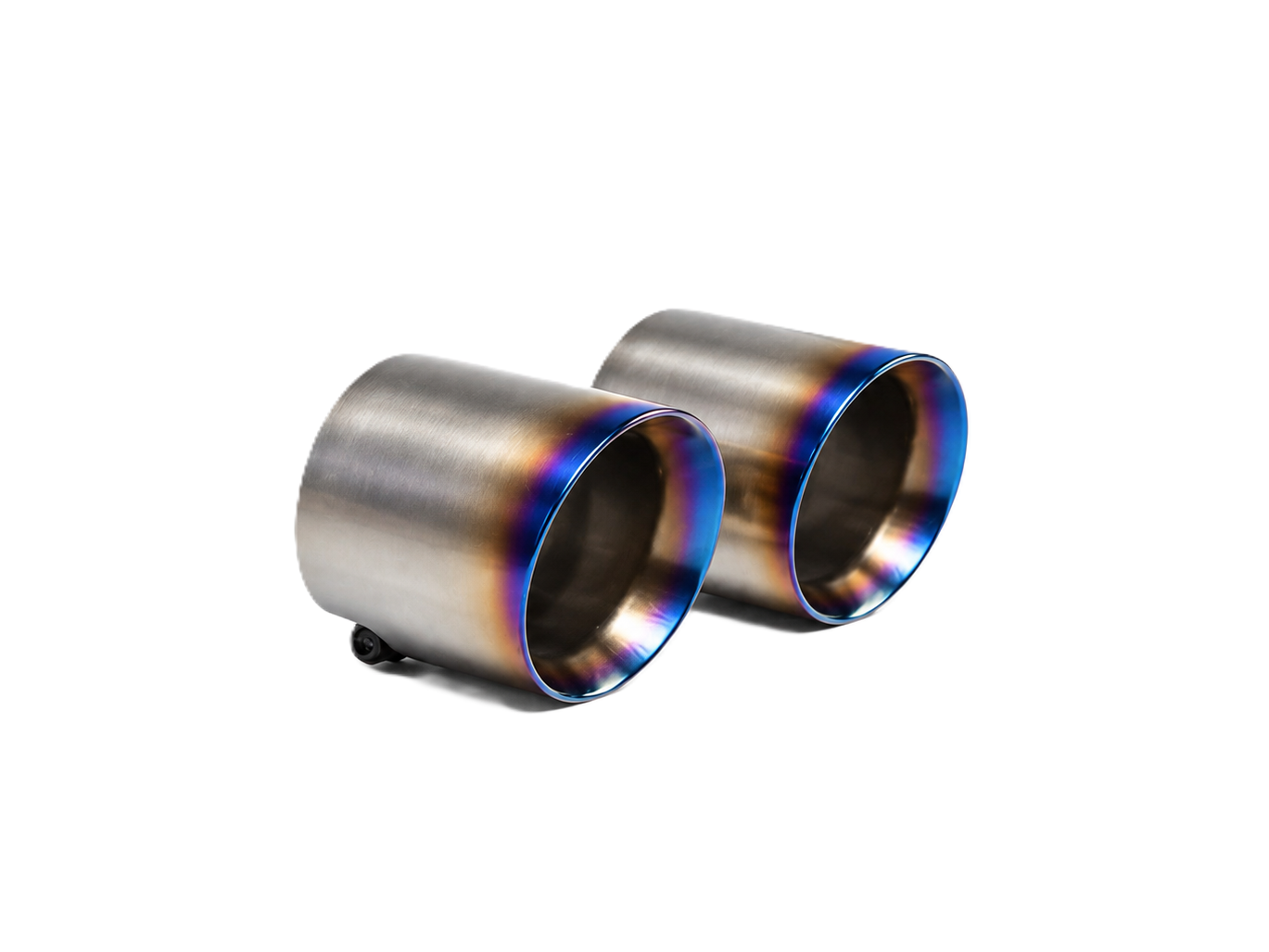
- Porsche 991.2 GT3 4.0L (500 Bhp) / GT3 RS 4.0L (520 Bhp) 2017-19
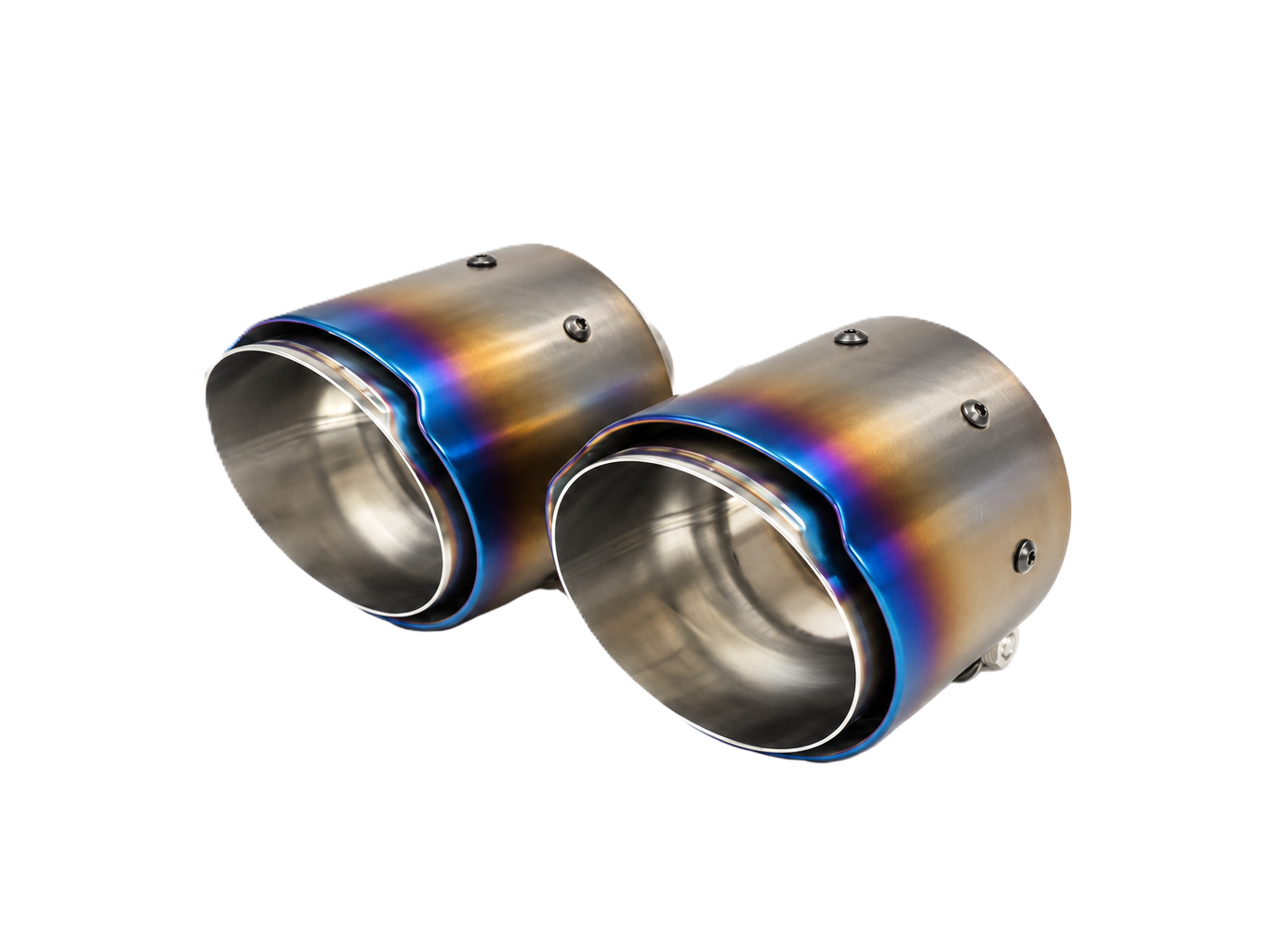
The Fabspeed Deluxe Dual Style Tips are a premium exhaust-tip upgrade designed specifically for the Porsche 911 991.2 GT3 and GT3 RS from 2017–2019.
Fits:
- Porsche 991.2 GT3 4.0L (500 Bhp) / GT3 RS 4.0L (520 Bhp) 2017-19
Featuring substantially larger 100mm outlets compared with the approximately 88mm factory exhaust tips, they give the rear of the GT3 or GT3 RS a wider, more aggressive and more purposeful appearance while retaining factory-style fitment.
Designed as a straightforward bolt-on upgrade, the tips can be installed with the original Porsche centre muffler or with compatible aftermarket exhaust systems that accept the standard factory-style exhaust-tip arrangement.
The system uses a lightweight holder plate and is available in several finish options, allowing the exhaust appearance to be matched to the individual vehicle.
What This Product Does:
The Fabspeed Deluxe Dual Style Tips replace the visible factory exhaust outlets at the rear of the vehicle.
They are designed to:
- Increase exhaust-tip diameter from approximately 88mm to 100mm.
- Give the rear bumper a more aggressive appearance.
- Provide a more substantial motorsport-inspired exhaust outlet.
- Replace worn, damaged or cosmetically deteriorated factory tips.
- Maintain factory-style mounting.
- Work with the original Porsche centre muffler.
- Work with compatible aftermarket exhaust systems.
- Allow the owner to choose a finish that complements the vehicle.
- Provide a lightweight replacement tip assembly.
- Improve exhaust-tip presentation without requiring replacement of the complete exhaust system.
Symptoms Of Wear Or Failure:
Exhaust tips do not usually fail mechanically in the same way as an engine or suspension component, but they can deteriorate through heat, contamination, vibration and impact damage.
Possible signs include:
- Heavy carbon and soot accumulation.
- Permanent staining.
- Corrosion.
- Surface pitting.
- Peeling or deterioration of a coated finish.
- Scratches.
- Dents.
- Impact damage.
- Cracks.
- Loose mounting hardware.
- Excessive tip movement.
- Rattling.
- Exhaust tips sitting unevenly.
- One outlet protruding further than the other.
- Contact with the rear bumper or diffuser.
- Heat damage around surrounding trim.
- Carbon-fibre finish becoming damaged or discoloured.
Why Replacement Matters:
Replacing damaged, worn or deteriorated exhaust tips helps restore:
- Correct exhaust outlet alignment.
- Secure mounting.
- Proper bumper clearance.
- Clean rear-end appearance.
- Consistent left-to-right symmetry.
- The intended premium appearance of the GT3 or GT3 RS.
For a performance-focused vehicle where the centrally mounted exhaust outlets are a prominent styling feature, worn or damaged tips can significantly affect the overall appearance of the rear of the car.
Related reference numbers
Related, superseded, cross reference or alternative numbers for comparison.
FSPOR9912GT3DLTTI
The product you are viewing cross references to these numbers


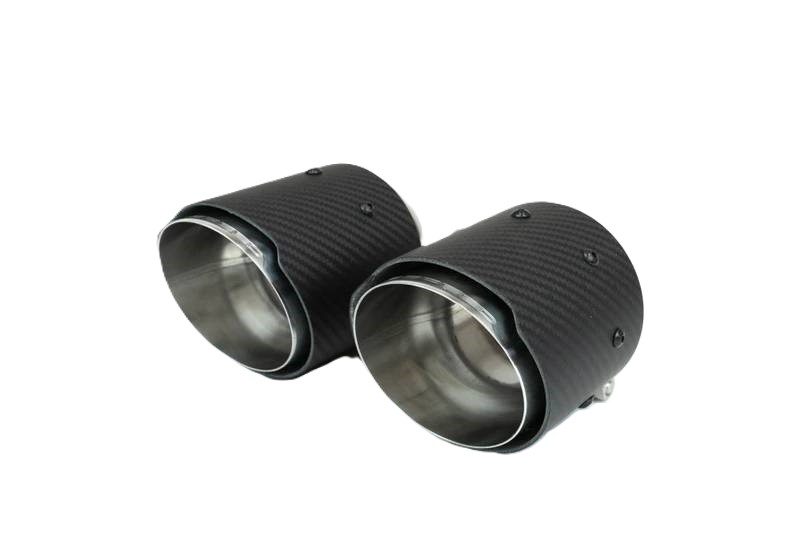
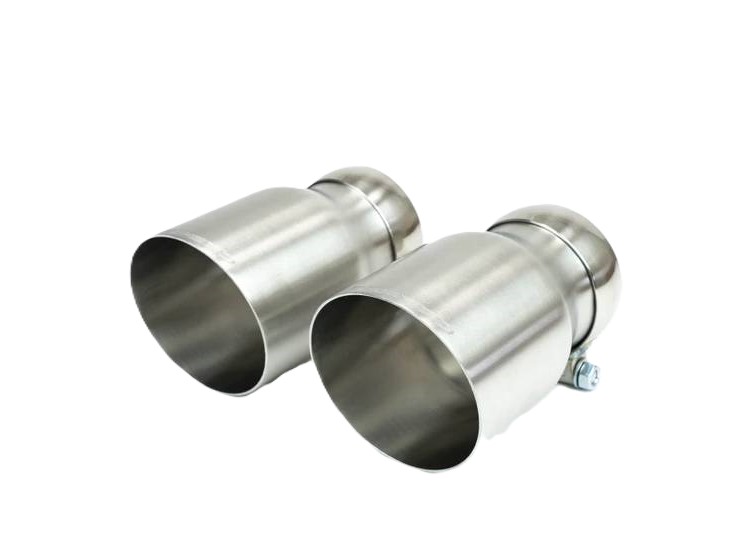
- Porsche 991.2 Speedster 4.0L (510Bhp) 2019
The Fabspeed Race Competition Exhaust System Package is a complete headers-to-exhaust-tips performance system developed specifically for the Porsche 911 991.2 Speedster.
Fits:
- Porsche 991.2 Speedster 4.0L (510Bhp) 2019
Designed primarily for competition and closed-course use, this system replaces the restrictive factory exhaust arrangement with a lightweight, high-flow configuration incorporating equal-length headers, high-velocity merge collectors and large-diameter exhaust tubing.
Unlike a conventional cat-back system, this package replaces a much greater proportion of the exhaust system. It removes the original catalytic converters and uses a racing catalyst-bypass configuration to create a significantly less restrictive exhaust path.
The result is an extremely aggressive, motorsport-focused exhaust character with substantially increased volume, stronger flat-six presence and reduced exhaust-system weight.
Fabspeed describes the system as an all-out race exhaust and advises that increased cabin drone and reduced day-to-day refinement should be expected.
What This Product Does:
The Fabspeed Race Competition Exhaust System is designed to provide a freer-flowing exhaust route from the cylinder heads through to the rear exhaust outlets.
It is designed to:
- Replace the factory headers and rear exhaust system.
- Reduce exhaust restriction.
- Reduce exhaust backpressure.
- Improve exhaust gas evacuation.
- Provide equal-length exhaust routing.
- Improve exhaust pulse management.
- Produce a much louder and more aggressive flat-six exhaust note.
- Reduce exhaust-system weight.
- Remove the restriction associated with the factory catalytic converters.
- Provide a motorsport-focused exhaust configuration.
- Support additional performance modifications.
- Provide several exhaust-tip configurations to suit appearance or track requirements.
Symptoms Of Wear Or Failure:
Possible symptoms of deterioration include:
- Exhaust leaks.
- Ticking or blowing noises.
- Unexpected increase in exhaust volume.
- Rattling beneath the vehicle.
- Metallic vibration.
- Cracked welds.
- Damaged tubing.
- Loose collector springs.
- Exhaust joints becoming loose.
- Soot deposits around flanges or joints.
- Exhaust tips becoming misaligned.
- Excessive exhaust movement.
- Broken mounting brackets.
- Exhaust contacting the body or heat shields.
- Unusual exhaust fumes around the vehicle.
- Loss of exhaust-system structural integrity.
Why Replacement Matters:
A structurally damaged exhaust can compromise both performance and reliability.
Replacing damaged exhaust components helps restore:
- Correct exhaust sealing.
- Intended gas flow.
- Proper component alignment.
- Structural integrity.
- Correct ground and body clearance.
- Consistent exhaust sound.
- Safe routing of hot exhaust gases.
On a competition vehicle, these factors become especially important because the system experiences prolonged high exhaust temperatures and aggressive driving loads.
Related reference numbers
Related, superseded, cross reference or alternative numbers for comparison.
FSPOR9912SPEEDLTRHS
The product you are viewing cross references to these numbers
- Porsche 992.1 Turbo 3.8L 2020-24
- Porsche 992.1 Turbo S 3.8L 2020-24
- Porsche 992.1 Turbo Cabriolet 3.8L 2020-24
- Porsche 992.1 Turbo S Cabriolet 3.8L 2020-24
Fabspeed Sport Catalytic Converters With Muffler Adapter.
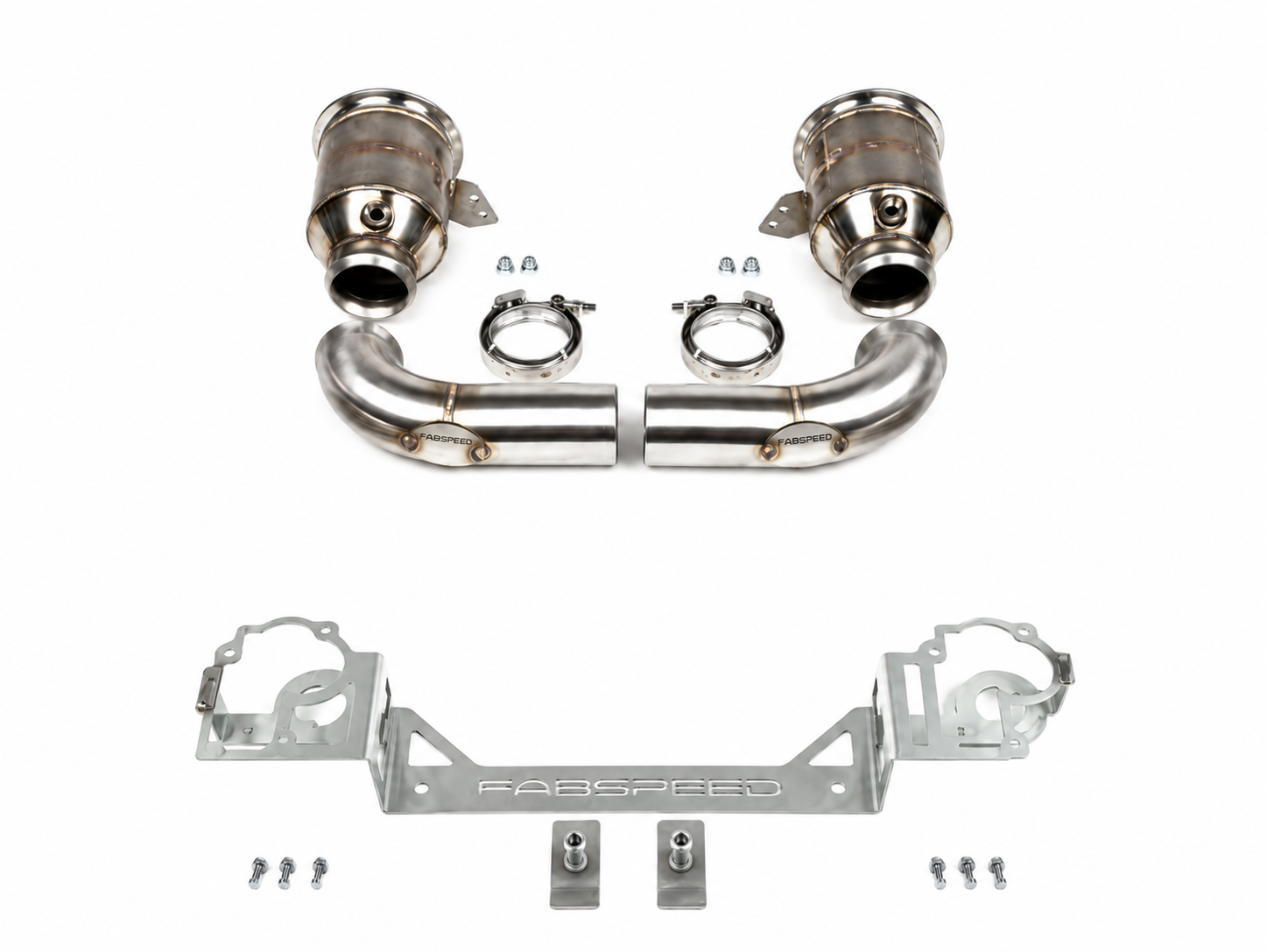
The Fabspeed Sport Catalytic Converters with Muffler Adapter are a high-performance exhaust upgrade designed for the Porsche 911 992 Turbo and Turbo S from 2021 onward.
Fits:
- Porsche 992.1 Turbo 3.8L 2021-24
- Porsche 992.1 Turbo S 3.8L 2021-24
- Porsche 992.1 Turbo Cabriolet 3.8L 2021-24
- Porsche 992.1 Turbo S Cabriolet 3.8L 2021-24
The system replaces the restrictive factory catalytic converters and rear muffler arrangement with high-flow German HJS 200 CPSI catalytic converters.
By reducing exhaust restriction downstream of the turbochargers, the system allows exhaust gases to leave the engine more efficiently. This can improve turbocharger response, increase power and torque, reduce exhaust-system weight and produce a substantially more aggressive exhaust note.
Fabspeed's design replaces the original approximately 800-cell catalytic converters with significantly freer-flowing HJS catalysts while retaining catalytic exhaust treatment.
Fabspeed reports dyno gains of up to 47.7 WHP and 47.1 lb-ft of torque, with approximately 54 HP claimed at the crank on its test vehicle. Actual results vary according to vehicle condition, fuel, environmental conditions and accompanying modifications.
What This Product Does:
The catalytic converter sits downstream of the turbocharger and performs two important functions:
- It treats exhaust gases before they leave the vehicle.
- It forms part of the exhaust path through which the turbocharger must discharge exhaust flow.
The Fabspeed system is designed to:
- Reduce restriction after the turbochargers.
- Increase exhaust gas flow.
- Reduce backpressure.
- Improve turbocharger response.
- Allow the VTG turbochargers to spool more quickly.
- Support increased horsepower and torque.
- Increase exhaust volume and character.
- Produce more noticeable turbocharger sound.
- Increase burbles and overrun sound.
- Reduce exhaust-system weight.
- Retain catalytic exhaust treatment.
Catalytic converters operate under extremely high temperatures and can deteriorate through age, contamination or engine faults.
Possible symptoms include:
- Check Engine Light.
- Catalyst-efficiency fault codes.
- Loss of engine power.
- Slower turbo response.
- Increased exhaust backpressure.
- Reduced performance at higher RPM.
- Metallic rattling from inside the catalyst.
- Unusual exhaust smells.
- Excessively high catalyst temperatures.
- Internal catalyst material breaking apart.
- Melted or collapsed catalyst substrate.
- Engine feeling restricted under boost.
- Uneven exhaust flow.
- Failed emissions testing where applicable.
A failing catalyst should be diagnosed properly before replacement because engine-management, fueling or ignition faults may have caused the damage.
Why Replacement / Upgrading Matters:
Replacing restrictive or deteriorated catalysts with a high-flow sport catalyst system can help restore or improve:
- Exhaust gas flow.
- Turbocharger response.
- Power and torque.
- High-load performance.
- Exhaust sound.
- Exhaust-system weight.
- Catalyst reliability.
- Overall performance character.
Related reference numbers
Related, superseded, cross reference or alternative numbers for comparison.
FSPOR992TSCGT2C
The product you are viewing cross references to these numbers
- Porsche 992.1 Turbo 3.8L 2020-24
- Porsche 992.1 Turbo S 3.8L 2020-24
- Porsche 992.1 Turbo Cabriolet 3.8L 2020-24
- Porsche 992.1 Turbo S Cabriolet 3.8L 2020-24
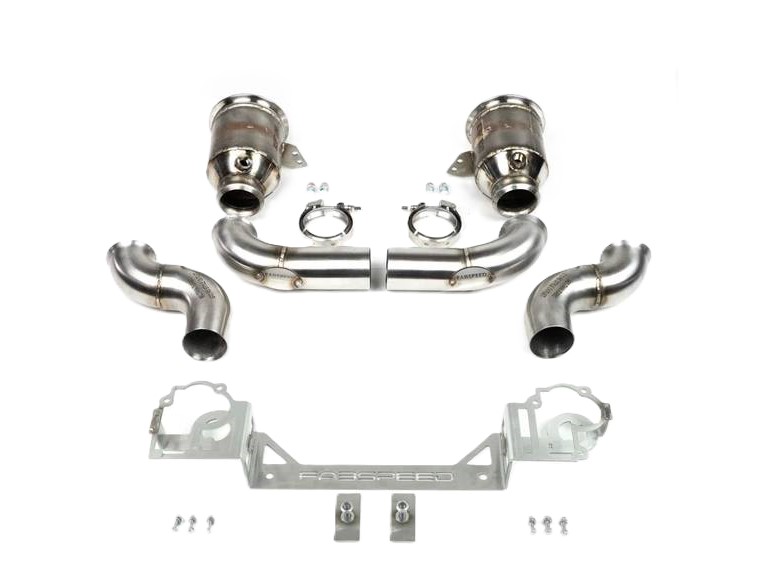
The Fabspeed Sport Catalytic Converters with GT2RS Style Outlets + Muffler Adapter are a high-performance exhaust upgrade designed for the Porsche 911 992 Turbo and Turbo S from 2021 onward.
Fits:
- Porsche 992.1 Turbo 3.8L 2021-24
- Porsche 992.1 Turbo S 3.8L 2021-24
- Porsche 992.1 Turbo Cabriolet 3.8L 2021-24
- Porsche 992.1 Turbo S Cabriolet 3.8L 2021-24
The system replaces the restrictive factory catalytic converters and rear muffler arrangement with high-flow German HJS 200 CPSI catalytic converters and direct GT2RS-inspired exhaust outlets.
By reducing exhaust restriction downstream of the turbochargers, the system allows exhaust gases to leave the engine more efficiently. This can improve turbocharger response, increase power and torque, reduce exhaust-system weight and produce a substantially more aggressive exhaust note.
Fabspeed's design replaces the original approximately 800-cell catalytic converters with significantly freer-flowing HJS catalysts while retaining catalytic exhaust treatment.
The GT2RS-style outlets create a direct, low-restriction route from the sport catalysts towards the exhaust tips, effectively providing the most free-flowing configuration available within this Fabspeed system while retaining catalytic converters.
Fabspeed reports dyno gains of up to 47.7 WHP and 47.1 lb-ft of torque, with approximately 54 HP claimed at the crank on its test vehicle. Actual results vary according to vehicle condition, fuel, environmental conditions and accompanying modifications.
What This Product Does:
The catalytic converter sits downstream of the turbocharger and performs two important functions:
- It treats exhaust gases before they leave the vehicle.
- It forms part of the exhaust path through which the turbocharger must discharge exhaust flow.
The Fabspeed system is designed to:
- Reduce restriction after the turbochargers.
- Increase exhaust gas flow.
- Reduce backpressure.
- Improve turbocharger response.
- Allow the VTG turbochargers to spool more quickly.
- Support increased horsepower and torque.
- Increase exhaust volume and character.
- Produce more noticeable turbocharger sound.
- Increase burbles and overrun sound.
- Reduce exhaust-system weight.
- Retain catalytic exhaust treatment.
- Replace the factory rear muffler arrangement with GT2RS-style direct outlets.
Symptoms Of Wear Or Failure:
Catalytic converters operate under extremely high temperatures and can deteriorate through age, contamination or engine faults.
Possible symptoms include:
- Check Engine Light.
- Catalyst-efficiency fault codes.
- Loss of engine power.
- Slower turbo response.
- Increased exhaust backpressure.
- Reduced performance at higher RPM.
- Metallic rattling from inside the catalyst.
- Unusual exhaust smells.
- Excessively high catalyst temperatures.
- Internal catalyst material breaking apart.
- Melted or collapsed catalyst substrate.
- Engine feeling restricted under boost.
- Uneven exhaust flow.
- Failed emissions testing where applicable.
A failing catalyst should be diagnosed properly before replacement because engine-management, fueling or ignition faults may have caused the damage.
Why Replacement / Upgrading Matters:
Replacing restrictive or deteriorated catalysts with a high-flow sport catalyst system can help restore or improve:
- Exhaust gas flow.
- Turbocharger response.
- Power and torque.
- High-load performance.
- Exhaust sound.
- Exhaust-system weight.
- Catalyst reliability.
- Overall performance character.
The GT2RS-style outlet configuration also removes much of the restriction and weight associated with the standard rear muffler arrangement.
Related reference numbers
Related, superseded, cross reference or alternative numbers for comparison.
FSPOR992TSCGT2WC
The product you are viewing cross references to these numbers


- Porsche 992.1 Turbo 3.8L 2020-24
- Porsche 992.1 Turbo S 3.8L 2020-24
- Porsche 992.1 Turbo Cabriolet 3.8L 2020-24
- Porsche 992.1 Turbo S Cabriolet 3.8L 2020-24
The Fabspeed Cat-Back Valved Maxflo Exhaust System is a high-performance replacement exhaust system designed for the Porsche 911 992 Turbo and Turbo S from 2021 onward, including the Turbo “50 Years” edition.
Fits:
- Porsche 992.1 Turbo 3.8L 2021-24
- Porsche 992.1 Turbo S 3.8L 2021-24
- Porsche 992.1 Turbo Cabriolet 3.8L 2021-24
- Porsche 992.1 Turbo S Cabriolet 3.8L 2021-24
Engineered to improve exhaust flow, reduce weight and provide a more distinctive turbocharged Porsche exhaust note, the system replaces the restrictive rear section of the factory exhaust while retaining the Porsche Sport Exhaust valve functionality.
When the PSE system is switched off and the exhaust valves are closed, the system provides a quieter and more refined exhaust character suitable for normal road and motorway driving.
When PSE is activated and the valves open, exhaust gases are given a less restrictive path through the system, producing a deeper, more aggressive exhaust note with greater turbo presence, sharper sound and increased volume.
The system is manufactured from CNC mandrel-bent T304L stainless steel and incorporates Fabspeed's cast X-pipe together with Helical Limited aerospace-grade exhaust valves.
Fabspeed's dyno testing recorded gains of up to +48.7 WHP and +53.7 lb-ft of torque, with approximately 55 HP claimed at the crank, although actual results vary according to vehicle specification, fuel, atmospheric conditions and associated modifications.
The system also saves approximately 9.8 lb / 4.4 kg compared with the factory exhaust.
What This Product Does:
The cat-back exhaust carries exhaust gases from the catalytic converter outlets through the rear exhaust system and out of the vehicle.
The Fabspeed Valved Maxflo system is designed to:
- Reduce restriction in the factory rear exhaust system.
- Improve exhaust gas flow.
- Reduce exhaust backpressure.
- Improve turbocharger exhaust flow.
- Support stronger throttle response.
- Support increased horsepower and torque.
- Provide a more aggressive exhaust note when required.
- Retain a quieter exhaust mode for everyday driving.
- Maintain integration with the Porsche PSE system.
- Reduce exhaust-system weight.
- Replace the factory muffler and associated rear exhaust pipework.
- Work with either factory catalysts or compatible Fabspeed sport catalysts.
Symptoms Of Wear Or Failure:
Possible signs of deterioration in the original or aftermarket cat-back exhaust include:
- Exhaust becoming noticeably louder without the valves being commanded open.
- Ticking or blowing noises from exhaust joints.
- Exhaust gases escaping around clamps or flanges.
- Soot marks around exhaust connections.
- Metallic rattling from the rear of the vehicle.
- Exhaust vibration.
- Loose exhaust components.
- Cracked welds.
- Damaged exhaust tubing.
- Corrosion or perforation.
- Exhaust system hanging lower than normal.
- Exhaust tips becoming misaligned.
- Excessive movement during acceleration.
- Increased cabin drone.
- Burning smell caused by exhaust gases or hot components contacting surrounding materials.
- Valve-related noises.
- Exhaust valves failing to open or close.
- Different exhaust sound between the two sides of the vehicle.
- PSE operation no longer changing the exhaust sound correctly.
Why Replacement / Upgrading Matters:
A damaged or excessively restrictive exhaust system can affect both performance and driving enjoyment.
Replacing a worn factory system or upgrading to the Fabspeed Valved Maxflo system can help restore or improve:
- Exhaust flow.
- Turbocharged engine response.
- Exhaust sound.
- PSE valve functionality.
- Exhaust-system sealing.
- Rear exhaust weight.
- Corrosion resistance.
- Overall exhaust durability.
For performance vehicles, maintaining a structurally sound and properly sealed exhaust is particularly important because exhaust gas temperatures and flow rates can be substantial.
Related reference numbers
Related, superseded, cross reference or alternative numbers for comparison.
FSPOR992TVLVQ
The product you are viewing cross references to these numbers


- Porsche 991 GT3 Cup 2018-2019
The Fabspeed Porsche 991 GT3 Cup Sport Headers are a high-performance replacement for the restrictive factory exhaust headers fitted to Porsche 991 GT3 Cup race cars from 2017 onward.
Fits:
- Porsche 991 GT3 Cup 2017-2019
Designed specifically for competition-focused GT3 Cup applications, these headers improve exhaust gas flow and scavenging, helping the naturally aspirated flat-six engine breathe more efficiently throughout the rev range.
The system features one-piece CNC mandrel-bent primary header tubes, a high-velocity motorsport-style merge collector and specially designed inlet flanges. Fabspeed manufactures the system from a combination of T321 and T304 stainless steel for strength, corrosion resistance and durability under extreme exhaust temperatures.
Integrated German-made HJS 200-cell tri-metallic sport catalytic converters provide substantially increased exhaust flow compared with more restrictive factory catalysts while retaining catalytic treatment.
Fabspeed lists a performance gain of up to approximately 15 HP, although actual output will vary according to vehicle specification, setup and operating conditions. The system also removes approximately 1 kg / 2 lb from the rear of the vehicle compared with the factory arrangement.
What This Product Does:
The exhaust headers collect combustion gases as they leave the engine's individual cylinders and direct them into the remainder of the exhaust system.
On a high-revving GT3 Cup engine, efficient exhaust flow is especially important because the engine must move large volumes of exhaust gas at high RPM.
The Fabspeed Sport Headers are designed to:
- Reduce exhaust restriction.
- Improve exhaust gas velocity.
- Improve cylinder scavenging.
- Reduce pumping losses.
- Support stronger high-RPM performance.
- Improve throttle response.
- Increase potential horsepower.
- Maintain efficient exhaust flow during sustained track use.
- Reduce unnecessary weight at the rear of the vehicle.
- Provide high-flow catalytic treatment through HJS sport catalysts.
Symptoms Of Wear Or Failure:
Competition exhaust systems experience extreme temperatures, vibration and repeated thermal cycling.
Possible symptoms of worn or damaged headers include:
- Ticking or tapping noise from the exhaust area.
- Exhaust note becoming louder than normal.
- Exhaust gases leaking near the cylinder heads.
- Soot marks around header flanges.
- Cracks in the header tubing.
- Cracked welds.
- Distorted mounting flanges.
- Loose mounting hardware.
- Failed exhaust gaskets.
- Rattling from the catalytic converter area.
- Reduced throttle response.
- Loss of high-RPM performance.
- Increased exhaust backpressure.
- Engine-management warning lights.
- Catalyst-efficiency fault codes.
- Unusual exhaust smells.
- Excessive heat around nearby components.
Because GT3 Cup vehicles are subjected to sustained competition use, regular inspection of the exhaust system is particularly important.
Why Replacement / Upgrading Matters:
A GT3 Cup engine depends on efficient airflow at both the intake and exhaust sides of the combustion process.
Restrictive, cracked or damaged headers can reduce the efficiency with which exhaust gases leave the engine.
Replacing worn components or upgrading to a higher-flow header system can help restore or improve:
- Exhaust gas flow.
- Cylinder scavenging.
- Engine responsiveness.
- High-RPM power delivery.
- Exhaust sealing.
- Thermal management.
- Competition reliability.
- Overall exhaust-system efficiency.
For a race car, maintaining predictable performance across repeated high-load sessions is especially important.
Related reference numbers
Related, superseded, cross reference or alternative numbers for comparison.
FSPOR991CUPSHDR
The product you are viewing cross references to these numbers


- Porsche 997 MK1 GT3 / GT3 RS 2007-09
- Porsche 911 (997) GT3 CUP 2010
- Porsche 991 GT3 Cup 2016
The Fabspeed Porsche 911 GT3 Cup Sport Headers are a high-performance replacement for the restrictive factory exhaust headers fitted to 997 and 991.1-generation Porsche 911 GT3 Cup race cars from 2007–2016.
Fits:
- Porsche 997 MK1 GT3 CUP 2007-09
- Porsche 911 (997) GT3 CUP 2010
- Porsche 991 GT3 Cup 2016
Designed specifically for competition-focused GT3 Cup applications, the system improves exhaust gas flow and scavenging to help the naturally aspirated flat-six engine breathe more efficiently throughout the rev range. The result is improved throttle response and the potential for increased power and torque.
Each header assembly incorporates German-made 200-cell HJS tri-metallic high-flow sport catalytic converters. These performance catalysts are designed to offer substantially less exhaust restriction than conventional catalysts while retaining catalytic treatment of the exhaust gases.
The headers are manufactured from high-quality 14–16 gauge stainless steel using CNC mandrel-bent tubing and feature high-velocity 3-into-1 pyramidal investment-cast merge collectors. This collector design is intended to improve exhaust scavenging as the individual cylinder exhaust pulses combine.
Fabspeed lists gains of up to 22 HP and 37 units of torque for this product, although actual results depend on the vehicle, engine specification, environmental conditions and accompanying modifications. The manufacturer also lists a reduction in weight compared with the factory arrangement.
What This Product Does:
The exhaust headers collect exhaust gases leaving each cylinder and direct them towards the remainder of the exhaust system.
On a high-revving naturally aspirated race engine such as the GT3 Cup flat-six, header design has a significant effect on the speed and efficiency with which exhaust gases leave the combustion chambers.
The Fabspeed Sport Headers are designed to:
- Reduce restriction compared with the factory header arrangement.
- Improve exhaust gas velocity.
- Promote more effective cylinder scavenging.
- Reduce exhaust backpressure.
- Allow the engine to expel combustion gases more efficiently.
- Improve throttle response.
- Support increased horsepower and torque.
- Maintain high exhaust flow at elevated engine speeds.
- Improve performance across the usable RPM range.
- Provide high-flow catalytic conversion through the HJS sport catalysts.
Symptoms Of Wear Or Failure:
Exhaust headers operate in an extremely demanding environment and are exposed to intense heat, vibration and repeated thermal cycling.
Possible symptoms of deteriorated factory or aftermarket headers include:
- Ticking or tapping noises from the exhaust area.
- Exhaust noise becoming louder than normal.
- Exhaust gases escaping around the cylinder-head flange.
- Soot deposits around header joints or welds.
- Cracks in the header tubing.
- Cracked or damaged welds.
- Distorted exhaust flanges.
- Loose header fasteners.
- Damaged exhaust gaskets.
- Rattling noises from the catalytic converters.
- Metallic noises from loose catalyst material.
- Reduced engine performance.
- Slower throttle response.
- Increased exhaust backpressure.
- Engine-management warning lights.
- Catalyst-efficiency fault codes.
- Unusual exhaust smells.
- Excessive heat around surrounding components.
Race cars should be inspected regularly because repeated high-temperature track operation can accelerate fatigue of exhaust components.
Why Replacement / Upgrading Matters:
Efficient exhaust flow is essential to extracting maximum performance from a GT3 Cup engine.
A restrictive, damaged or leaking exhaust header can interfere with exhaust scavenging and reduce engine efficiency.
Replacing worn factory components or upgrading to the Fabspeed Sport Headers can help restore or improve:
- Exhaust gas flow.
- Cylinder scavenging.
- Throttle response.
- High-RPM performance.
- Engine breathing.
- Power and torque potential.
- Exhaust-system sealing.
- Competition reliability.
For a race vehicle, consistent performance is as important as peak output. Exhaust leaks or deteriorating components can become progressively worse under sustained track temperatures.
Related reference numbers
Related, superseded, cross reference or alternative numbers for comparison.
FSPOR997CUPSHDR
The product you are viewing cross references to these numbers
- Porsche 992.1 Carrera 2 3.0L 2019-24
- Porsche 992.1 Carrera 4 3.0L 2019-24
- Porsche 992.1 Carrera 2 Cabriolet 3.0L 2019-24
- Porsche 992.1 Carrera 4 Cabriolet 3.0L 2019-24
- Porsche 992.2 Carrera 2 3.0L 2024>>
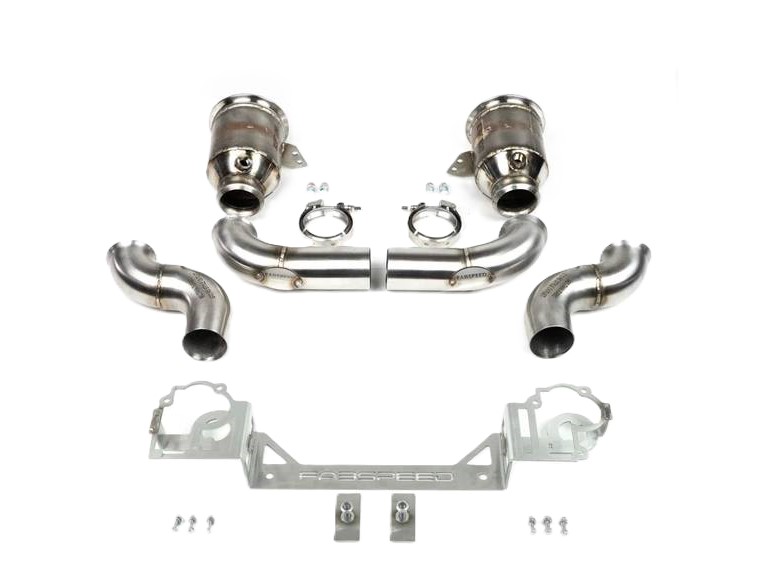
The Fabspeed Sport Catalytic Converters with GT2RS Style Outlets + Muffler Adapter are a high-performance exhaust upgrade for the Porsche 911 992 Carrera, designed to reduce exhaust restriction, improve turbo response and deliver a significantly more sporting exhaust character.
Fits:
- Porsche 992.1 Carrera 2 3.0L 2021-24
- Porsche 992.1 Carrera 4 3.0L 2021-24
- Porsche 992.1 Carrera 2 Cabriolet 3.0L 2021-24
- Porsche 992.1 Carrera 4 Cabriolet 3.0L 2021-24
- Porsche 992.2 Carrera 2 3.0L 2024>>
The system replaces the restrictive factory catalytic converters with German HJS 200-CPSI high-flow catalytic converters and incorporates GT2RS-inspired direct exhaust outlets with muffler adapter. This configuration creates a freer-flowing path for exhaust gases after the turbochargers while retaining catalytic exhaust treatment.
Manufactured from CNC mandrel-bent 14–16 gauge T304L stainless steel, the system is engineered as a direct bolt-on installation with no cutting or welding required.
What This Product Does:
- Replaces the factory catalytic-converter assemblies.
- Replaces the restrictive original 800-cell catalysts with HJS 200-CPSI units.
- Reduces exhaust backpressure.
- Allows exhaust gases to leave the turbochargers more efficiently.
- Helps improve turbocharger response.
- Supports increased horsepower and torque.
- Creates a more aggressive sports-car exhaust note.
- Increases audible turbocharger sound.
- Uses GT2RS-inspired direct exhaust outlets.
- Retains catalytic exhaust treatment.
- Reduces exhaust-system weight.
- Provides a modular design that can be converted back to a muffled configuration.
- Retains compatibility with the factory muffler using optional adapter pipes.
- Can also be configured with Fabspeed's Valvetronic exhaust.
- Provides a bolt-on installation without cutting or welding.
Fabspeed's HJS catalysts use a much more open internal structure than the original 800-cell units, helping the turbocharged 992 engine move exhaust gases more efficiently.
Symptoms Of Wear Or Failure:
The Fabspeed system is primarily a performance upgrade, but replacement may also be appropriate when the original catalytic converters have deteriorated.
Possible symptoms of a failing or restricted catalyst include:
- Reduced engine power.
- Sluggish acceleration.
- Increased turbo lag.
- Poor throttle response.
- Engine feeling restricted at higher RPM.
- Difficulty producing normal power under heavy load.
- Check engine warning light.
- Catalyst-efficiency fault codes.
- Rattling or metallic noises from inside a catalytic converter.
- Excessive heat from the catalyst housing.
- Strong or unusual exhaust odours.
- Increased emissions.
- Failed emissions testing.
- Exhaust leaks around joints or flanges.
- Visible damage to the catalyst housing.
- Poor fuel economy.
- Abnormally high exhaust backpressure.
A partially blocked catalyst may be relatively difficult to notice during light driving but become increasingly restrictive as exhaust-gas volume rises under acceleration.
Why Replacement Matters:
Catalytic converters sit directly downstream of the turbochargers and therefore have a significant influence on exhaust flow.
If the internal substrate becomes damaged, contaminated, melted or partially blocked, exhaust gases cannot pass through efficiently.
This increases backpressure and can result in:
- Reduced engine performance.
- Slower turbo response.
- Increased exhaust temperatures.
- Poor high-RPM performance.
- Increased load on the turbocharged exhaust system.
- Engine-management faults.
- Reduced emissions-control effectiveness.
Replacing a damaged or restrictive catalyst restores a clear exhaust path and proper catalytic function.
Related reference numbers
Related, superseded, cross reference or alternative numbers for comparison.
FSPOR992SCGT2WC
The product you are viewing cross references to these numbers