




Enter your VAT number here and click Verify:
Your details have been verified. VAT number registered to:
,
.
Your order will now be zero rated for VAT purposes. We reserve the right to verify these details after your order request has been made and reinstate VAT if required.
Your VAT details were not recognised or were invalid. Your VAT number must be matched to your Billing Country as specified above. This is currently specified as . You do not need to enter the country code part of your VAT number as this has already been selected in your billing address details above.
The VAT number checking service is currently offline. Please supply your VAT details within the comments or special instructions field below and we will apply a VAT discount after placing your order request.

Specialist Tools


For the removal of VAG & Porsche push and pull connectors.
• For the removal of VAG and Porsche connectors.
• Connectors are found on MAF sensors, coil packs, headlights, fog lights, level sensors, map sensors etc.
• Fits directly onto the push and pull connectors.
• Black plastic handle for easy grip.
Related reference numbers
Related, superseded, cross reference or alternative numbers for comparison.
6547
The product you are viewing cross references to these numbers

For the removal of VAG and Porsche connectors found on MAF sensors, coil packs, headlights, fog lights, level sensors, map sensors etc.
• Fits directly on to the push and pull connectors and opens the locking tabs as pressure is applied.
• Applications include MAF sensors, coil packs, MAP sensors, CPS sensors and light connectors.
• Soft grip T-handle.
• 20mm offset head, 160mm long. EU Registered Design.
Related reference numbers
Related, superseded, cross reference or alternative numbers for comparison.
7859
The product you are viewing cross references to these numbers

- Porsche Boxster 718 2.0L Manual (300 Bhp) 2017>>
- Porsche Boxster 718 2.0L PDK (300 Bhp) 2017>>
- Porsche Boxster S 718 2.5L Manual (350 Bhp) 05/2017>>
- Porsche Boxster S 718 2.5L PDK (350 Bhp) 05/2017>>
- Porsche Boxster T 718 2.0L Manual (300 Bhp) 01/2019>>
- Porsche Boxster T 718 2.0L PDK (300 Bhp) 01/2019>>
- Porsche Boxster GTS 718 2.5L Manual (365 Bhp) 05/2017>>
- Porsche Boxster GTS 718 2.5L PDK (365 Bhp) 05/2017>>
- Porsche Boxster GTS 718 4.0L Manual (400 Bhp) 01/2019>>
- Porsche Boxster GTS 718 4.0L PDK (400 Bhp) 01/2019>>
- Porsche Boxster Spyder / Sypder RS 718 4.0L 01/2019>>
- Porsche Boxster 25 Years 718 4.0L Manual (400 Bhp) 01/2020>>
- Porsche Boxster 25 Years 718 4.0L PDK (400 Bhp) 01/2020>>
- Porsche Cayman 718 2.0L Manual (300 Bhp)
- Porsche Cayman 718 2.0L PDK (300 Bhp)
- Porsche Cayman S 718 2.5L Manual (350 Bhp)
- Porsche Cayman S 718 2.5L PDK (350 Bhp)
- Porsche Cayman T 718 2.0L Manual (300 Bhp)
- Porsche Cayman T 718 2.0L PDK (300 Bhp)
- Porsche Cayman GTS 718 2.5L Manual (365 Bhp)
- Porsche Cayman GTS 718 2.5L PDK (365 Bhp)
- Porsche Cayman GTS 718 4.0L Manual (400 Bhp)
- Porsche Cayman GTS 718 4.0L PDK (400 Bhp)
- Porsche Cayman GT4 718 4.0L / GT4 RS 718 4.0L
- Porsche Cayman GT4 Clubsport
- Porsche Cayman GT4 RS Clubsport 2020-2024
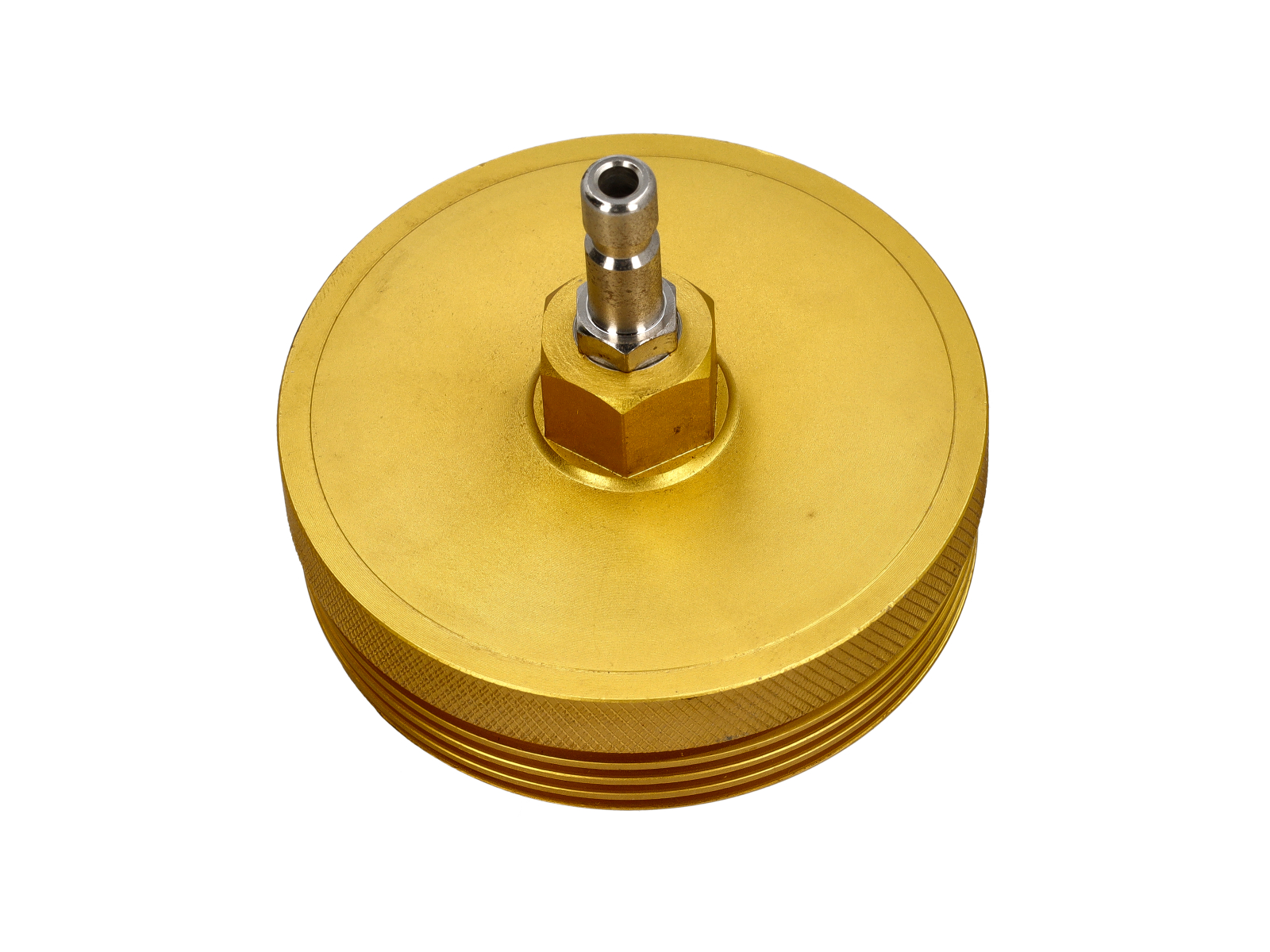
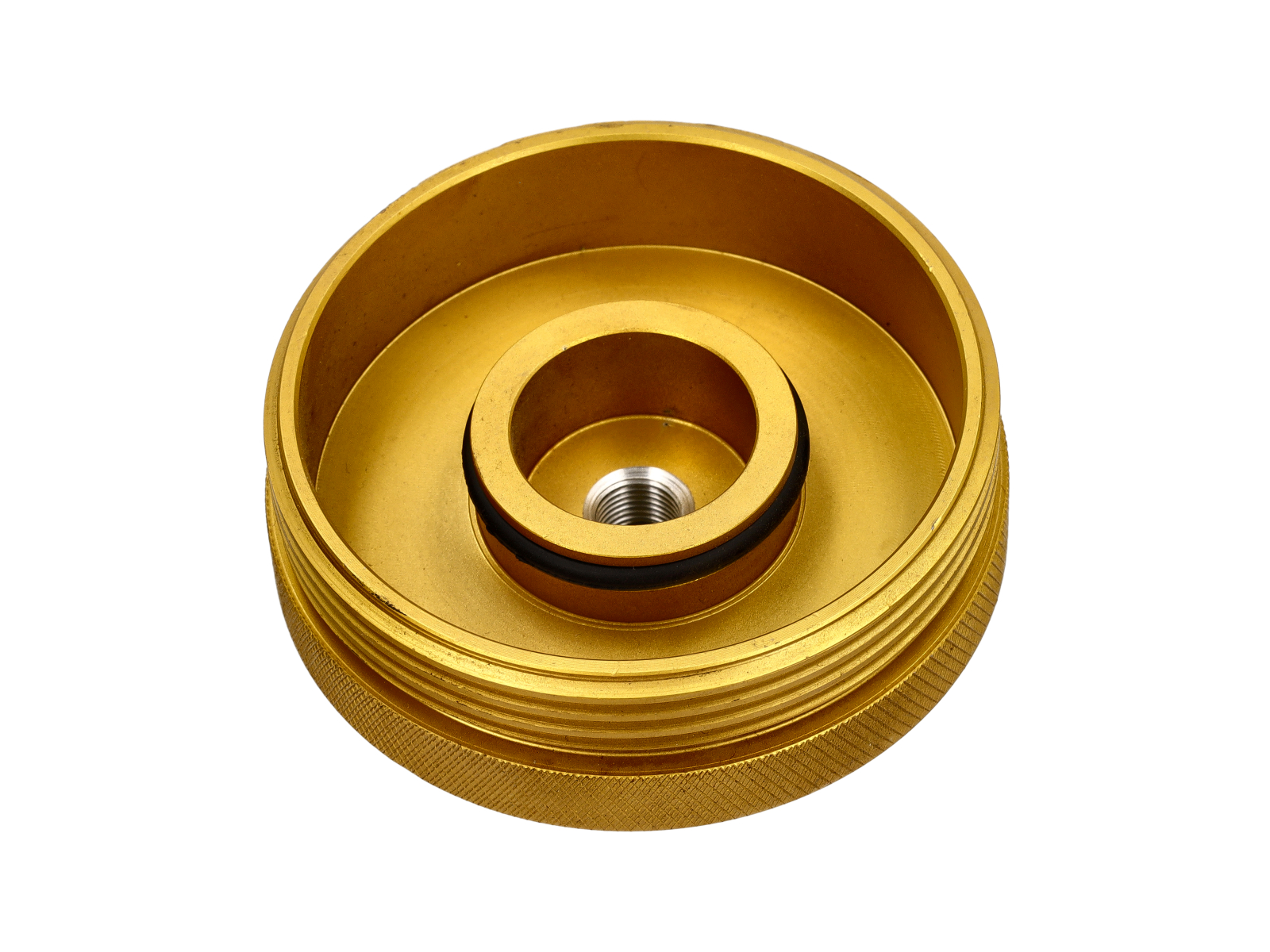
Coolant Pressure Testing / Purge Cap – Essential Tool for Cooling System Diagnostics & Maintenance
This coolant pressure testing and purge cap is purpose-built for the Porsche 718 Boxster and 718 Cayman, allowing technicians to accurately test, diagnose and bleed the cooling system. It replaces the standard coolant reservoir cap during servicing and enables direct connection to pressure testers, vacuum purge systems and coolant refilling equipment.
The 718’s turbocharged flat-four engine operates under high thermal load, and its cooling system relies on precise pressure levels to maintain performance and prevent overheating. This specialised cap ensures that coolant pressure tests are accurate and reliable, helping technicians detect leaks, verify system integrity and properly purge air after coolant replacement.
What This Coolant Pressure / Purge Cap Does
This tool allows you to:
- Connect a pressure testing system to check for leaks
- Verify pressure stability across hoses, radiators, gaskets and coolant tank
- Support vacuum filling and coolant purging after service
- Identify failing components early, such as water pumps or coolant leaks
- Ensure complete air removal, preventing hot spots and overheating
- Aid in diagnosing coolant loss, pressure drop or overheating problems
It is an essential tool for workshop-level cooling system maintenance on the 718 platform.
Why Coolant Systems Fail on the Porsche 718
The 718 Boxster/Cayman cooling system may develop faults
caused by:
- Age-related hose deterioration
- Weak or failing coolant reservoir caps losing pressure
- Small leaks in radiators, water pumps or O-rings
- Air pockets trapped after coolant service
- Thermal expansion stress from spirited driving or track use
- Clogged or restricted coolant passages
- Faulty expansion tank fittings
A pressure test using a proper purge/testing cap is the fastest way to locate these issues before significant engine damage occurs.
Why You Should Use or Replace the Coolant Test/Purge Cap
A high-quality cap ensures:
- Accurate coolant pressure readings
- Fast detection of hidden leaks
- Proper bleeding of the cooling system after service
- Reliable seal under pressure, unlike worn standard caps
- Reduced risk of overheating or coolant boil-over
- Professional-quality servicing for Porsche 718 engines
Replacement is recommended when a cap becomes worn, cracked, or fails to hold pressure during diagnostic procedures.


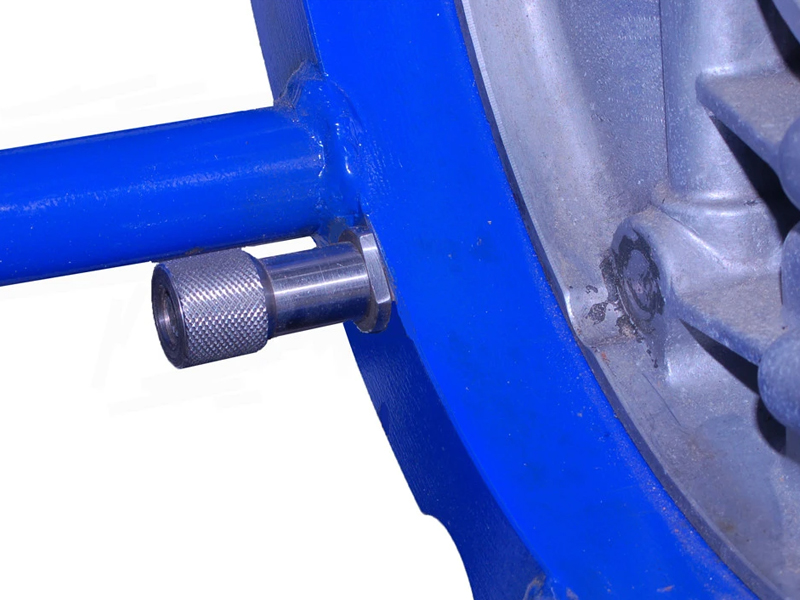
Finally an elegant way to secure your engine to the engine yoke. No need for sockets, washers, and oversized nuts to take up slack. Use these knurled nuts and adapters to mount the different length case studs to the yoke. These adapters allow clearance for mounting the clutch. Hard-coated aluminum and stainless steel for years of service.
Specialist Tools for Accurate, Efficient & High-Quality Porsche Engine Rebuilds
Engine rebuilds require precise measurements, correct assembly procedures and the right equipment to ensure every component fits and functions exactly as intended. Specialist tools are essential when working on Porsche engines due to their unique engineering, tight tolerances and model-specific service procedures. These tools enable technicians and enthusiasts to dismantle, inspect, rebuild and calibrate engines with professional accuracy—reducing the risk of damage, misalignment or incorrect installation.
Whether performing a full engine restoration, carrying out timing work, inspecting internal components or installing performance parts, using the correct specialist tools guarantees a reliable, long-lasting and high-quality rebuild.
What Specialist Engine Rebuild Tools Do
High-quality specialist tools ensure precision and safety
throughout the rebuild process. They are designed to:
- Accurately
measure critical tolerances, including bore, deck height, ring gap and
valve clearances
- Correctly
install and remove components such as crankshafts, pistons, liners and
bearings
- Support
timing procedures, including camshaft alignment and intermediate shaft
setup
- Prevent
damage to delicate components during disassembly and assembly
- Improve
rebuild efficiency with purpose-built fixtures and holding tools
- Ensure
even torque application, promoting proper sealing and component
longevity
- Assist in diagnostic tasks such as leak-down testing or compression verification
Specialist tools are essential for achieving a professional-grade engine build with reliable and repeatable results.
Why Workshop Tools Wear or Fail
Even well-engineered tools degrade over time due to heavy
use, improper handling or exposure to harsh environments. Common causes of
failure include:
- Metal
fatigue from repeated loading
- Worn
or stripped threads on pullers, press tools or torque tools
- Corrosion
from moisture or chemical exposure
- Heat
damage from working near exhaust or cylinder heads
- Loss
of calibration, particularly with measuring or torque-sensitive tools
- Damaged
contact points from misuse or excessive force
- Contamination from debris or workshop dirt
A failing tool can cause inaccurate measurements, unsafe working conditions or even costly engine damage.
Why Specialist Tools Should Be Replaced or Upgraded
Replacing worn tools or upgrading to precision-engineered
alternatives provides clear benefits:
- Improved
measurement accuracy for critical engine dimensions
- More
reliable component installation, reducing the risk of misalignment
- Safer
workshop practices, preventing injury or engine damage
- Consistent
torque and calibration, essential for sealing and bearing load
- Enhanced
efficiency, saving time during complex rebuild procedures
- Better
compatibility with modern engines and performance upgrades
- Higher quality rebuild outcomes, improving engine reliability and longevity
Using proper tools is an investment in the quality of the rebuild and the health of the engine.
-
 Oil System Parts
-
Fuel System Parts
-
Gaskets & Sets
-
Radial Seal / RMS / Camshaft / Balance shaft
-
Belts / Tensioners / Rollers
-
Chains & Tensioners
-
Engine Bearings / Shells
-
Rocker Arms & Tappets
-
Engine Bolts / Studs
-
Engine Mounts
-
Engine Cylinders / Liners / Pistons
-
Connecting Rod
-
Cylinder Head / Camshaft Carrier
-
Camshaft covers / Gaskets
-
Camshaft gears / sprockets and fixings
-
Crankcase Parts
-
Crankshaft & Parts
-
Turbo Chargers / Intercoolers & Parts
-
Air Intake & Injection