




Enter your VAT number here and click Verify:
Your details have been verified. VAT number registered to:
,
.
Your order will now be zero rated for VAT purposes. We reserve the right to verify these details after your order request has been made and reinstate VAT if required.
Your VAT details were not recognised or were invalid. Your VAT number must be matched to your Billing Country as specified above. This is currently specified as . You do not need to enter the country code part of your VAT number as this has already been selected in your billing address details above.
The VAT number checking service is currently offline. Please supply your VAT details within the comments or special instructions field below and we will apply a VAT discount after placing your order request.


- Porsche 911 1968-1973 2.2L / 2.4L / 2.7L RS LWB (F)
- Porsche 911 1974-1977 2.7L / 1976-77 3.0 Carrera
- Porsche 911 1975-1977 3.0L Turbo (930)
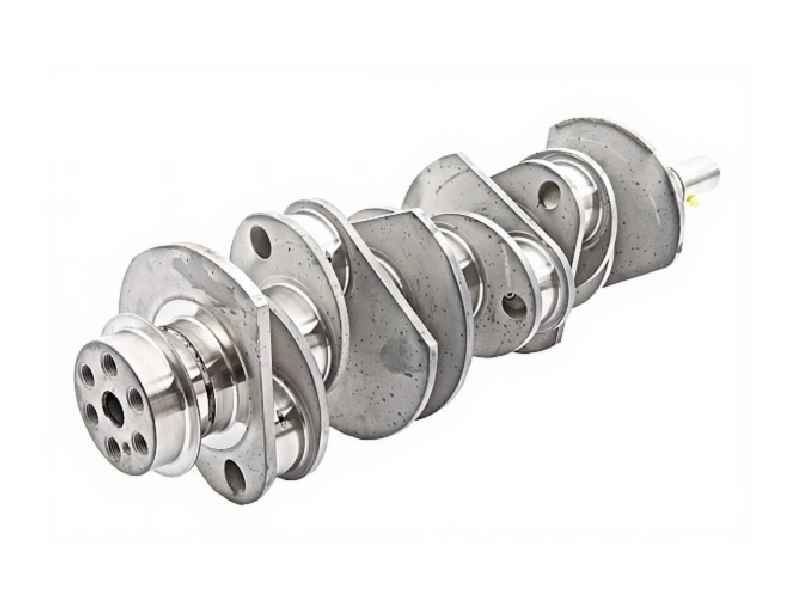
Standard Size Crankshaft (STD)
The standard size (STD) engine crankshaft is an
essential rotating component for the early air-cooled Porsche models.
Fits:
- Porsche 911 1972-1973 2.4L / 2.7L RS LWB (F)
- Porsche 911 1974-1977 2.7L / 1976-77 3.0 Carrera
- Porsche 911 1975-1977 3.0L Turbo (930)
Designed to maintain original journal dimensions and deliver long-lasting structural integrity, this crankshaft provides the precision, balance and strength demanded by classic flat-six engines.
Whether performing a true-to-original restoration or a full bottom-end rebuild, this crankshaft ensures proper bearing clearances, smooth rotation and the reliability required to support both naturally aspirated and early turbocharged Porsche engines.
What the Crankshaft Does
This crankshaft plays a central role in engine operation by:
- Transforming
piston movement into rotational torque to drive the transmission
- Maintaining
exact journal sizing for correct oil film and bearing support
- Ensuring
balanced rotation across the entire RPM range
- Supporting
reliable lubrication through precision oil galleries
- Handling
high load and thermal stress typical of air-cooled performance engines
- Providing dependable bottom-end stability for both normally aspirated and turbocharged setups
Without a properly sized and balanced crankshaft, the engine cannot run smoothly or reliably.
Why Crankshafts Can Fail
Although Porsche’s air-cooled crankshafts are renowned for
durability, age, performance use and lubrication issues can lead to failure.
Common causes include:
- Oil
starvation causing bearing damage and journal scoring
- Contamination
in the oil system leading to abrasive wear
- High-mileage
fatigue resulting in stress cracks or journal out-of-round conditions
- Overheating
reducing metallurgical strength
- Incorrect
machining or imbalance from past rebuilds
- Detonation
or pre-ignition placing excessive load on journals
- Corrosion from long storage or moisture intrusion
Symptoms can include low oil pressure, vibration, bearing noise, metal debris in the oil, or excessive crankshaft end-float.
Why You Should Replace a Worn or Damaged Crankshaft
Installing a new or precision-engineered standard size crankshaft—matched to original Porsche tolerances—provides the foundation for a reliable, long-lasting engine rebuild.
Benefits include:
- Restored bearing clearance and proper lubrication
- Smooth rotational balance and reduced engine vibration
- Improved reliability for both standard and turbocharged engines
- Protection against catastrophic bottom-end failures
- Extended lifespan for connecting rods, bearings and pistons
- Consistent performance in high-heat air-cooled environments
For valuable classics like the 1972–77 Porsche 911 and early 930 Turbo, a correct STD crankshaft is essential to preserving performance and longevity.
Related reference numbers
Related, superseded, cross reference or alternative numbers for comparison.
91610201600
The product you are viewing cross references to these numbers

- Porsche Boxster 987 MKII 2.9L 2009-12
- Porsche Boxster S 987 MKII 3.4L 2009-12
- Porsche Boxster 981 2.7L 2012-16
- Porsche Boxster 981 S / GTS 3.4L 2012-16
- Porsche 911 1984-1986 3.2L
- Porsche 911 1987-1989 3.2L G50
- Porsche 964 (911) C2 1989-93
- Porsche 964 (911) C4 1989-93
- Porsche 964 (911) RS 3.6L 1991-93
- Porsche 964 (911) RS 3.8L 1991-93
- Porsche 964 (911) TURBO 3.3L 1991-93
- Porsche 964 (911) TURBO 3.6L 1991-93
- Porsche 993 (911) C2 1994-97
- Porsche 993 (911) C4 1994-97
- Porsche 993 (911) RS 1994-97
- Porsche 993 (911) C2S 1994-97
- Porsche 993 (911) C4S 1994-97
- Porsche 993 (911) TURBO 1994-96
- Porsche 993 (911) GT2 1994-97
- Porsche 993 (911) TURBO S 1994-97
- Porsche 996 TURBO 2000-05
- Porsche 996 GT2 2001-05
- Porsche 996 GT3 MKI 1999-02
- Porsche 996 GT3 MKII 2003>>
- Porsche 996 GT3 RS 2003-04
- Porsche 997 MK1 Carrera 2 3.6L 2005-08
- Porsche 997 MK1 Carrera 2S 3.8L 2005-08
- Porsche 997 MK1 Carrera 4 3.6L 2005-08
- Porsche 997 MK1 Carrera 4S 3.8L 2005-08
- Porsche 997 MK1 TURBO 2007-09
- Porsche 997 MK1 GT3 2007-09
- Porsche 997 MK1 GT2 2007-09
- Porsche 997 MKII GT3 2010-11
- Porsche 997 MKII Turbo 2010-13
- Porsche 997 MKII GT2 RS 2011-13
- Porsche 991.1 Carrera C2 3.4L (350 Bhp) 2012-16
- Porsche 991.1 Carrera C2S / GTS 3.8L (400/430 Bhp) 2012-16
- Porsche 991.1 Carrera C4 3.4L (350 Bhp) 2012-16
- Porsche 991.1 Carrera C4S / GTS 3.8L (400/430 Bhp) 2012-16
- Porsche 991.1 Turbo 3.8L (520 Bhp) 2014-16
- Porsche 991.1 Turbo S 3.8L (560 Bhp) 2014-16
- Porsche 991.1 GT3 3.8L (475 Bhp) 2014-16
- Porsche Cayman 2.9L 987C MKII 2009-12
- Porsche Cayman S / R 3.4L 987C MKII 2009-12
- Porsche Cayman 2.7L 981 2013-16
- Porsche Cayman S / GTS 3.4L 981 2013-16
- Porsche 924S 2.5L 1986-87
- Porsche 924S 2.5L 1988
- Porsche 944 2.5L 8V 1982-87
- Porsche 944 2.7L 8V 1988-89
- Porsche 944S 2.5L 16V 1987-88
- Porsche 944S2 3.0L 16V 1989-91
- Porsche 944 Turbo 2.5L 8V 1985-88
- Porsche 944 Turbo 2.5L 8V 1989-91
- Porsche 944 Turbo S 2.5L 8V 1988
- Porsche 968 3.0L 1992-94
- Porsche 968 Sport 3.0L 1994-95
- Porsche 968 CS 3.0L 1993-95
- Porsche 968 Turbo S 3.0L 1993-94

Fits:
Porsche 911 Carrera 3.2L 1984-89
Porsche 924S 1986-88
Porsche 944 1982-91
Porsche 968 1992-95
Porsche 964 1989-94
Porsche 993 1994-98
Porsche 996 Turbo / GT2 / GT3 1999-05
Porsche 997 Carrera 2009-12
Porsche 997 Turbo / GT2 2007-09
Porsche 997 Turbo / GT2 RS 2009-14
Porsche 997 GT3 2007-13
Porsche 981 Boxster 2013>>
Porsche 987 Boxster 2009-12
Porsche 981C Cayman 2014>>
Porsche 987C Cayman 2009-13
Porsche 991 Carrera / 991 Turbo / 991 GT3
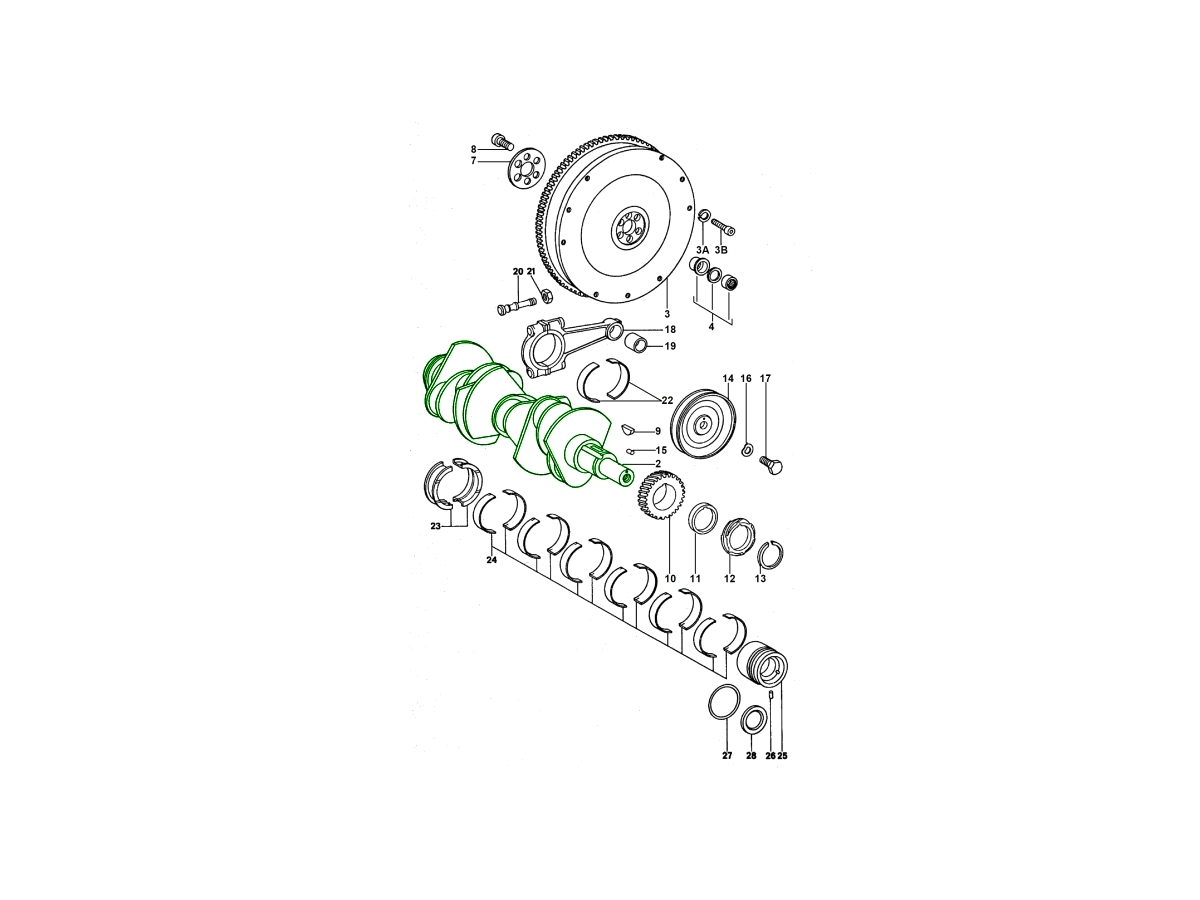
Click 'Zoom in' for large parts diagram.
Diagram ref no 1A
Related reference numbers
Related, superseded, cross reference or alternative numbers for comparison.
90009503100
The product you are viewing cross references to these numbers


100 Plasigauge strips per box

PLASTIGAUGE PL-A is widely used in the measurement of clearance in plain automotive bearings. Measurement of clearance in big-end bearings can be achieved without dismantling the crankshaft.
For measurements of: 0.001″ to 0.007″ (0.025mm – 0.175mm)
Suitable for use at temperatures between 0°C and 35°C
Contents:
Related reference numbers
Related, superseded, cross reference or alternative numbers for comparison.
PLA007
The product you are viewing cross references to these numbers