





Enter your VAT number here and click Verify:
Your details have been verified. VAT number registered to:
,
.
Your order will now be zero rated for VAT purposes. We reserve the right to verify these details after your order request has been made and reinstate VAT if required.
Your VAT details were not recognised or were invalid. Your VAT number must be matched to your Billing Country as specified above. This is currently specified as . You do not need to enter the country code part of your VAT number as this has already been selected in your billing address details above.
The VAT number checking service is currently offline. Please supply your VAT details within the comments or special instructions field below and we will apply a VAT discount after placing your order request.
Technica RaceWire

Technica RaceWire for Porsche
Technica RaceWire began as a team of engineers looking to bring the best quality wiring harnesses to likeminded automotive enthusiasts. Our mission is to provide simple solutions to complicated problems on performance and Porsche projects. Calling on experience, expertise, key relationships, and continual improvement, Technica RaceWire is dedicated to providing products that balance quality, cost, and aesthetics
A Quick Look at Technica RaceWire
Technica RaceWire information on this page is based on details supplied by the manufacturer or distributor, plus any OE references provided with the parts.
Choosing the Right Fit for Your Porsche
Where Technica RaceWire is listed for Porsche, use the supplied model coverage and OE references to confirm suitability. Check details that commonly affect fitment such as model year, side/position, and connector type where relevant.
- Typical reasons to choose these parts include improving electrical reliability, supporting track builds, adding sensors or data logging, and addressing faults caused by ageing looms or poor-quality connections.
- Common real-world symptoms of underlying issues include intermittent cut-outs, sensor dropouts, blown fuses, overheating connectors, and unreliable grounds, often linked to bad crimps, unsealed connectors, poor routing near heat sources, or lack of strain relief.
- Practical wiring tips include giving special attention to grounds and crimps, keeping harness routing away from exhaust heat, using appropriate sealing to prevent moisture ingress, and clearly labelling circuits to simplify future fault-finding.
Browse by Category
If you already know the area you are working on, start with the category and then filter by Porsche model. Where real-world symptoms and typical reasons to replace are provided, use them to keep the wording grounded.
Engine Cooling — Cooling components are typically replaced when there are leaks, overheating, repeated low coolant warnings, or ageing hoses and clamps. Real-world early signs include a sweet coolant smell, visible puddles, steam, rising temperature readings, gurgling noises after shutdown, and staining or residue around radiators, hoses, and joints.
- Check coolant level regularly and inspect for staining or dampness around common leak points such as hoses, expansion tank, radiator, water pump, and thermostat housing.
- A pressure test (with UV dye if needed) is often the most effective way to pinpoint small or intermittent leaks.
Thermostat / Temperature Sensor — These parts are changed when the engine runs too hot or too cold, shows unstable temperature behaviour, or when the ECU logs coolant temperature faults. Typical symptoms include overheating, slow warm-up, weak heater performance, unusual fan behaviour, fluctuating or implausible gauge readings, and poor fuel economy linked to incorrect temperature control.
- Compare actual warm-up behaviour and hose temperatures with scan-tool readings to distinguish thermostat issues from sensor or wiring faults.
- If warm-up takes a long time and cabin heat is poor, suspect a stuck-open thermostat; if temperature readings jump unrealistically, suspect sensor or wiring problems.
Engine Electrical — Engine electrical components are replaced when starting, charging, ignition, or sensor-related faults affect drivability and reliability. Real-world triggers include intermittent no-start, misfires, rough idle, stalling, poor charging, battery drain, warning lights, heat-soak failures, and inconsistent live data or limp-mode behaviour.
- Begin diagnosis with the basics: battery condition, main grounds or earth straps, and the cleanliness and security of key connectors.
- Use fault codes as a guide but confirm with testing of power, grounds, and signal quality before replacing parts, as cheap or incorrect components can create repeat issues.
Injectors — Fuel injectors are replaced when fuelling becomes uneven due to clogging, leakage, poor spray pattern, or electrical failure. Common symptoms include rough idle, misfires that follow a cylinder, hesitation on acceleration, black smoke or rich running, lean surging, hard starting, fuel smell, fuel in the oil from leakage, and uneven spark plug appearance.
- Professional ultrasonic cleaning and flow testing can often restore injectors and highlight any that are significantly out of balance.
- Listen for consistent injector clicking and use cylinder balance checks, plug readings, and fuel-trim data to distinguish injector issues from ignition problems.
Wiring Harness / Cables — Harnesses and cables are renewed when insulation deteriorates, connectors corrode, wires fracture internally, or previous repairs have left unreliable joins. Real-world issues include intermittent electrical faults, random warning lights, misfires that appear and disappear, flickering lights, melted insulation, green corrosion in connectors, unexplained blown fuses, and components that behave differently when the wiring is moved.
- Pay close attention to grounds, battery connections, and high-heat areas near the engine or exhaust where insulation can become brittle or melted.
- A wiggle test while monitoring live data or voltage can help expose intermittent wiring issues; widespread heat damage or corrosion is often best addressed with replacement rather than repeated small repairs.
Explore Technica RaceWire at Design911
View the current Technica RaceWire range for Porsche at Design911, then filter by model and category to narrow down to the right parts.


- Porsche 944 2.5L 8V 1982-87
- Porsche 944 2.7L 8V 1988-89
- Porsche 944S 2.5L 16V 1987-88
- Porsche 944S2 3.0L 16V 1989-91
- Porsche 944 Turbo 2.5L 8V 1985-88
- Porsche 944 Turbo 2.5L 8V 1989-91
- Porsche 944 Turbo S 2.5L 8V 1988

Fits:
Porsche 944 2.5ltr / 2.7ltr - 1982 to 1989
Porsche 944S 16V 2.5ltr - 1988 to 1989
Porsche 944 S2 3.0ltr - 1989 to 1991
Porsche 944 turbo - 1985 to 1991
Porsche 944 are notorious for getting extremely hot.
We wanted to make an all-in-one solution that was super easy to install and looked incredible. Sport with our Standalone fusebox that contains two relays to power dual fans.
The Relay/Fusebox can easily be mounted on the Porsche 944 OEM Battery location. We utilized Porsche 944 Thermal Switch Sensor that is rated to turn on at 70 C. That means the fan will kick on sooner and stay on longer even after you turn off your Porsche 944.
Related reference numbers
Related, superseded, cross reference or alternative numbers for comparison.
95160648100
The product you are viewing cross references to these numbers


- Porsche 924S 2.5L 1986-87
- Porsche 924S 2.5L 1988
- Porsche 944 2.5L 8V 1982-87
- Porsche 944 2.7L 8V 1988-89
- Porsche 944S 2.5L 16V 1987-88
- Porsche 944S2 3.0L 16V 1989-91
- Porsche 944 Turbo 2.5L 8V 1985-88
- Porsche 944 Turbo 2.5L 8V 1989-91
- Porsche 944 Turbo S 2.5L 8V 1988
Fits:
Porsche 924S - 1986 to 1988
Porsche 944 - 1982 to 1989
Porsche 944 turbo - 1986 to 1991
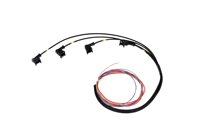
This Porsche 944 Injector Harness will replace your brittle and old connectors, terminals, wires and loom.
The fuel injector section of the factory harness connector has been exposed to three decades of high heat cycles and extreme environmental conditions. As a result, the wires and connectors become brittle and broken, which can cause problems with engine performance.
This OEM+ replacement harness with yellow labels will ensure a cleaner engine bay, using brand-new connectors and wires, and sealed boots.
The harness will be routed through the elephant's boot, down the main branch, and into the DME at the passenger's footwell. A full pinout and instruction manual will be provided with the harness.
- TXL Wires (Temperature Rating to +125 C)
- Polyethylene Terephthalate (PET) Loom (Temperature Rating to +125 C)
Related reference numbers
Related, superseded, cross reference or alternative numbers for comparison.
94460611201
The product you are viewing cross references to these numbers


- Porsche 911 1984-1986 3.2L
- Porsche 911 1987-1989 3.2L G50
- Porsche 911 1978-1989 3.3L Turbo (930)
- Porsche 944S 2.5L 16V 1987-88
- Porsche 944S2 3.0L 16V 1989-91
Fits:
Porsche 944 S - 1987 to 1988
Porsche 944 S2- 1989 to 1991
Connector will fit Bosch units
0 281 200 195
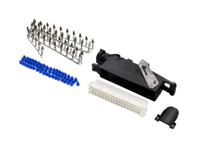
Connector List:
- 55 Pin ECU Connector
- Wire Seals
- Terminals
- Connector Screws
Suitable for Bosch Motronic
M1.3 / M1.5 / M1.52 / M1.54
MP5.1 / MP5.2 / MP7 / M2.5 / M2.7 /M2.10
Features:
After three decades of heat and extreme environmental conditions, the connectors and wires become extremely brittle and fragile and can break. Oftentimes, they break by just unplugging them. This can cause signal loss and prevent your engine from starting.
This OEM+ replacement kit will replace the stock ECU Bosch DME connector.
Related reference numbers
Related, superseded, cross reference or alternative numbers for comparison.
94461812405
The product you are viewing cross references to these numbers

- Porsche 911 1984-1986 3.2L
- Porsche 911 1987-1989 3.2L G50
- Porsche 911 1978-1989 3.3L Turbo (930)
- Porsche 924S 2.5L 1986-87
- Porsche 924S 2.5L 1988
- Porsche 944 2.5L 8V 1982-87
- Porsche 944 2.7L 8V 1988-89
- Porsche 944S 2.5L 16V 1987-88
- Porsche 944S2 3.0L 16V 1989-91
- Porsche 944 Turbo 2.5L 8V 1985-88
- Porsche 944 Turbo 2.5L 8V 1989-91
- Porsche 944 Turbo S 2.5L 8V 1988
- Porsche 968 3.0L 1992-94
- Porsche 968 Sport 3.0L 1994-95
- Porsche 968 CS 3.0L 1993-95
- Porsche 968 Turbo S 3.0L 1993-94
Fits:
Porsche 924S - 1986 to 1988
Porsche 944 - 1982 to 1991
Porsche 944 turbo - 1985 to 1991
Porsche 968 - 1992 to 1995
Porsche 911 - 1984 to 1989
Connector will fit Bosch units
0 281 200 076
0 281 200 050
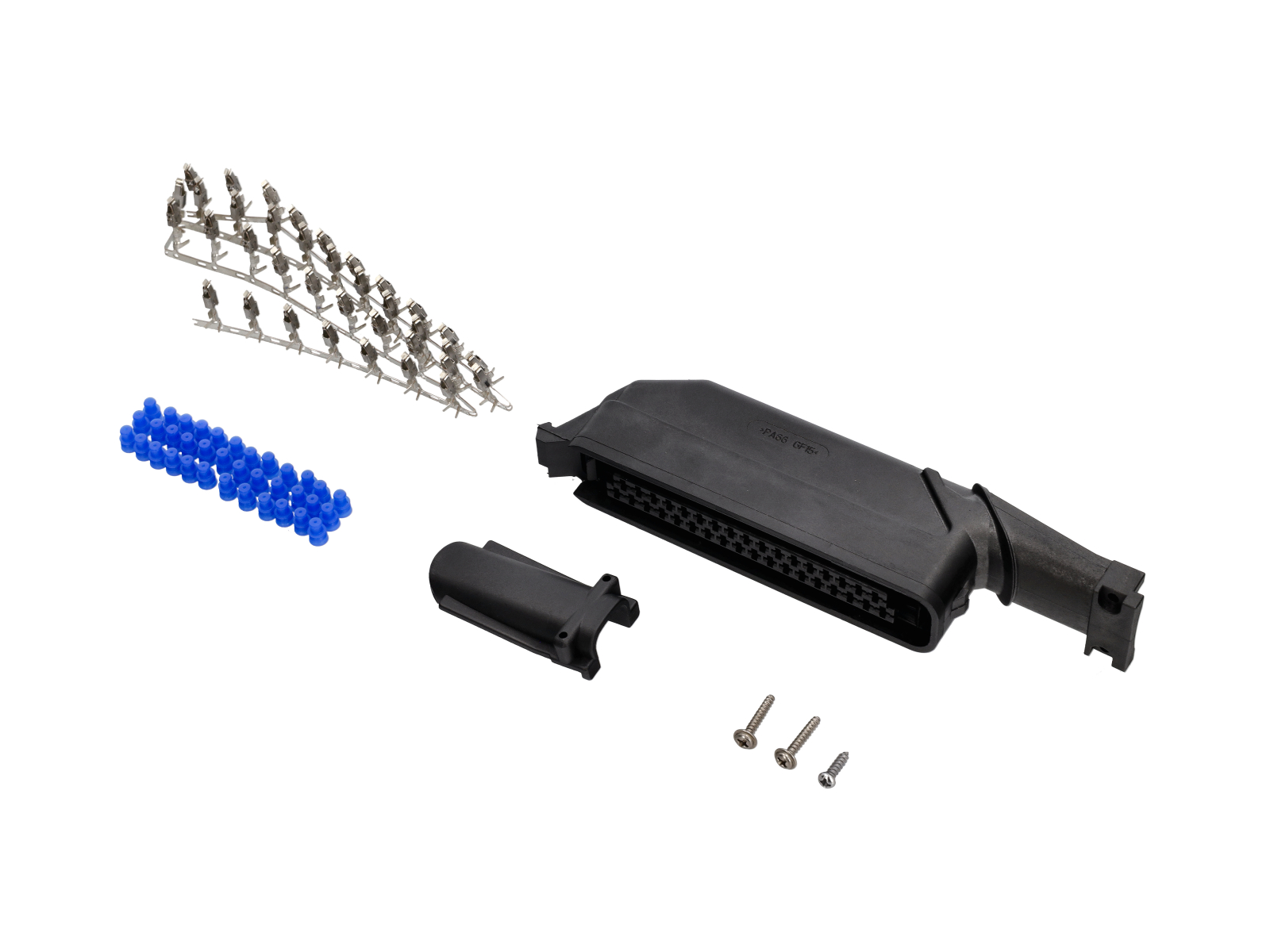
Connector List:
- 35 Pin ECU Connector
- Wire Seals
- JPT Terminals
- Connector Screws
Features:
After three decades of heat and extreme environmental conditions, the connectors and wires become extremely brittle and fragile and can break. Oftentimes, they break by just unplugging them. This can cause signal loss and prevent your engine from starting.
This OEM+ replacement kit will replace the stock ECU Bosch DME connector.
Related reference numbers
Related, superseded, cross reference or alternative numbers for comparison.
94461200207
The product you are viewing cross references to these numbers


- Porsche 944 2.5L 8V 1982-87
- Porsche 944S 2.5L 16V 1987-88
Fits:
Porsche 944 2.5ltr - 1982 to 1985 (late dash)
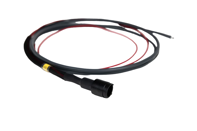
This Porsche 944 O2 Harness will replace your brittle and old connectors, terminals, wires, and loom
Features:
- The O2 Sensor section of the factory harness connector has been exposed to three decades of high heat cycles and extreme environmental conditions. As a result, the wires and connectors become brittle and broken, which can cause problems with engine performance.
- This OEM+ replacement harness with yellow labels will ensure a cleaner engine bay, using brand-new connectors and wires, and sealed boots. The harness will be routed through the elephant's boot, down the main branch, and into the DME at the passenger's footwell. A full pinout and instruction manual will be provided with the harness.
- TXL Wires (Temperature Rating to +125 C)
- Polyethylene Terephthalate (PET) Loom (Temperature Rating to +125 C)
Click 'Zoom in' for large parts diagram.
Diagram ref no 22
Related reference numbers
Related, superseded, cross reference or alternative numbers for comparison.
94460601900
The product you are viewing cross references to these numbers


- Porsche 944 2.5L 8V 1982-87
Fits:
Porsche 944 - 1982 to 1985 (early dash)
This Porsche 944 O2 Harness will replace your brittle and old connectors, terminals, wires, and loom
Fits 250-23025 Oxygen Sensor
Features:
- The O2 Sensor section of the factory harness connector has been exposed to three decades of high heat cycles and extreme environmental conditions. As a result, the wires and connectors become brittle and broken, which can cause problems with engine performance.
- This OEM+ replacement harness with yellow labels will ensure a cleaner engine bay, using brand-new connectors and wires, and sealed boots. The harness will be routed through the elephant's boot, down the main branch, and into the DME at the passenger's footwell. A full pinout and instruction manual will be provided with the harness.
- TXL Wires (Temperature Rating to +125 C)
- Polyethylene Terephthalate (PET) Loom (Temperature Rating to +125 C)
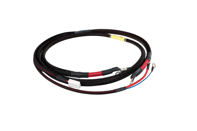


- Porsche 944 2.5L 8V 1982-87
Fits:
Porsche 944 2.5ltr - 1982 to 1985 for cars with early dash
For LHD (Left Hand Drive) cars and RHD (Right Hand Drive)
Features:
- 6 GA Motorsport Batter Cable
- 12 GA TXL Wires (Starter Solenoid)
- 18 GA TXL Wires (Alternator Exciter)
- Tin-Plated Battery Lugs on both ends
- TXL Wires (Temperature Rating to +125 C)
- Polyethylene Terephthalate (PET) Loom (Temperature Rating to +125 C)
Click 'Zoom in' for large parts diagram.
Diagram ref no 12
Related reference numbers
Related, superseded, cross reference or alternative numbers for comparison.
94461201501
The product you are viewing cross references to these numbers
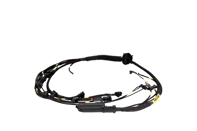


- Porsche 944 2.5L 8V 1982-87
Fits:
Porsche 944 2.5ltr - 1985 to 1988 Late dash
For LHD (Left Hand Drive) cars and RHD (Right Hand Drive)
Complete engine harness
Connectors:
- Female 35 pin connector to DME Motronic ECU
- 4 x Injector
- Air Flow Sensor
- Altitude Compensation Switch
- Auxiliary Air Valve
- Code Plug
- Diagnosis
- DME Connection Plug
- Firewall 14 Pin Connector
- Idle Positioner
- Oil Level Switch
- Oil Pressure Send
- Oil Pressure Warn
- Oxygen Sensor
- Reference Mark Sensor
- Speed Transmitter
- Temperature Sensor
- Throttle Valve Switch
- Water Temperature Sensor
- Water Temperature Send
- Water Temperature Warn
TXL Wires (Temperature Rating to +125 C)
Polyethylene Terephthalate (PET) Loom (Temperature Rating to +125 C)
New Rubber Elephant Boot
TRW Street Sport Harness Total Weight - 1.54lbs
OEM Harness Total Weight - 1.88lbs
Click 'Zoom in' for large parts diagram.
Diagram ref no 2
Related reference numbers
Related, superseded, cross reference or alternative numbers for comparison.
94460702101
The product you are viewing cross references to these numbers
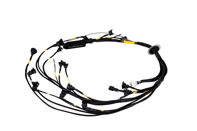

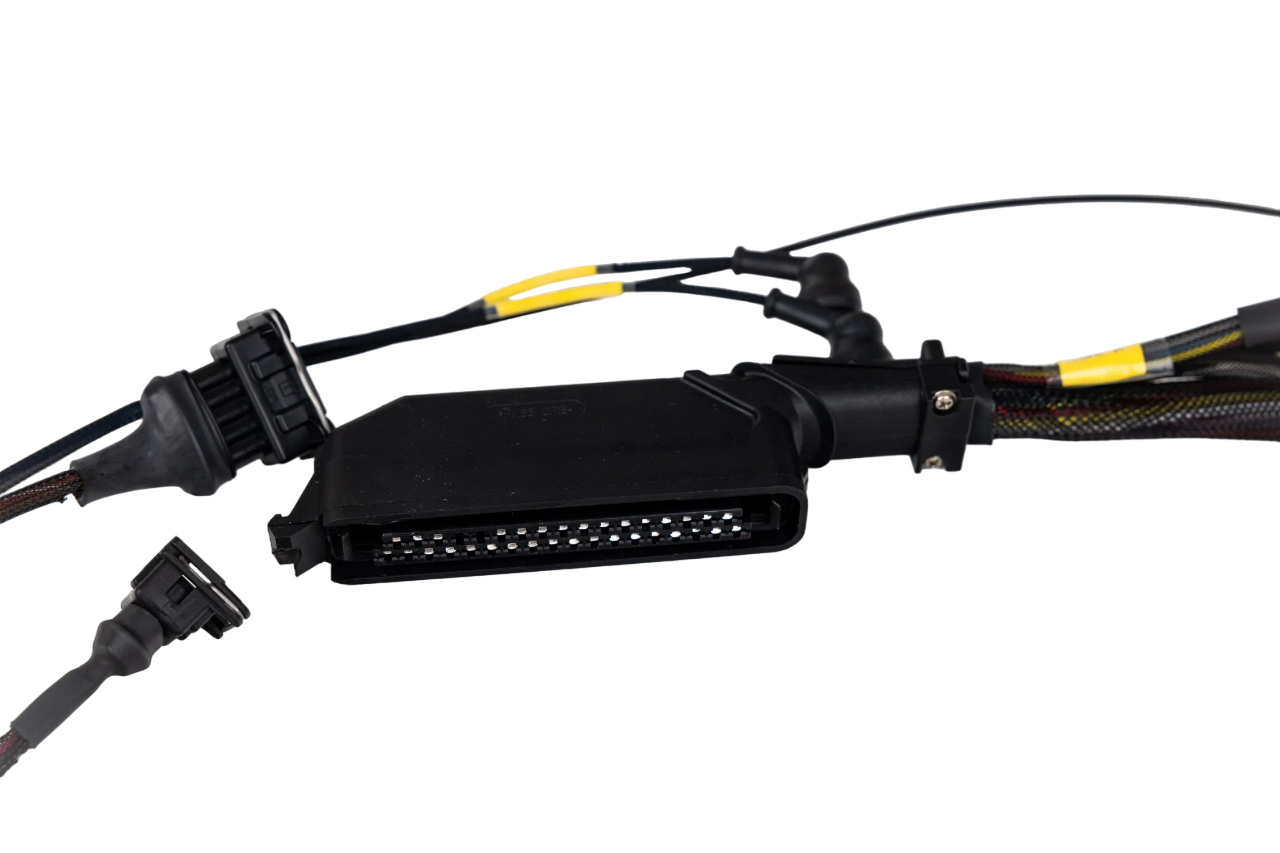
- Porsche 924S 2.5L 1986-87
- Porsche 924S 2.5L 1988
Fits:
Porsche 924S - 1986 to 1988
For LHD (Left Hand Drive) cars and RHD (Right Hand Drive)
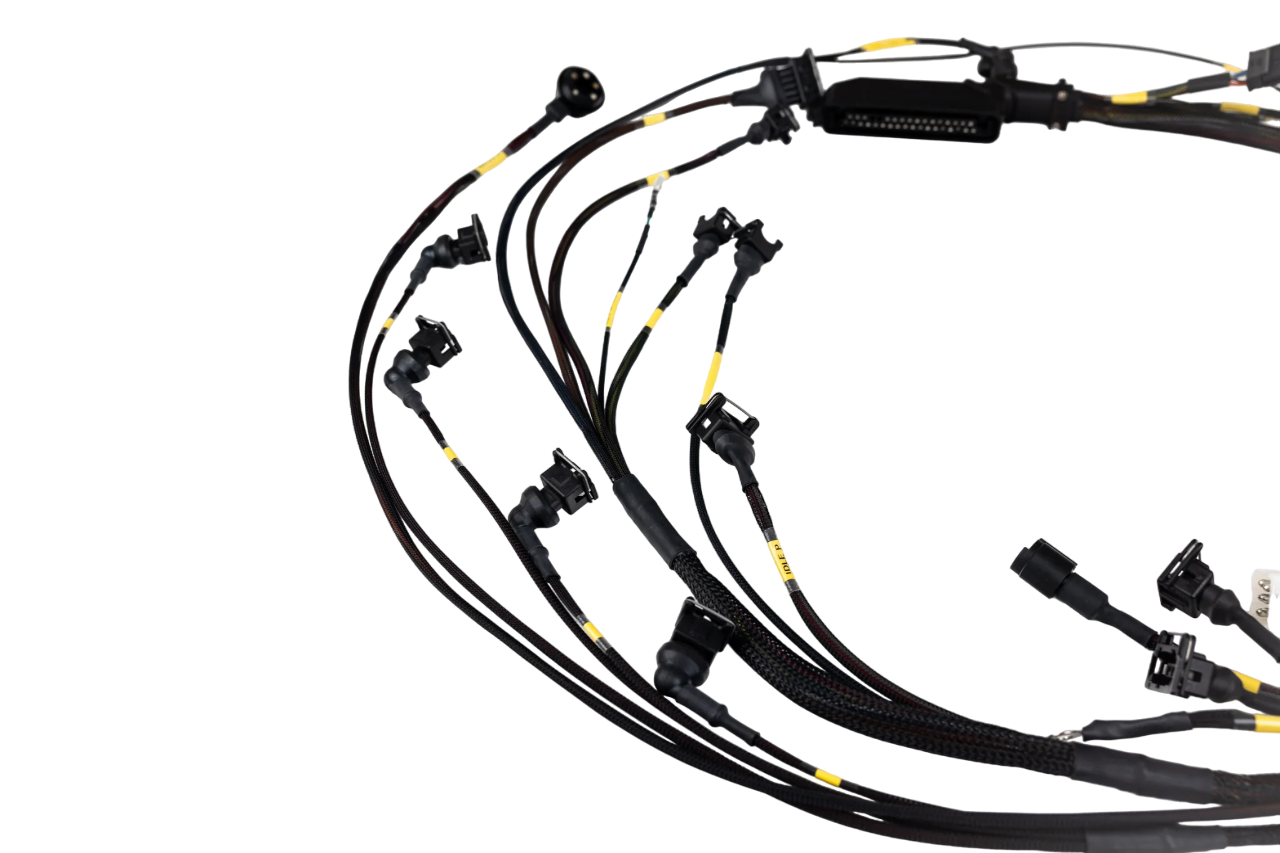
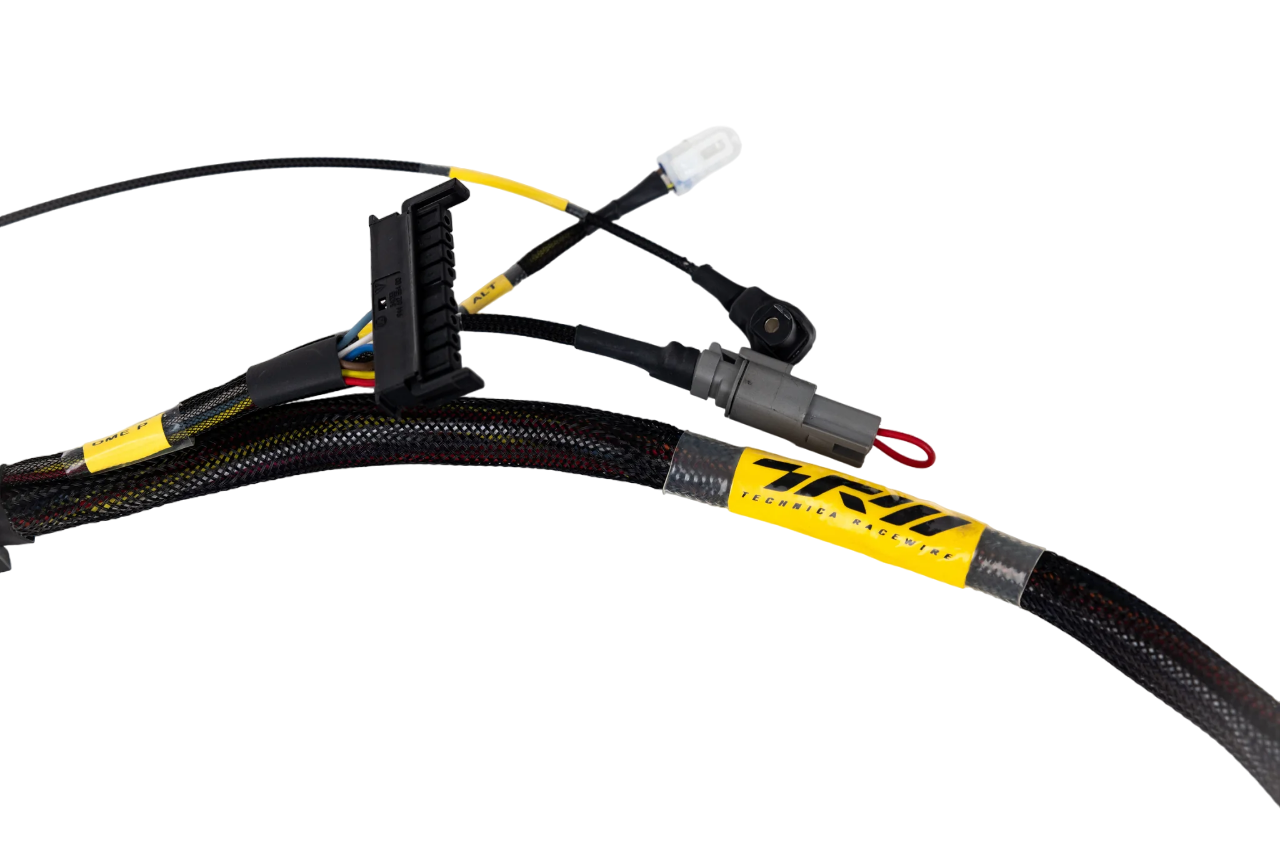
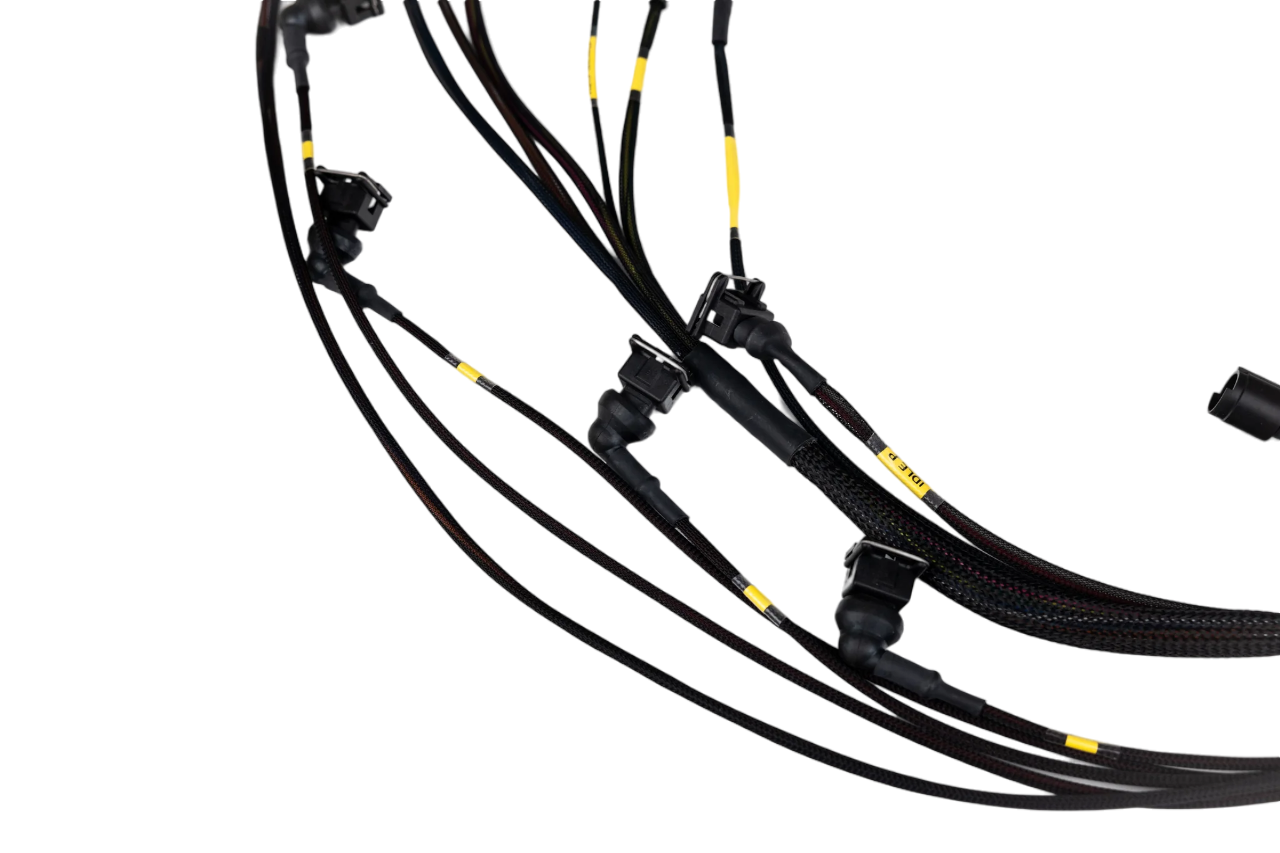
Complete engine harness
Connectors:
- Female 35 pin connector to DME Motronic ECU
- 4 x Injector
- 9 Pin Connector for 12V+
- Air Flow Sensor
- Altitude Compensation Switch
- Code Plug
- DME Connection Plug
- Idle Positioner
- Oil Level Switch
- Oil Pressure Send
- Oil Pressure Warn
- Oxygen Sensor
- Reference Mark Sensor
- Speed Transmitter
- Temperature Sensor
- Throttle Valve Switch
- Water Temperature Sensor
- Water Temperature Send
Materials:
TXL Wires (Temperature Rating to +125 C)
Polyethylene Terephthalate (PET) Loom (Temperature Rating to +125 C)
RW Harness Total Weight - 1.05lbs
OEM Harness Total Weight - 1.85lb
Related reference numbers
Related, superseded, cross reference or alternative numbers for comparison.
94460703002
The product you are viewing cross references to these numbers