
do not press the back button…
-
Engine Parts
-
- Engine Cooling Coolant Hoses and Pipes (Front engine cars) Coolant Hoses and Pipes (Rear engine cars) Water / Coolant Radiators Track & Race Coolant Radiators Water / Coolant Pumps Coolant Bottles / Expansion Tanks Thermostat / Temperature Sensor Oil Radiators / Heat Exchangers Oil System & Pipes Oil Tank Air cooling parts All Categories
-
- Engine Rebuild Parts Intermediate shaft (IMS) Oil System Parts Fuel System Parts Gaskets & Sets Radial Seal / RMS / Camshaft / Balance shaft Belts / Tensioners / Rollers Chains & Tensioners Timing covers and gaskets Engine Bearings / Shells Engine Valves / Guides / Springs Rocker Arms & Tappets Engine Bolts / Studs Engine Mounts Piston Rings Engine Cylinders / Liners / Pistons Connecting Rod Cylinder Head / Camshaft Carrier Camshaft covers / Gaskets Camshafts Camshaft gears / sprockets and fixings Crankcase Parts Crankshaft & Parts All Categories
-
-
Brakes
-
- Brakes Brake Pads & Disc Package SPORTS Brake Pads & Disc Package Brake Pads Packages Brake Disc Standard Brake Pads Standard SPORTS Brake Disc Brembo Standard brakes Brembo Racing brakes TEXTAR Brakes PAGID Racing Brakes Manthey Racing Brake Pads Zimmermann Brakes Performance Friction Brakes Giro Slotted Brake Disc Wilwood Disc Brakes SHW Performance Brakes EBC Brakes Black Diamond Performance Brakes O-Brake Brake Discs Surface Transforms Ceramic Brakes Rotinger Graphite Line Replacement for Ceramic Disc All Categories
-
-
Suspension & Steering
-
Transmission
-
- Gearbox / Transmission Clutch Kits Clutch Kits - High Performance Clutch Friction Plate Clutch Pressure Plate Clutch Release Bearings Clutch Cables & Parts Clutch Guide Tube Clutch Ring Gear Clutch Forks & Levers Clutch Bolts Gearbox Parts Driveshafts & Parts Gasket Sets / Gaskets / Seals / Lock Nuts Gearbox Mounts Gearshift Control Parts Flywheel / Torque CV Joints Kits CV Boots and Kits Cardan Shaft / Prop Shaft Transmission Parts Gearbox / Differential Oil Gearbox Sump / Oil Pan All Categories
-
-
Cooling & Heating
-
- Heating / Air Conditioning Air con condensers & desiccators Air con evaporators & expansion valves Air con pipes Air con belts Fans & cowlings Relays / Sensors / Resistors Compressors Heater flaps Blower Motors & Fans Heater blowers Heater hoses & pipes Heat Exchanger Heater cables Vents / Grilles Climate Control Temperature Sensors / Switches Heating / Air conditioning Housings Auxiliary coolant pump
-
-
Electrical & Lighting
-
- Electrical & Relays Fuel Pumps Brake Light Switch Brake & Clutch Switch Hazard Warning Switch Handbrake Switch Reverse Light Switch Headlamp Switch Window Switch Window Motors Window Mechanism Wiper Motor Wiper Mechanism Electric Horn SmartTop Control Units Ignition Switch Seat Switch Indicator / Wiper Stalk Switch Roof / Sun Roof Switch Relays / Fuses Washer pumps / bottles / jets Alarms / Security / Central Locking Electronic Control Units All Categories
-
-
Body & Exhaust
-
- Chassis / Bodywork Restoration Chassis / Repair Panels Front Lid Damper Rear Lid Damper Bonnets / Locks & Latches Boots / Rear Lid / Locks and Latches Rear lid / Tailgate Bumpers Front Bumpers Rear Door Handles | Locks | Keys Door Panels | Hinges | Striker Plates Window Lifters | Motors Wings Front & Parts Wings Rear & Parts Side Sill Panels Exterior Chassis Mouldings Mirrors & Parts Stone Chip Foils / Stickers Undertrays Chassis & Engine Front Wiper Arms & Blades Rear Wiper Arms & Blades Wheel Arch Liners & Covers Roof - Cabrio / Targa / Coupe / Speedster All Categories
-
-
Exhausts
Standard Silencers / Mufflers
Sport Silencers / Mufflers
Switchable Silencers / Mufflers
Exhaust for Body Conversion
1 IN / 1 OUT
Standard Silencers 1 IN / 1 OUT
Sports Silencers 1 IN / 2 OUT
Sports Silencers 2 IN / 1 OUT
Standard Silencers 2 IN / 1 OUT
Sport Silencers 2 IN / 2 OUT
Standard Silencers 2 IN / 2 OUT
Sport Silencers All Categories
-
Exhausts
Standard Silencers / Mufflers
Sport Silencers / Mufflers
Switchable Silencers / Mufflers
Exhaust for Body Conversion
1 IN / 1 OUT
-
-
Lubricants & Fluids
-
- Service Parts Service Kits Service Kits OE Parts Oil Filters Air Filters Pollen/Particle Filters Fuel Filters Belts All Types Spark Plugs IRIDIUM POWER Spark Plugs IRIDIUM RACING Spark Plugs Ignition Coils Front Wiper Arms & Blades Rear Wiper Arms & Blades Gearbox Service Parts Porsche Classic Motor oil Engine Oil & Lubricants - Mobil Engine Oil & Lubricants - Total Engine Oil & Lubricants - Castrol Engine Oil & Lubricants - Motul Engine Oil & Lubricants - Millers Oils NanoDrive Engine Oil & Lubricants - Millers Oils Fuel Additives All Categories
-
-
All Parts
-
- Parts Accessories Chassis / Bodywork Brakes Clothing & Gifts Electrical & Relays Engine Cooling Engine Electrical Engine Rebuild Parts Engine Tuning Exhausts Exterior Styling / Spoilers Gearbox / Transmission Heating / Air Conditioning Hydraulics Interior & Accessories Incar / Multimedia Lighting Mats & Carpets Motorsport and Off-Road Pedal Cluster Rubber Seals Seats & Seat Belts All Categories
-
- Back to main website




Enter your VAT number here and click Verify:
Your details have been verified. VAT number registered to:
,
.
Your order will now be zero rated for VAT purposes. We reserve the right to verify these details after your order request has been made and reinstate VAT if required.
Your VAT details were not recognised or were invalid. Your VAT number must be matched to your Billing Country as specified above. This is currently specified as . You do not need to enter the country code part of your VAT number as this has already been selected in your billing address details above.
The VAT number checking service is currently offline. Please supply your VAT details within the comments or special instructions field below and we will apply a VAT discount after placing your order request.
LN Engineering
LN Engineering for Porsche
Now in our 20th year, LN Engineering is best known for our Nickies cylinders and sleeves as well as for our solutions to the intermediate shaft bearing problem, namely the IMS Retrofit and IMS Solution. Since its founding in 2002, LN Engineering also has a longstanding partnership with Jake Raby, who as founder of Flat 6 Innovations, Aircooled Technology, The Knowledge Gruppe, and Rennvision, has served as a Technical Advisor to LN Engineering and has also been closely involved with LN Engineering's Porsche product development since day one
A Quick Look at LN Engineering
Now in our 20th year, LN Engineering is best known for our Nickies cylinders and sleeves as well as for our solutions to the intermediate shaft bearing problem, namely the IMS Retrofit and IMS Solution. Since its founding in 2002, LN Engineering also has a longstanding partnership with Jake Raby, who as founder of Flat 6 Innovations, Aircooled Technology, The Knowledge Gruppe, and Rennvision, has served as a Technical Advisor to LN Engineering and has also been closely involved with LN Engineering's Porsche product development since day one.
Choosing the Right Fit for Your Porsche
Where LN Engineering is listed for Porsche, use the supplied model coverage and OE references to confirm suitability. Check details that commonly affect fitment such as model year, side/position, and connector type where relevant.
- Typical reasons people replace these parts include addressing known Porsche engine weaknesses, carrying out preventative reliability upgrades during related work (such as clutch or engine-out jobs), and aiming to improve longevity to reduce the risk of major engine damage.
- Common real-world symptoms that may prompt inspection or replacement are metallic debris in the oil, unusual engine noises, oil leaks, and signs of progressive bearing or internal wear, especially where maintenance or cooling has been marginal.
- Practical ownership tips include planning preventative work to coincide with existing labour, using correct-specification oil with sensible change intervals, inspecting for debris and leaks before upgrades, and documenting findings for future reference.
Browse by Category
If you already know the area you are working on, start with the category and then filter by Porsche model. Where real-world symptoms and typical reasons to replace are provided, use them to keep the wording grounded.
Engine Cooling — Cooling components are usually replaced when there are leaks, overheating episodes, repeated low-coolant warnings, or ageing hoses and tanks; many Porsche owners choose upgraded parts here because a small cooling failure can quickly lead to serious engine damage. Common early signs include a sweet smell, visible puddles, steam, temperature creeping up under load, or staining and dampness around hoses, radiators, and the expansion tank.
- Check coolant level and look carefully for staining or damp joints around hoses, the radiator, expansion tank, water pump, and thermostat housing; avoid driving the car hard or far if any leak or overheating is suspected.
- If symptoms are intermittent, a professional pressure test (and possibly UV dye) is often the most effective way to pinpoint small coolant leaks.
Thermostat / Temperature Sensor — Thermostats and temperature sensors are renewed when the engine runs too hot or too cold, takes too long to warm up, shows unstable temperature readings, or logs temperature-related fault codes. On Porsche models, owners often change these parts when fans behave oddly, fuel consumption worsens, or the heater output is poor, as stuck thermostats or inaccurate sensors can both affect drivability and protection.
- Compare warm-up behaviour and hose temperatures with scan-tool data: if the engine never reaches proper temperature with a weak heater, suspect a thermostat stuck open; if the readings jump or look implausible, focus on the sensor and its wiring.
- Before replacing multiple parts at once, confirm the fault as far as possible, but consider renewing associated components together where labour overlaps and access is difficult.
Engine Rebuild Parts — Engine rebuild parts are used when tests point to internal wear or damage, such as low or uneven compression, heavy oil consumption, persistent oil leaks that gaskets alone do not cure, abnormal internal noises, or metallic debris found in the oil system. Porsche specialists commonly replace a broad set of internal components during a rebuild because labour and machining are the major costs, and renewing chains, guides, bearings, seals, and gaskets together helps avoid repeated strip-downs.
- Before committing to a major rebuild, typical checks include compression and leak-down testing, borescope inspection, oil and filter examination for debris, and confirmation that issues are not caused by external ancillaries.
- When the engine is apart, it is usual to replace hard-to-reach wear items such as timing chains, guides, tensioners, seals, and critical bearings so the rebuilt Porsche engine has the best chance of long-term reliability.
Engine Tuning — Engine tuning components are chosen to refine drivability, throttle response, and power delivery, or to support hardware changes like intake, exhaust, or forced-induction upgrades on a Porsche. Owners often look at tuning when they want to eliminate flat spots, improve response after modifications, or optimise how the engine behaves on road and track, bearing in mind that calibration should follow good mechanical health rather than compensate for underlying faults.
- Before any tuning work, confirm that the base engine is healthy with good compression, stable fueling, correct sensor readings, and no boost or vacuum leaks; tuning maps should not be used to hide mechanical issues.
- Plan upgrades in a balanced way so that airflow, fueling, cooling, and ignition systems all support the intended power level, keeping reliability and usable road manners in mind.
Engine Modifications & Upgrades — Engine modifications and upgrades are typically selected to increase power, strengthen known weak points, or improve durability for demanding Porsche use such as track days. Common drivers for these parts include repeated overheating, marginal oil pressure, detonation concerns, or component fatigue found during teardown, leading owners to adopt improved cooling and oiling solutions, stronger internals, and better airflow before pushing for higher outputs.
- Stage upgrades sensibly: start with reliability enhancements to cooling, oiling, and fueling, then address airflow and power increases, and finally refine calibration so the overall package stays robust.
- When planning a road‑biased build, favour parts and specifications that preserve low‑RPM behaviour, manage heat effectively, and keep noise and vibration at acceptable levels for regular Porsche use.
Explore LN Engineering at Design911
View the current LN Engineering range for Porsche at Design911, then filter by model and category to narrow down to the right parts.


- Porsche Boxster 986 2.5L 1997-99
- Porsche Boxster 986 2.7L 1999-02
- Porsche Boxster S 986 3.2L 1999-02
- Porsche Boxster 986 2.7L 2003-04
- Porsche Boxster S 986 3.2L 2003-04
- Porsche 996 C2 3.4L 1997-08/01
- Porsche 996 C4 3.4L 1997-08/01
- Porsche 996 C2 3.6L 09/01-2005
- Porsche 996 C4 3.6L 09/01-2005
- Porsche 996 C4S 3.6L 09/01-2005

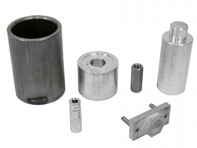
The Supplemental Tool kit is required for installation of the Single Row and Dual row IMS Solution and also for M96 /MY06-08 Upgrade - kit 106-08.30
Related reference numbers
Related, superseded, cross reference or alternative numbers for comparison.
106-08.21
The product you are viewing cross references to these numbers
Monday-Friday: 8.30am - 5.30pm (GMT)
Saturday: Closed
Sunday: Closed